Banner
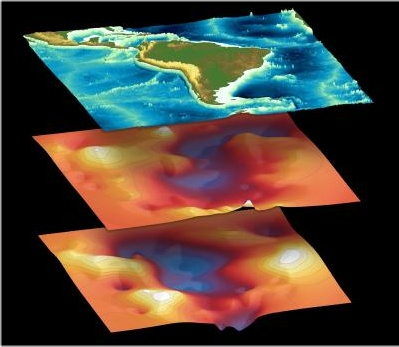
Here's Where Your Backyard Was 300 Million Years Ago

We may use terms like "grounded" and terra firma to mean stability and consistency but geology...

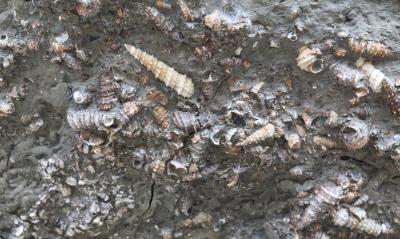
Convergent Evolution Cheat Sheet Now 120 Million Years Old

One tenet of natural selection is a random walk of genes but nature may be more predictable than...

Synchrotron Could Shed Light On Exotic Dark Photons

There are many hypothetical particles proposed to explain dark matter and one idea to explore how...

The Pain Scale Is Broken But This May Fix It

Chronic pain is reported by over 20 percent of the global population but there is no scientific...

User picture.
News StaffRSS Feed of this column.

News Releases From All Over The World, Right To You... Read More »

Blogroll

A tiny fragment of Martian meteorite 1.3 billion years old contains a 'cell-like' structure, which investigators say once held water, according to findings published in Astrobiology.

While investigating the Martian meteorite, known as Nakhla, Dr. Elias Chatzitheodoridis of the National Technical University of Athens found an unusual feature embedded deep within the rock. In a bid to understand what it might be, he teamed up with long-time friend and collaborator Professor Ian Lyon at the University of Manchester. 

The Asian monsoon was believed to have begun about 25 million years ago  as a result of the uplift of the Tibetan Plateau and the Himalaya Mountains but a new study finds it existed 40 million years ago - a time when atmospheric carbon dioxide was 4X what it is now. The monsoon then weakened 34 million years ago when atmospheric CO2 then decreased by 50 percent and an ice age occurred. 

The monsoon, the largest climate system in the world, governs the climate in much of mainland Asia, bringing torrential summer rains and dry winters. 

The authors make the surprising claim in Nature that the monsoon is as much a result of global climate as it is a result of topography.   

There was a time when medicine was considered 'at all costs' but the costs were a lot lower. With malpractice attorneys on call and 'defensive medicine' to include every test so that during fact-finding all of the bases are covered, costs have skyrocketed.

But governments that fund health care want to get the most effective treatment for the money. Both the vaguely defined "pre-diabetes" and hypertension drugs for low-risk people are worrying trends. In a new paper, Dr. Stephen Martin and colleagues urge clinicians to be cautious about treating low risk patients with blood pressure lowering drugs.

A third of the inherited risk of prostate cancer is closer to being identifiable with 23 new genetic variants associated with increased risk of the disease.

But there are a lot of factors. The total number of common genetic variants linked to prostate cancer is about 100, and testing for them can identify men with risk almost six times as high as the population average - but that is still just 1%.

Yogurt with probiotics are one of the latest health fads, but no one is sure they are doing anything at all and, if they are, that it is helping. 

Probiotics are defined by marketing groups as "live micro-organisms which, when administered in adequate amounts, confer a health benefit on the host, beyond the common nutritional effects." Proponents believe they facilitate fiber digestion, might boost the immune system and prevent or treat diarrhea. Dozens of bifidobacteria and lactobacilli are marketed in foods like yogurts and fermented milk products.
A decade ago there was mass hysteria among the fringes of science academia because American President George W. Bush limited federal funding for human embryonic stem cells to existing lines. Accompanying claims were that Alzheimer's Disease wouldn't be cured and Republicans hated science. 

In 2014, it is difficult to remember what all the fuss was about. California wants its $3 billion in hESC funding back, though that money did finally produce one paper, and adult stem cells have done all of the things hESC research was speculated to be able to do. Now, a final hurdle is about to be crossed: researchers have successfully 'reset' human pluripotent stem cells (iPSCs) to a fully pristine state, the point of their greatest developmental potential.