Banner
Here's Where Your Backyard Was 300 Million Years Ago

We may use terms like "grounded" and terra firma to mean stability and consistency but geology...

Convergent Evolution Cheat Sheet Now 120 Million Years Old

One tenet of natural selection is a random walk of genes but nature may be more predictable than...

Synchrotron Could Shed Light On Exotic Dark Photons

There are many hypothetical particles proposed to explain dark matter and one idea to explore how...

The Pain Scale Is Broken But This May Fix It

Chronic pain is reported by over 20 percent of the global population but there is no scientific...

User picture.
News StaffRSS Feed of this column.

News Releases From All Over The World, Right To You... Read More »

Blogroll

Cigarette smoking is considered a leading cause of preventable death worldwide and implicated in as many as 440,000 deaths in the United States each year by the U.S. Centers for Disease Control and Prevention.

In the United States, about 20 percent of people still smoke cigarettes and half claim they try to quit each year, though only 10 percent do so and most change their minds within 48 hours. Learning about withdrawal and difficulty of quitting can lead to more effective treatments to help smokers quit and so a new study on nicotine addiction measured a behavior that can be similarly quantified across species like humans and rats; the responses to rewards during nicotine withdrawal. 

A strange thing happened during climate change policy debates: Advances in hydraulic fracturing - fracking - put trillions of dollars' worth of previously unreachable oil and natural gas within humanity's grasp, and using it led to reductions in CO2 in the United States.

American cars didn't cause all climate change, no matter what you may have read. Around 13,000 years ago, a sudden, catastrophic event caused drastic climate change and much of the Earth was plunged into a period of cold climatic conditions and drought. This drastic climate change, now called the Younger Dryas, coincided with the extinction of Pleistocene megafauna, such as the saber-tooth cats and the mastodon, and resulted in major declines in prehistoric human populations, perhaps including the termination of the Clovis culture in America.

Researchers have discovered a pathway that may improve understanding of molecular mistakes that cause older women to have babies with Down syndrome.

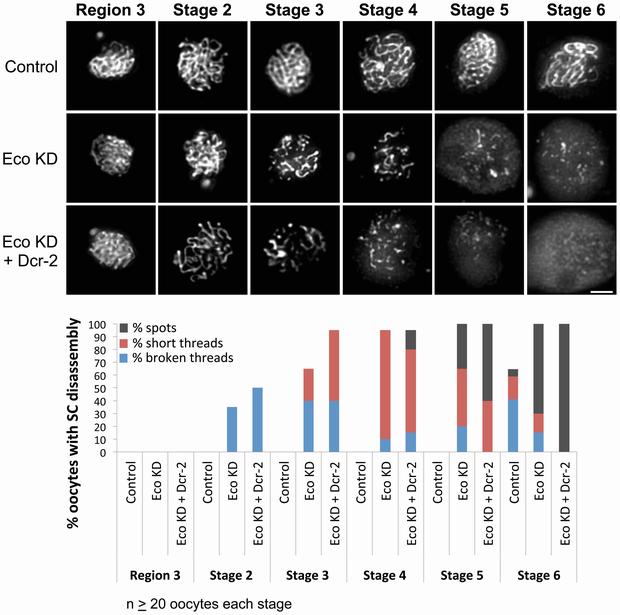
As women age, so do their eggs and during a woman's 30s, the chance that she will conceive a Down syndrome fetus increases dramatically. Most such pregnancies arise from mistakes in a process called meiosis, a specialized cell division that creates gametes, or sex cells (sperm and eggs). Mistakes in meiosis can lead to gametes with the wrong number of chromosomes, which can cause Down syndrome.

Concerns about kidney transplantation are very high among kidney failure patients, particularly older adults and women, but why?

There are thousands of patients with kidney failure who lack access to kidney transplantation, and disparities persist in terms of race, age, sex, and other patient characteristics.  That gets a lot of attention but what gets less mention is those disparities are in large part self-created.

To improve access, it's important to understand the sources of the disparities. Are patients unaware of transplantation and clinicians don't explain it, clinicians don't give referrals, or are patient concerns causing them to avoid transplantation despite appropriate referrals?

Researchers have revealed an unusual biochemical connection: ft (Fat) genes interact directly with mitochondria in cells.

Mitochondria are the primary sources of energy production within our cells and there are some 200 pathologies linked to mitochondrial dysfunction.