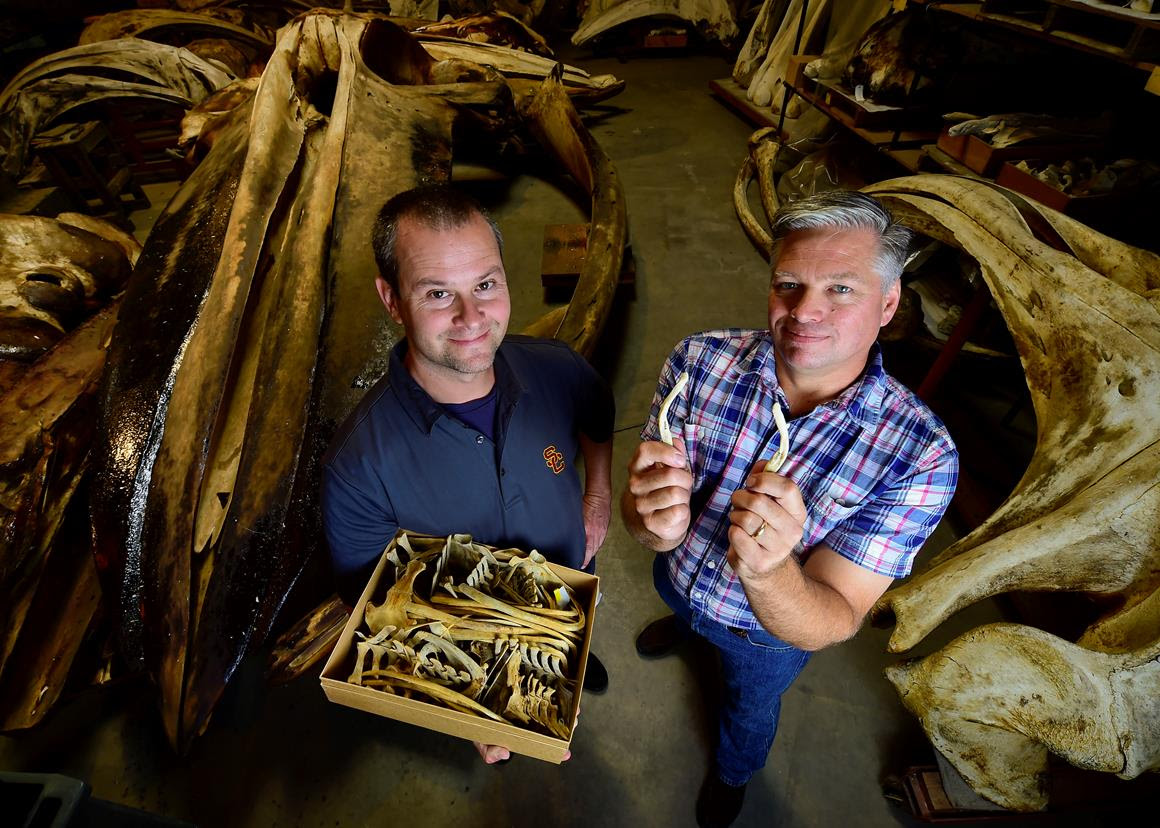
New whale research has turned a long-accepted evolutionary assumption on its...hips. Instead of being just vestigial, whale pelvic bones play a key role in reproduction, according to a new study.
Both whales and dolphins have pelvic (hip) bones, evolutionary remnants from when their ancestors walked on land more than 40 million years ago. Common wisdom has long held that those bones are simply vestigial, slowly withering away like tailbones have in humans. But a new paper by USC and the Natural History Museum of Los Angeles County finds that not only do those pelvic bones serve a purpose – but their size and possibly shape are influenced by the forces of sexual selection.
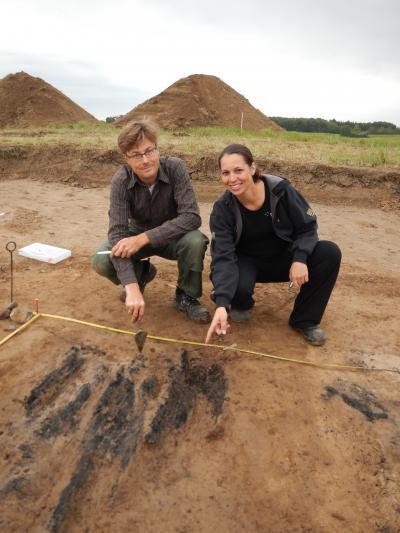
South of Copenhagen, Danish archaeologists have done something that has not happened in over 60 years - they have found a previously undiscovered Viking fortress.
It will be a surprise to most that Vikings built fortresses at all - they were the people that caused everyone else to build fortresses, who was dangerous enough to raid them? Their fellow berserkers and pirates, of course.
Using new, precise laser measurements of the landscape out curator Nanna Holm of
Nanna Holm of The Danish Castle Centre
on the trail of the fortress. An almost invisible rise in the field was proved by new measurements to have a clear circular outline.
In the search for enzymes that can break lignocellulose down into biofuel sugars under the extreme conditions of a refinery, researchers are investigating new ways to release plant sugars from lignin for the production of liquid transportation fuels. Sugars can be fermented into fuels once the woody matter comprised of cellulose, hemicellulose, and lignin is broken down, but lignocellulose is tough.
For various chemical reasons, all of which add up to cost-competitiveness, biorefineries could benefit if the production of biofuels from lignocellulosic biomass is carried out at temperatures between 65 and 70 degrees Celsius.
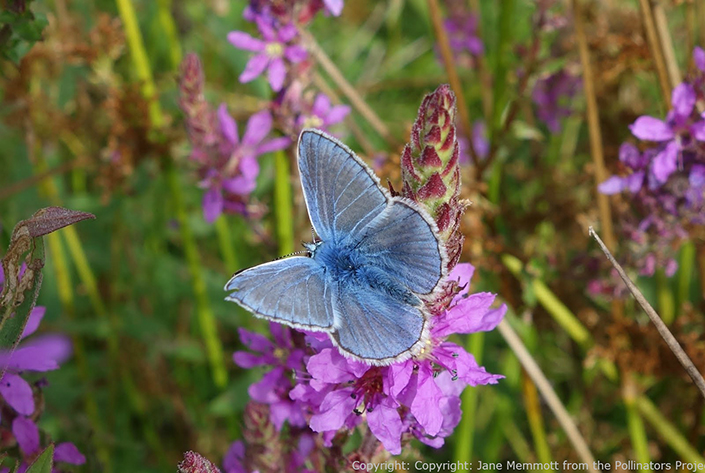
The Common Blue butterfly is a pollinator that plays a vital role in maintaining food supplies but it is struggling in the UK countryside.
While environmental fundraising corporations try to spin bee numbers to create concern among the public about modern neonicotinoid pesticides, what gets no attention is that 98% of the country's flower-rich meadows have been lost since the end of the Second World War.
Yet apples, strawberries, raspberries, beans and tomatoes are all reliant on insect pollinators like butterflies. Globally, crop pollination services are estimated to be worth $153 billion per year. Understanding the influences that the landscape and other environmental factors can have on our pollinators is therefore of huge importance.
While use of well-established medicine has declined among rich, liberal elites in America's wealthiest, most educated states, untested and sometimes dangerous herbal dietary supplement sales in the United States rose to $6,000,000,000 - an increase of 7.9% over 2013.
As expected, sales in "natural" food stores were strongest, rising by 8.8%, but even regular food and drug stores had a 7.7% over 2012 sales, reflecting a growing distrust of science among the organic and alternative medicine communities.
Enrollment in a randomized Phase II clinical trial of Pracinostat in combination with azacitidine in patients with previously untreated intermediate-2 or high-risk myelodysplastic syndrome (MDS) has been completed. The multi-center, placebo-controlled, double-blind study enrolled a total of 108 patients with a one-to-one randomization.
The Company plans to unblind the study approximately six months after the last patient was enrolled and report topline data in Q1 2015.


 Here's Where Your Backyard Was 300 Million Years Ago
 Convergent Evolution Cheat Sheet Now 120 Million Years Old
 Synchrotron Could Shed Light On Exotic Dark Photons
 The Pain Scale Is Broken But This May Fix It