Banner
Here's Where Your Backyard Was 300 Million Years Ago

We may use terms like "grounded" and terra firma to mean stability and consistency but geology...

Convergent Evolution Cheat Sheet Now 120 Million Years Old

One tenet of natural selection is a random walk of genes but nature may be more predictable than...

Synchrotron Could Shed Light On Exotic Dark Photons

There are many hypothetical particles proposed to explain dark matter and one idea to explore how...

The Pain Scale Is Broken But This May Fix It

Chronic pain is reported by over 20 percent of the global population but there is no scientific...

User picture.
News StaffRSS Feed of this column.

News Releases From All Over The World, Right To You... Read More »

Blogroll

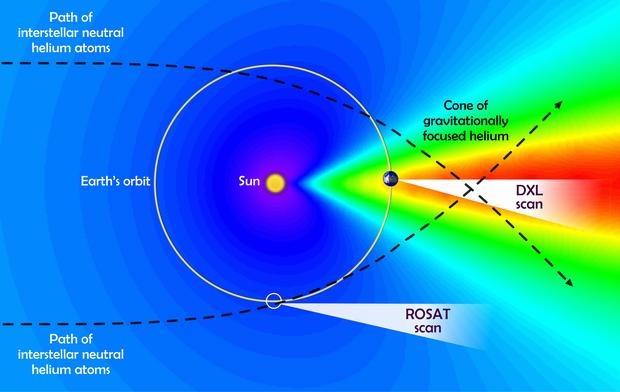
New findings have resolved a decades-old puzzle about a fog of low-energy X-rays observed over the entire sky. Thanks to refurbished detectors first flown on a NASA sounding rocket in the 1970s, astronomers have now confirmed the long-held suspicion that much of this glow stems from a region of million-degree interstellar plasma known as the local hot bubble, or LHB. 

At the same time, the study also establishes upper limits on the amount of low-energy, or soft, X-rays produced within our planetary system by the solar wind, a gusty outflow of charged particles emanating from the sun. 

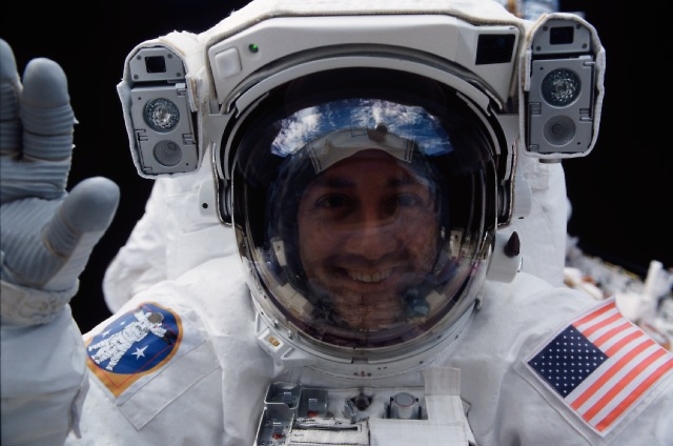
Mission Accomplished. Now it's time to go back home.

After two space shuttle missions and almost two decades, astronaut Mike Massimino has left NASA for Columbia University in New York. During the final servicing mission of the Hubble Space Telescope in 2009, Massimino became the first astronaut to tweet from space, and he now has nearly 1.3 million followers.

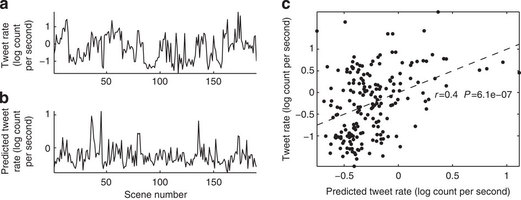
Marketing experts have long wanted a reliable method of forecasting responses to products and messages.

A study that analyzed the brain responses of 16 individuals says even a few people can be a remarkably strong predictor of the preferences of large TV audiences, up to 90 percent in the case of Super Bowl commercials.

This is far superior to the wobbly claims made by psychology surveys. 

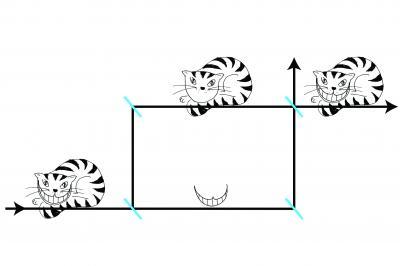
In Lewis Caroll's novel "Alice in Wonderland", the Cheshire Cat could disappear but its grin remained.  Why? Who knows? Like dogs named Checkers and Esther Williams swimming pools, things don't always make sense. Scientifically, that cat was an object separated from its properties - it was a quantum cat.

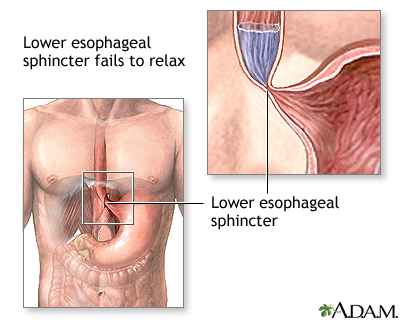
Achalasia is a rare disease, affecting 1 in 100,000 people, characterized by a loss of nerve cells in the esophageal wall and manifested as chest pain during eating, weight loss, and regurgitation of food.

When we swallow, a sphincter in the lower esophagus opens, allowing food to enter the stomach. Nerve cells in the esophageal wall control the opening and closing of this sphincter, but in people with achalasia, these nerve cells gradually disappear. Without these cells, the esophageal sphincter fails to relax, causing food to accumulate in the esophagus. This results in the swallowing problems, regurgitation, vomiting, nighttime coughing, chest pain and weight loss. 

Two new papers postulate that there will be a water crisis by 2040. Not because of population, but because of current energy and power solutions.  And they believe solar and wind power is the only answer.

 In most countries, electricity is the biggest source of water consumption because the power plants need cooling cycles in order to function and that is why the scholars from Aarhus University in Denmark, Vermont Law School and CNA Corporation, a federally-funded research center for the United States Navy and Marine Corps, advocate solar and wind energy over existing technology.


Credit: Aarhus University