Banner
Here's Where Your Backyard Was 300 Million Years Ago

We may use terms like "grounded" and terra firma to mean stability and consistency but geology...

Convergent Evolution Cheat Sheet Now 120 Million Years Old

One tenet of natural selection is a random walk of genes but nature may be more predictable than...

Synchrotron Could Shed Light On Exotic Dark Photons

There are many hypothetical particles proposed to explain dark matter and one idea to explore how...

The Pain Scale Is Broken But This May Fix It

Chronic pain is reported by over 20 percent of the global population but there is no scientific...

User picture.
News StaffRSS Feed of this column.

News Releases From All Over The World, Right To You... Read More »

Blogroll

A new congressionally mandated report from the National Research Council has found that changes EPA has proposed and implemented into its Integrated Risk Information System (IRIS) process are "substantial improvements"  over its old system.

IRIS is used to assess the hazards posed by environmental contaminants but has been rather sporadically followed in the past. A court had to order the EPA to stop blaming fracking for problems without doing a study and the agency has had to defend itself against charges of 'secret' science in determining greenhouse gas policy.

While acknowledging the progress made to date, the report offers further guidance and recommendations to improve the overall scientific and technical validity of the program.

ITHACA, N.Y. – Coffee drinkers, rejoice! Aside from java's energy jolt, food scientists say you may reap another health benefit from a daily cup of joe: prevention of deteriorating eyesight and possible blindness from retinal degeneration due to glaucoma, aging and diabetes.

Raw coffee is, on average, just 1 percent caffeine, but it contains 7 to 9 percent chlorogenic acid, a strong antioxidant that prevents retinal degeneration in mice, according to a Cornell study published in the Journal of Agricultural and Food Chemistry.

You can't open a newspaper without reading about how many people are on welfare in America now. The government is even on a recruitment drive to get more people on benefits, and looking for ways to get them buying organic food too.

That shows a whole lot more money is helping better-off families rather than the very poorest.

Robert A. Moffitt, Professor of Economics at the Johns Hopkins University, notes that the United States is spending 74 percent more in inflation-adjusted dollars on welfare programs in 2007 than in 1975 but the 2.5 million single parent families with the absolute lowest levels of earnings, aid dropped 35 percent between 1983 and 2004. During that same period, aid rose 74 percent for those earning slightly more.

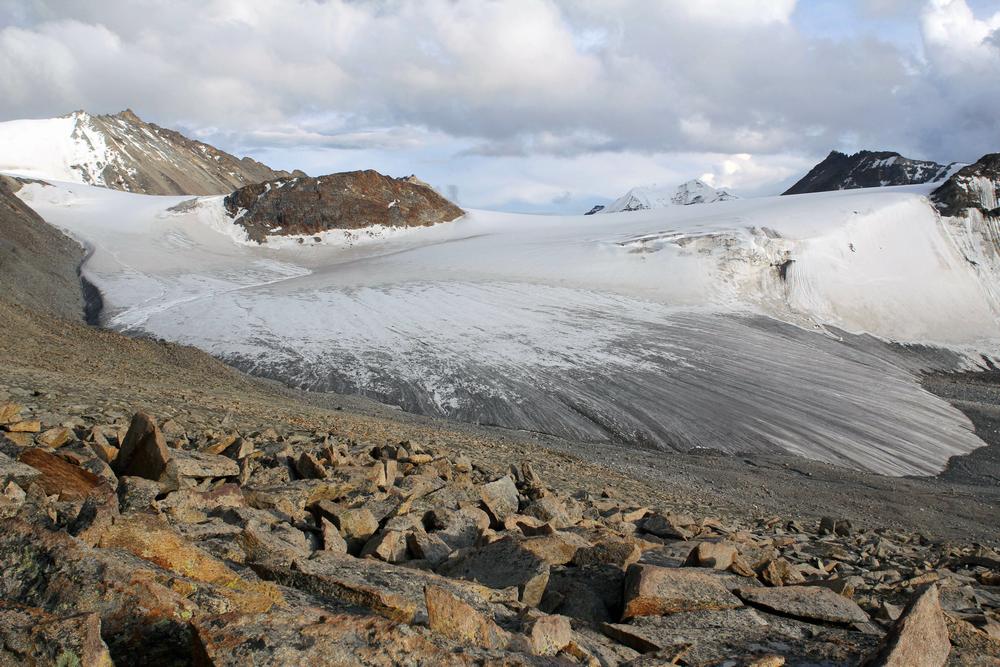
We know some glaciers are growing and we know some glaciers are receding. What we did not know until recently is how many glaciers there are, where they are, and what their extents and volumes are.

That has changed - for the first time reliable calculations of the future development of glaciers and their contributions to regional hydrology and global sea-level rise can be derived from an accurate measurement.

The international team mapped all of the world’s glaciers so all glaciologists can study the impacts of a changing climate on glaciers worldwide, and determine their total extent and volume on a glacier-by-glacier basis. Overall, glaciers cover an area of about 730,000 km2 and have a volume of about 170,000 km3.

Why do we yawn? It's unclear. One hypothesis is that yawning helps to increase the oxygen supply but there no association between yawning and blood oxygen levels has been found.

Psychologists now have a different notion - that yawning cools the brain.

It isn't just U.S. Secretary of State John Kerry insulting Jewish people, the whole world harassed, threatened and used abusive language toward Jews on an individual basis more in 2013.

But there was a silver lining; a 20% decline in violent incidents against Jews.

The annual report by Tel Aviv University's Kantor Center for the Study of Contemporary European Jewry and the Moshe Kantor Database for the Study of Contemporary Antisemitism and Racism, in cooperation with the European Jewish Congress, highlighted the "severe escalation in anti-Jewish atmosphere," borne out by daily attacks on individuals who reported feeling that their personal safety and communal well-being were jeopardized.