Last month, we were treated to the biggest solar storm since 2005, generating some of the most dazzling northern lights in recent memory. The source of that storm, and others like it, was the sun's magnetic field, described by invisible field lines that protrude from and loop back into the burning ball of gas. Sometimes these field lines break—snapping like a rubber band pulled too tight—and join with other nearby lines, releasing energy that can then launch bursts of plasma known as solar flares. Huge chunks of plasma from the sun's surface can hurtle toward Earth and damage orbiting satellites or bump them off their paths.
A recent study by University of Alberta researchers Elena Nicoladis and Cassandra Foursha-Stevenson in the Journal of Cross-Cultural Psychology wanted to see whether speaking French (being bilingual) influenced how children assigned gender to objects. It yielded some interesting observations, like that in the unilingual crowd, more cows are boys and cats are girls.
A train is heading toward five people who can't escape its path and only you are close enough to do anything. You can reroute the train onto different tracks with only one person along that route.
Would you do it?
A team of Michigan State University researchers recently put participants in a 3-D setting and gave them the power to kill one person (in this case, a realistic digital character) to save five. The results of the moral dilemma? About what you would expect. 90 percent of the participants pulled a switch to reroute the boxcar, affirming that people are okay to take a direct hand in killing someone if it saves a lot more, even if they are against killing people.
It's Valentine's Day and the wonders of nature are getting in on the act. Luckily, ESA was there to capture the memories.
Here, for your enjoyment, are the numerous ways the cosmos and the Earth hearts you. If you want to see their slideshow with music, go here. If you want all of the science of Valentine's Day, go here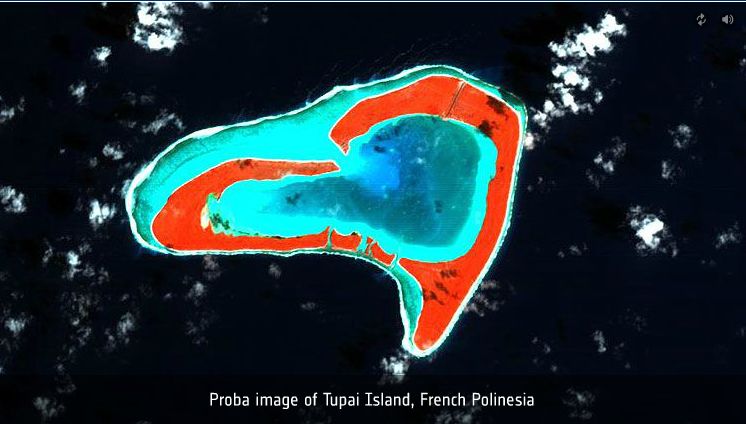
In August of 2011, Hurricane Irene hit the Caribbean and and then traveled up parts of the eastern United States, bringing widespread wreckage in some places and, thanks to threatening midtown Manhattan, even more media coverage. The Category 3 storm whipped up water levels, generating storm surges that swept over seawalls and flooded seaside and inland communities. Some hurricane analysts suggested that Irene was a “100-year event”: a storm that only comes around once in a century.


 Pilot Study: Fibromyalgia Fatigue Improved By TENS Therapy
 High Meat Consumption Linked To Lower Dementia Risk
 Long Before The Inca Colonized Peru, Natives Had A Thriving Trade Network
 Mesolithic People Had Meals With More Tradition Than You Thought










