Banner
Pilot Study: Fibromyalgia Fatigue Improved By TENS Therapy

Fibromyalgia is the term for a poorly-understood condition where people experience pain and fatigue...

High Meat Consumption Linked To Lower Dementia Risk

Older people who eat large amounts of meat have a lower risk of dementia and cognitive decline...

Long Before The Inca Colonized Peru, Natives Had A Thriving Trade Network

A new DNA analysis reveals that long before the Incan Empire took over Peru, animals were...

Mesolithic People Had Meals With More Tradition Than You Thought

The common imagery of prehistoric people is either rooting through dirt for grubs and picking berries...

User picture.
News StaffRSS Feed of this column.

News Releases From All Over The World, Right To You... Read More »

Blogroll

If you put 'genomics' on the end of a word, you can gain instant credibility, so it makes sense that someone would come up with 'nutrigenomics' and say they can make a diet that corresponds to your genetic profile.

It's tough to know what they mean by 'genetic profile' though obviously some people have a different metabolism than other so they can eat more.   A customized diet consisting of 'eat fewer calories' wouldn't seem to require genomics.   But 'nutrigenomics', they say, is something better because it aims to identify the genetic factors that influence the body's response to diet and studies how the bioactive constituents of food affect gene expression.

In a recently conducted study, a multidisciplinary French-American research team reported that Neanderthal extinction was principally a result of competition with Cro-Magnon populations, rather than the consequences of climate change. 
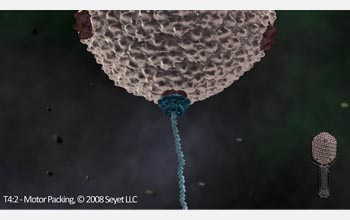
Peering at structures only atoms across, researchers writing in Cell have identified the clockwork that drives a powerful virus nanomotor.   Bonus:  Because of the motor's strength - to scale, it is twice that of an automobile - the new findings could also inspire engineers designing sophisticated nanomachines.

But back on viruses, because a number of virus types may possess a similar motor, including the virus that causes herpes, the results may also assist pharmaceutical companies developing methods to sabotage virus machinery.
Image Fortress today announced that it has launched the International Space Archives, an online digital library, organizing the vast collections of still and video imagery produced by the manned and unmanned space programs of the world.

Over the past fifty years, the space programs in the United States and other countries have amassed extensive volumes of still and motion picture photography that has been largely inaccessible to the public. The International Space Archives has been designed to make this incredible collection of imagery available to a worldwide audience.
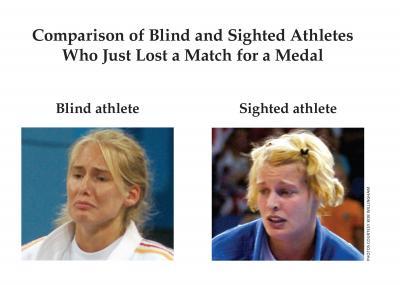
Facial expressions of emotion are hardwired into our genes, according to a study published today in the Journal of Personality and Social Psychology. The research suggests that facial expressions of emotion are innate rather than a product of cultural learning. The study is the first of its kind to demonstrate that sighted and blind individuals use the same facial expressions, producing the same facial muscle movements in response to specific emotional stimuli. 

The study also provides new insight into how humans manage emotional displays according to social context, suggesting that the ability to regulate emotional expressions is not learned through observation. 
New research in an animal model suggests that a diet high in inorganic phosphates, which are found in a variety of processed foods including meats, cheeses, beverages, and bakery products, might speed growth of lung cancer tumors and may even contribute to the development of those tumors in individuals predisposed to the disease.

The study also suggests that dietary regulation of inorganic phosphates may play an important role in lung cancer treatment. The research, using a mouse model, was conducted by Myung-Haing Cho, D.V.M., Ph.D., and his colleagues at Seoul National University, appears in the first issue for January of the American Journal of Respiratory and Critical Care Medicine, published by the American Thoracic Society.