Banner
Pilot Study: Fibromyalgia Fatigue Improved By TENS Therapy

Fibromyalgia is the term for a poorly-understood condition where people experience pain and fatigue...

High Meat Consumption Linked To Lower Dementia Risk

Older people who eat large amounts of meat have a lower risk of dementia and cognitive decline...

Long Before The Inca Colonized Peru, Natives Had A Thriving Trade Network

A new DNA analysis reveals that long before the Incan Empire took over Peru, animals were...

Mesolithic People Had Meals With More Tradition Than You Thought

The common imagery of prehistoric people is either rooting through dirt for grubs and picking berries...

User picture.
News StaffRSS Feed of this column.

News Releases From All Over The World, Right To You... Read More »

Blogroll

Research by dating site FreeDating.co.uk found that 36% of women would end a relationship over an 'inadequate' Christmas gift.  This was particularly the case when the present was the latest in a series of disappointing let-downs within the relationship.

Examples of gifts which were deemed inadequate included cooking utensils, cleaning products, and a sticky tape dispenser.   Generally speaking, it seems common sense to think that devices meant to cook for a significant other or clean the house would be a bad idea - but that's why science studies are needed.

A team of scientists from the University of Cambridge and the University of Cukurova in Turkey have taken a major step to understanding how the brain controls the onset of puberty. 

The research, published in this week's Nature Genetics, identified the hormone Neurokinin B as a critical part of the control system that switches on the master regulator of human puberty. Although Neurokinin B was previously known to be present in the hypothalamus, the part of the brain that controls puberty, its key role was not previously appreciated.
Researchers have discovered that the ocean's chemical makeup is less stable and more greatly affected by climate change than previously believed. The researchers report in Science that during a time of climate change 13 million years ago the chemical makeup of the oceans changed dramatically. The researchers warn that the chemical composition of the ocean today could be similarly affected by climate changes now underway – with potentially far-reaching consequences for marine ecosystems. 
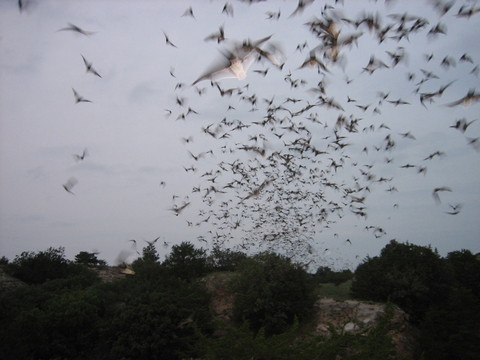
Annemarie Surlykke from the University of Southern Denmark is fascinated by echolocation. She really wants to know how it works. Surlykke equates the ultrasound cries that bats use for echolocation with the beam of light from a torch: you won't see much with the light from a small bulb but you could see several hundred metres with a powerful beam.
During the last 20 years, the prevalence of obesity in Germany has increased by 39% in men and 21.2% in women.

The population of the federal state of Saxony-Anhalt most often suffers from obesity and has the greatest waist circumference, followed by Brandenburg. Hans Hauner of Munich Technical University and his coauthors have performed a study of the regional differences in prevalence in general medical care. Their results are reported in the current edition of Deutsches Ärzteblatt International.
Polar lows are small-scale storms that occur in the oceans of the high latitudes and are comparable to a tropical cyclone. The strong winds they produce are rightly feared by seamen. In the course of the last century, North Atlantic polar lows caused 56 shipwrecks with a total of 342 people lost at sea.

Although polar lows do not always produce winds of hurricane force, they are particularly treacherous to shipping because they can develop very suddenly and, on account of their small diameter of only a few hundred kilometres, are very difficult to predict.

Similarly, the lack of meteorological stations in the polar regions further compounds the difficulties of forecasting and documenting these weather systems.