Banner
Pilot Study: Fibromyalgia Fatigue Improved By TENS Therapy

Fibromyalgia is the term for a poorly-understood condition where people experience pain and fatigue...

High Meat Consumption Linked To Lower Dementia Risk

Older people who eat large amounts of meat have a lower risk of dementia and cognitive decline...

Long Before The Inca Colonized Peru, Natives Had A Thriving Trade Network

A new DNA analysis reveals that long before the Incan Empire took over Peru, animals were...

Mesolithic People Had Meals With More Tradition Than You Thought

The common imagery of prehistoric people is either rooting through dirt for grubs and picking berries...

User picture.
News StaffRSS Feed of this column.

News Releases From All Over The World, Right To You... Read More »

Blogroll
Petroleum is the feedstock for many products in the chemical industry but it is becoming increasingly expensive.  Renewable raw materials are an alternative but we quickly learned that, despite the beliefs of activists in the 1980s and 1990s, fuel from food was not a good idea.

Thanks to white industrial biotechnology, chemical substances can also be derived from waste products generated by the food industry, leftover biomass from agriculture and forestry, and residual materials. Researchers of the Fraunhofer Institute for Interfacial Engineering and Biotechnology IGB in Stuttgart are demonstrating how this biotechnical recycling works, using colza, whey and crab shells as examples.
It sounds like a science fiction movie: A killer contagion threatens the Earth, but scientists save the day with a designer drug that forces the virus to mutate itself out of existence. The killer disease? Still a fiction. The drug? It could become a reality thanks to a new study by Rice University bioengineers.

The study, which is available online and slated for publication in the journal Physical Review E, offers the most comprehensive mathematical analysis to date of the mechanisms that drive evolution in viruses and bacteria. Rather than focusing solely on random genetic mutations, as past analyses have, the study predicts exactly how evolution is affected by the exchange of entire genes and sets of genes.

Children with heart defects may someday receive perfectly-matched new heart valves built using stem cells from their umbilical cord blood, according to research presented at the American Heart Association's Scientific Sessions 2008.

When infants are born with malfunctioning heart valves that can't be surgically repaired, they rely on replacements from animal tissue, compatible human organ donations or artificial materials. These replacements are lifesaving, but don't grow and change shape as a child develops; so two or more surgeries may be needed to replace outgrown valves. The animal tissue may also stiffen over time as well and be less durable than a normal human valve.

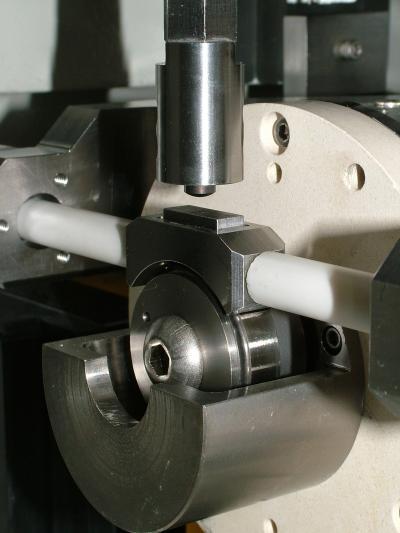
We rarely think about the electricity impact of something like a conveyor belt at an airport.   When our luggage goes on , or we step on one, numerous gears with ball- and slide-bearings go to work.

The power consumption is tremendous, in the range of several gigawatt hours per annum. A substantial amount of this is lost through friction. In wind turbines and in cars, too, a percentage of the energy is spent on friction – reducing the efficiency factor accordingly. Novel lubricants that almost eliminate the effect of friction could be the answer. Once they have been set in motion, the bearings run and run and run.
About 10 million people in the United States alone—from troops returning from war to students with music blasting through headphones—are suffering from impairing noise-induced hearing loss. 

The rising trend is something that researchers and physicians at the University of Michigan Kresge Hearing Research Institute are hoping to reverse, with a cocktail of vitamins and the mineral magnesium that has shown promise as a possible way to prevent hearing loss caused by loud noises. The nutrients were successful in laboratory tests, and now researchers are testing whether humans will benefit as well.
Ewing sarcoma is the second most common type of primary bone cancer seen in children and young adults. Patients with relapsed or refractory Ewing sarcoma have a poor outcome with conventional therapies.

Cytarabine decreases the levels of a certain key protein in Ewing sarcoma cells and has demonstrated preclinical activity against Ewing sarcoma cell lines in the laboratory.   A new study published in Pediatric Blood&Cancer evaluated a phase II clinical trial of a potential new treatment approach for relapsed Ewing sarcoma using cytarabine.