Banner
Pilot Study: Fibromyalgia Fatigue Improved By TENS Therapy

Fibromyalgia is the term for a poorly-understood condition where people experience pain and fatigue...

High Meat Consumption Linked To Lower Dementia Risk

Older people who eat large amounts of meat have a lower risk of dementia and cognitive decline...

Long Before The Inca Colonized Peru, Natives Had A Thriving Trade Network

A new DNA analysis reveals that long before the Incan Empire took over Peru, animals were...

Mesolithic People Had Meals With More Tradition Than You Thought

The common imagery of prehistoric people is either rooting through dirt for grubs and picking berries...

User picture.
News StaffRSS Feed of this column.

News Releases From All Over The World, Right To You... Read More »

Blogroll
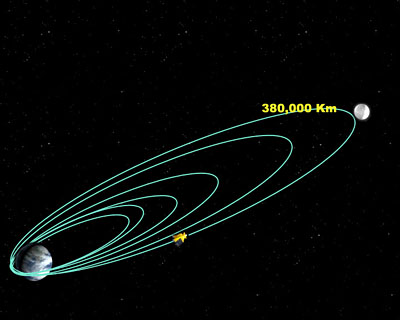
Yesterday, following a fifth orbit-raising maneuver, the Chandrayaan-1 spacecraft successfully settled into a trajectory that will take it to the Moon.  After launch on 22 October, the spacecraft was first injected into an elliptical 7-hr orbit around Earth, between 255 km and 22 860 km above our planet. After five engine firings, Chandrayaan-1 spiralled outwards in increasingly elongated ellipses around Earth, until it reached its lunar transfer orbit on 4 November at 00:26 CET (04:56 Indian standard time).  

In the fifth and last orbit-raising maneuver, the spacecraft’s 440 Newton liquid-fuel propelled engine was fired for about two and a half minutes. The lunar transfer orbit’s farthest point from Earth is about 380 000 km. 
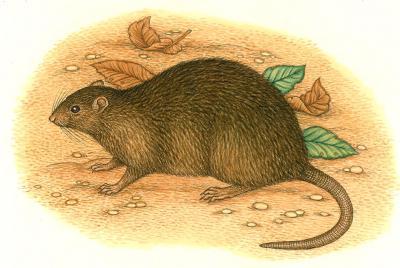
It took less than a decade for native rats to become extinct on the Indian Ocean's previously uninhabited Christmas Island once Eurasian black rats jumped ship onto the island at the turn of the 20th century.

But this story is more than the typical tale of direct competition: according to new genetic research published in PLoS One, black rats carried a pathogen that exterminated two endemic species, Rattus macleari and R. nativitatis. This study is the first to demonstrate extinction in a mammal because of disease, supporting the hypothesis proposed a decade ago that "hyperdisease conditions"—unusually rapid mortality from which a species never recovers—can lead to extinction. 
Any time science  terms become colloquial, it leads to problems.    How often does someone make a speculation and call it a 'theory'?   Cars supposedly 'evolve' if their advertising is true.    And 'junk DNA' means 'useless' if you ask many outside biology.   

But 'junk' DNA does not mean 'no value' and a new paper published in Genome Research on Nov. 4 reaffirm that.  Scientists at the Genome Institute of Singapore (GIS) report that what was previously believed to be "junk" DNA is one of the important ingredients distinguishing humans from other species.
It seems that our brain can correct speech errors in the same way that it controls other forms of behavior, say Niels Schiller and Lesya Ganushchak, Netherlands Organisation for Scientific Research (NWO) researchers in Leiden who made this discovery while studying how the brain reacts to verbal errors. This research can contribute to improvements in the treatment of people who have problems with speaking or in understanding language. 
The Instituto Madrileño de Estudios Avanzados en Nanociencia (IMDEA Nanoscience) and the University of Hamburg have collaborated on the development of composite materials based on semiconductor nanoparticles and carbon nanotubes as functional materials for efficient light emitting diodes and photovoltaic devices. 

Semiconductor nanocrystals, also called quantum dots, exhibit outstanding optical properties compared to organic dyes commonly used in research today.
In the near future it will be possible to customize the food we eat  based on the genetic profile of the individual. Dutch researcher Amber Ronteltap suggests that the consumer market is not yet ready for this so-called nutrigenomics. Ronteltap concludes that many obstacles must be overcome before products based on nutrigenomics become a reality. 

Nutrigenomics is a discipline that investigates the correlation between nutrients and the human genome. This area of science can contribute to public health and disease prevention by providing individuals with advice on specific adaptations in their nutrient regime. This form of personalised nutrition joins the bandwagon of broader marketing trends to develop products more tailored to the individual.