Banner
Pilot Study: Fibromyalgia Fatigue Improved By TENS Therapy

Fibromyalgia is the term for a poorly-understood condition where people experience pain and fatigue...

High Meat Consumption Linked To Lower Dementia Risk

Older people who eat large amounts of meat have a lower risk of dementia and cognitive decline...

Long Before The Inca Colonized Peru, Natives Had A Thriving Trade Network

A new DNA analysis reveals that long before the Incan Empire took over Peru, animals were...

Mesolithic People Had Meals With More Tradition Than You Thought

The common imagery of prehistoric people is either rooting through dirt for grubs and picking berries...

User picture.
News StaffRSS Feed of this column.

News Releases From All Over The World, Right To You... Read More »

Blogroll

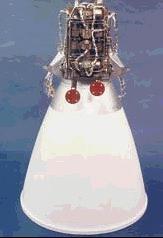
Engineers from NASA and Pratt & Whitney Rocketdyne successfully completed a series of hot-fire altitude tests using liquid methane on the RS-18 engine, which was last used to lift astronauts off the moon's surface 36 years ago and was originally flown with storable hypergolic propellants during the Apollo moon missions.

The tests, conducted at White Sands test facility in New Mexico, are part of the technology development for NASA's Constellation program, and gathered important data on ignition, performance measurement, and rapid start and stop.

The RS-18 engine has been modified to burn liquid oxygen and liquid methane, providing increased safety and performance to future space vehicles.

Almost 60% of British women use at least one herbal product during pregnancy, research launched at the British Pharmaceutical Conference (BPC) in Manchester has revealed.

In the first UK study of its kind, pharmacy researchers from the University of East Anglia found that despite the popularity of herbal products, almost half (49%) of the pregnant women were uncertain about the safety of the preparations and took them on the recommendation of family or friends rather than a healthcare professional.

Bats' ability to echolocate may have evolved more than once, according to research published this week by Queen Mary, University of London scientists.

Species of bat with the ability to echolocate do not all group together in the evolutionary tree of life - some are more related to their non-echolocating cousins, the fruit bats. This has raised the question of whether echolocation in bats has evolved more than once, or whether the fruit bats somehow lost their ability to echolocate.

Mammalian fatty acid synthase is one of the most complex molecular synthetic machines in human cells. It is also a promising target for the development of anti-cancer and anti-obesity drugs and the treatment of metabolic disorders. Now researchers at ETH Zurich have determined the atomic structure of a mammalian fatty acid synthase. Their results have just been published in Science magazine.

Synthesis of fatty acids is a central cellular process that has been studied for many decades. Fatty acids are used in the cell as energy storage compounds, messenger molecules and building blocks for the cellular envelope. Until now, individual steps of this process have been investigated using isolated bacterial enzymes. However, in higher organisms – except plants – fatty acid synthesis is catalyzed by large multifunctional proteins where many individual enzymes are brought together to form a "molecular assembly line".

Basil can protect against the harmful effects of ageing, according to research presented at the British Pharmaceutical Conference (BPC) in Manchester.

Holy basil, (Latin name Ocimum sanctum), is a close relative of the herb commonly used in Western cooking. Native to India, its extract has long been used in the ancient system of Ayurvedic medicine practiced in India and other parts of Asia as a rejuvenation drug, to promote a youthful state of physical and mental health.

In the first formal study of the herb, pharmacy researchers found that holy basil extract was effective at actively searching for and eliminating harmful molecules and protecting against damage caused by some free radicals in key organs such as the heart, liver and brain.

Ramadan is a Muslim religious observance in which participants do not eat or drink anything from dawn until sunset.

Researchers from the departments of Department of Nutrition and Bromatology and Department of Chemistry-Physics of the University of Granada have carried out a study in which they have revealed the need of counterbalancing the diet of the population who follow Ramadan.

According to the collected data, in this period of time macronutrient consumption levels are not appropriate if compared with the reference recommendations. The number of daily ingestions drops to 2 or 3, with regard to the 4 or 5 ingestions of the rest of the population in this period. In addition, scientists have established that, because of the diet, corporal fat increases and muscular mass falls.