Banner
Pilot Study: Fibromyalgia Fatigue Improved By TENS Therapy

Fibromyalgia is the term for a poorly-understood condition where people experience pain and fatigue...

High Meat Consumption Linked To Lower Dementia Risk

Older people who eat large amounts of meat have a lower risk of dementia and cognitive decline...

Long Before The Inca Colonized Peru, Natives Had A Thriving Trade Network

A new DNA analysis reveals that long before the Incan Empire took over Peru, animals were...

Mesolithic People Had Meals With More Tradition Than You Thought

The common imagery of prehistoric people is either rooting through dirt for grubs and picking berries...

User picture.
News StaffRSS Feed of this column.

News Releases From All Over The World, Right To You... Read More »

Blogroll

A new approach to estimating tumor growth based on breast screening results from almost 400,000 women is published today in Breast Cancer Research. This new model can also estimate the proportion of breast cancers which are detected at screening (screen test sensitivity). It provides a new approach to simultaneously estimating the growth rate of breast cancer and the ability of mammography screening to detect tumors.

The results of the study show that tumor growth rates vary considerably among patients, with generally slower growth rates with increasing age at diagnosis. Understanding how tumours grow is important in the planning and evaluation of screening programs, clinical trials, and epidemiological studies. However, studies of tumour growth rates in people have so far been based mainly on small and selected samples.

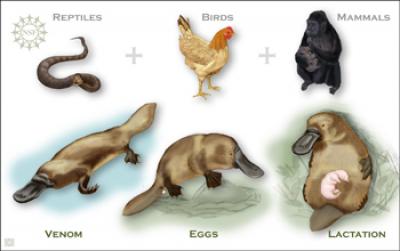
The first genome sequencing project of a mammal that lays eggs is complete and, like the animal itself, the DNA of the platypus is something of a patchwork.

The platypus, found in eastern Australia, including Tasmania, is one of the five species of mammals that lay eggs instead of giving birth to live young. The four species of echidna are the other mamimals that share this distinction.

The curious discovery of the duck-billed, egg-laying, otter-footed, beaver-tailed, venomous platypus in 1798, comfortable on land and in water, convinced British scientists that it must be a hoax. Sketches of its appearance were thought to be impossible.

But new research proves that the oddness of the platypus' looks isn't just skin-deep. Platypus DNA is an equally cobbled-together array of avian, reptilian and mammalian lineages that may hold clues for human disease prevention.

Rensselaer Polytechnic Institute graduating senior Jeffery Martin has put his basic knowledge of sugars to exceptional use by creating a lab-on-a-chip device that builds complex, highly specialized sugar molecules, mimicking one of the most important cellular structures in the human body - the Golgi Apparatus.

Among the most important and complex molecules in the human body, sugars control not just metabolism but also how cells communicate with one another.

Cells build sugars in a cellular organelle known as the Golgi Apparatus. Under a microscope, the Golgi looks similar to a stack of pancakes. The strange-looking organelle finishes the process of protein synthesis by decorating the proteins with highly specialized arrangements of sugars. The final sugar-coated molecule is then sent out into the cell to aid in cell communication and to help determine the cell’s function in the body.

A group of researchers writing in Geophysical Research Letters have a new theory about Mercury’s mysterious magnetic field - iron “snow” inside the planet that forms and falls toward the center, much like snowflakes form in Earth’s atmosphere and fall to the ground.

Mercury is the closest planet to the sun and the only other terrestrial planet that possesses a global magnetic field. Discovered in the 1970s by NASA’s Mariner 10 spacecraft, Mercury’s magnetic field is about 100 times weaker than Earth’s. Most models cannot account for such a weak magnetic field.

Made mostly of iron, Mercury’s core is also thought to contain sulfur, which lowers the melting point of iron and plays an important role in producing the planet’s magnetic field.

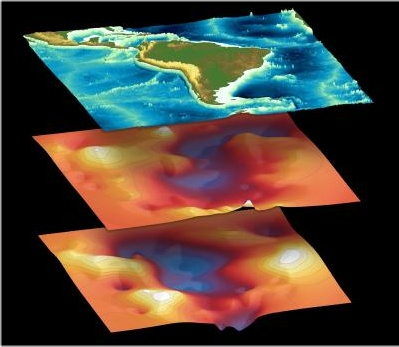
A comparison of recorded Antarctic temperatures and snowfall accumulation to predictions by major computer models of global climate change offer both good and bad news.

The good news is that the numerical models’ predictions covering the last 50 years broadly follow the actual observed temperatures and snowfall for the southernmost continent, although the observations are very variable.

The bad news is that a similar comparison that includes the last 100 years is a poor match. Projections of temperatures and snowfall ranged from 2.5 to five times what they actually were during that period.

St. Jude Children's Research Hospital investigators have found that an electrically powered amplification mechanism in the cochlea of the ear is critical to the acute hearing of humans and other mammals. The findings will enable better understanding of how hearing loss can result from malfunction of this amplification machinery due to genetic mutation or overdose of drugs such as aspirin.

Sound entering the cochlea is detected by the vibration of tiny, hair-like cilia that extend from cochlear hair cells. While the cochlea’s “inner hair cells” are only passive detectors, the so-called “outer hair cells” amplify the sound signal as it transforms into an electrical signal that travels to the brain’s auditory center. Without such amplification, hearing would be far less sensitive, since sound waves entering the cochlea are severely diminished as they pass through the inner ear fluid.