Banner
Here's Where Your Backyard Was 300 Million Years Ago

We may use terms like "grounded" and terra firma to mean stability and consistency but geology...

Convergent Evolution Cheat Sheet Now 120 Million Years Old

One tenet of natural selection is a random walk of genes but nature may be more predictable than...

Synchrotron Could Shed Light On Exotic Dark Photons

There are many hypothetical particles proposed to explain dark matter and one idea to explore how...

The Pain Scale Is Broken But This May Fix It

Chronic pain is reported by over 20 percent of the global population but there is no scientific...

User picture.
News StaffRSS Feed of this column.

News Releases From All Over The World, Right To You... Read More »

Blogroll
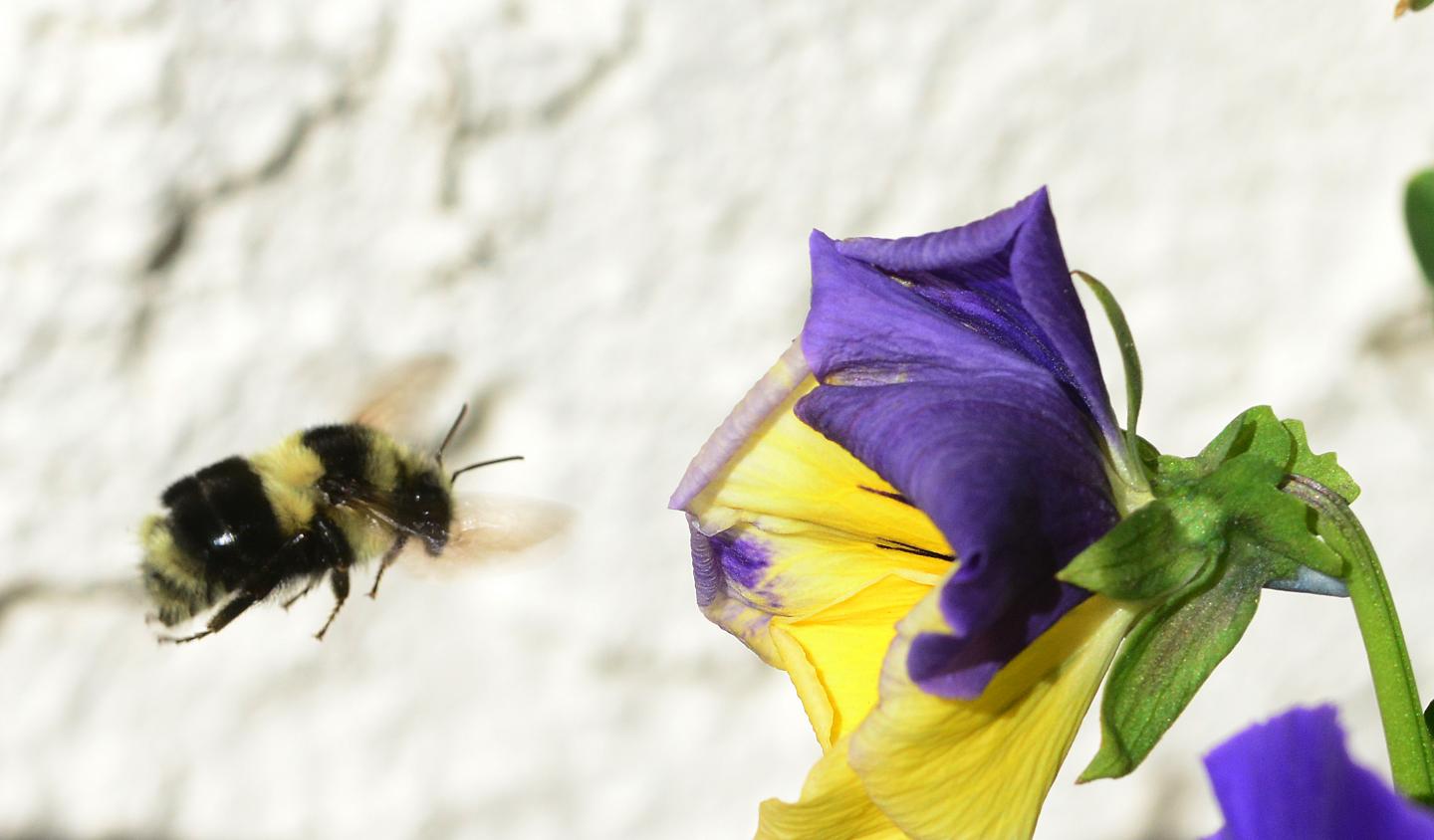
Among all the hype about bee deaths, there is an overwhelming amount of discussion about pesticides and blinders on about parasites and disease and even climate change, but one thing gets no mention at all: Flowers.

But they are a grave danger to bees, according to an article in Proceedings of the Royal Society B.

The study is the first to show that not only can bees disperse parasites around the environment but also that flowers are platforms for a host of pollinator parasites subsequently dispersed onto visiting bees. 

U.S. farmers have long hoped to extend sugarcane's growing range northward from the Gulf coast because it substantially increase the land available for sugar and (for as long as subsidies last) biofuels.

Several hybrid canes developed in the 1980s have proved hardy in cooler climes, surviving overwinter as far north as Booneville, Arkansas, but no one had tested whether
the offspring of crosses between sugarcane and a hardy, cold-tolerant grass, Miscanthus - "miscanes" - actually photosynthesize, and thus continue to grow, when the thermometer dips.

The World Glacier Monitoring Service, which compiles the results of worldwide glacier observations in annual calls-for-data, has compiled such data on glacier changes for more than 120 years.

Now they have published a new analysis of global glacier changes and say observations of the first decade of the 21st century (2001-2010) compared to all available earlier data from in-situ, air-borne, and satellite-borne observations as well as to reconstructions from pictorial and written sources leads them to believe that observed glaciers currently lose between half a meter and one meter of ice thickness every year – this is two to three times more than the corresponding average of the 20th century.

A new paper says protective probiotics could fight the "chytrid" fungus that has been decimating amphibian populations worldwide.

Jenifer Walke, PhD, a postdoctoral researcher at Virginia Tech University, Blacksburg, and collaborators have grown bacterial species from the skin microbiome of four species of amphibians. 

The desire to quit smoking--often considered a requirement for enrolling in treatment programs--is not always necessary to reduce cigarette cravings, argues a review of addiction research. Early evidence suggests that exercises aimed at increasing self-control, such as mindfulness meditation, can decrease the unconscious influences that motivate a person to smoke. 

Scientists are looking to the brain to understand why setting a "quit day" isn't a surefire way to rid oneself of a cigarette habit. Recent neuroimaging studies have shown that smokers have less activity in the brain regions associated with self-control, raising questions around whether targeting these neurobiological circuits could be a way to treat addiction.

A metabolic imbalance caused by radiation from your wireless devices could be the link to a number of health risks, such as various neurodegenerative diseases and cancer, according to a recent review which claims experimental data links metabolic effects of low-intensity radiofrequency radiation and living cells.

This imbalance, also known as oxidative stress, is defined by co-author Dr. Igor Yakymenko as, “an imbalance between the production of reactive oxygen species (ROS) and antioxidant defense.” Yakymenko explains the oxidative stress due to RFR exposure could explain not only cancer, but also other minor disorders such as headache, fatigue, and skin irritation, which could develop after long-term RFR exposure.