Banner
Here's Where Your Backyard Was 300 Million Years Ago

We may use terms like "grounded" and terra firma to mean stability and consistency but geology...

Convergent Evolution Cheat Sheet Now 120 Million Years Old

One tenet of natural selection is a random walk of genes but nature may be more predictable than...

Synchrotron Could Shed Light On Exotic Dark Photons

There are many hypothetical particles proposed to explain dark matter and one idea to explore how...

The Pain Scale Is Broken But This May Fix It

Chronic pain is reported by over 20 percent of the global population but there is no scientific...

User picture.
News StaffRSS Feed of this column.

News Releases From All Over The World, Right To You... Read More »

Blogroll

Each cell in the body contains a whole genome, 3 billion of "letters" known as bases, so the data packed into a few DNA molecules could fill an entire hard drive.

Instead of having one reference genome for study, more and more people are having their DNA sequenced, and that is a truly massive amount of data that will require massive computational and storage capabilities beyond anything previously anticipated, says a new assessment from computational biologists and computer scientists at the University of Illinois and Cold Spring Harbor Laboratory.

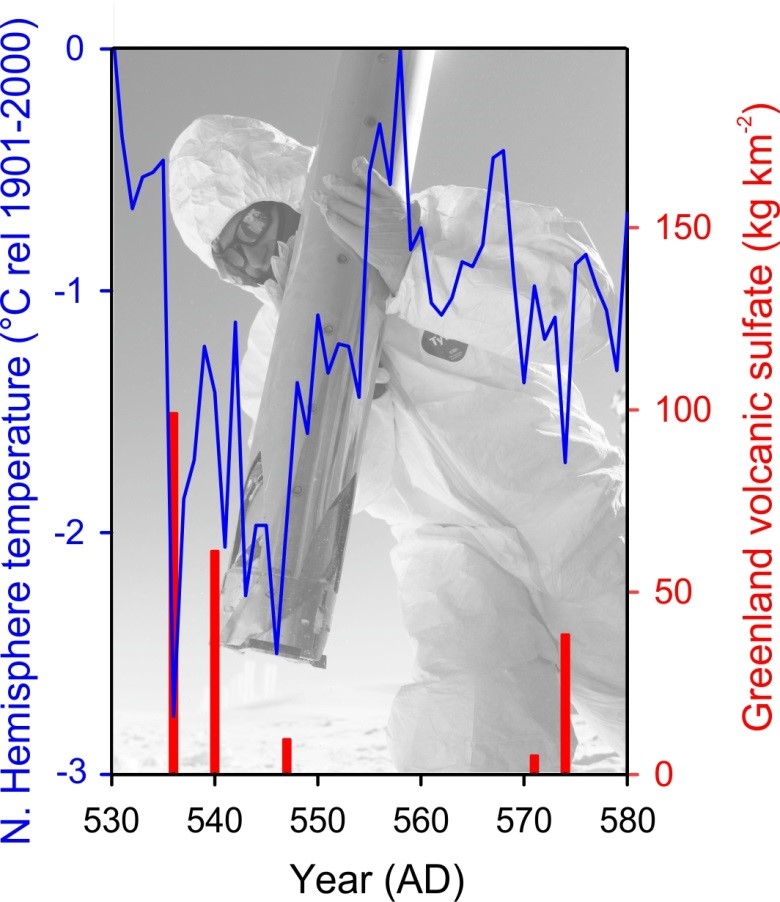
It is well established that volcanic eruptions contribute to climate variability but quantifying those impacts has proven challenging due to inconsistencies in historic atmospheric data observed in ice cores and corresponding temperature variations seen in climate proxies such as tree rings.

A new study in Nature resolves those inconsistencies with a new reconstruction of the timing and associated radiative forcing of nearly 300 individual volcanic eruptions extending as far back as the early Roman period.

A mutation found in most melanomas rewires cancer cells' metabolism, making them dependent on a ketogenesis enzyme, researchers at Winship Cancer Institute of Emory University have discovered. The finding points to possible strategies for countering resistance to existing drugs that target the B-raf V600E mutation, or potential alternatives to those drugs. It may also explain why the V600E mutation in particular is so common in melanomas.

The growth-promoting V600E mutation in the gene B-raf is present in most melanomas, and also in some cases of colon and thyroid cancer. Drugs such as vemurafenib are available that target this mutation, but in clinical trials, after a period of apparent remission, cancers carrying the V600E mutation invariably develop drug resistance.

Bringing reusable bags to the grocery store brings self-identification as an environmentally friendly shopper, but it also influences the things you buy, according to a new paper in the Journal of Marketing.

Reusable bags were correlated to organic food - no surprise there - but also junk food. 

Think you're a foodie? Adventurous eaters, known as "foodies," are often associated with indulgence and excess. However, a new Cornell Food and Brand Lab study shows just the opposite -adventurous eaters weigh less and may be healthier than their less-adventurous counterparts.

More than 34 million children's lives have been saved since 2000 because of investments in child health programs at a cost of as little as $4,205 per child, according to a new analysis in The Lancet.

This analysis builds off the work of an international collaboration of researchers and, for the first time, creates a scorecard that allows governments, policymakers, and donors to track investments in child health and to link those investments to child deaths averted across countries in a comparable manner.