Banner
Here's Where Your Backyard Was 300 Million Years Ago

We may use terms like "grounded" and terra firma to mean stability and consistency but geology...

Convergent Evolution Cheat Sheet Now 120 Million Years Old

One tenet of natural selection is a random walk of genes but nature may be more predictable than...

Synchrotron Could Shed Light On Exotic Dark Photons

There are many hypothetical particles proposed to explain dark matter and one idea to explore how...

The Pain Scale Is Broken But This May Fix It

Chronic pain is reported by over 20 percent of the global population but there is no scientific...

User picture.
News StaffRSS Feed of this column.

News Releases From All Over The World, Right To You... Read More »

Blogroll

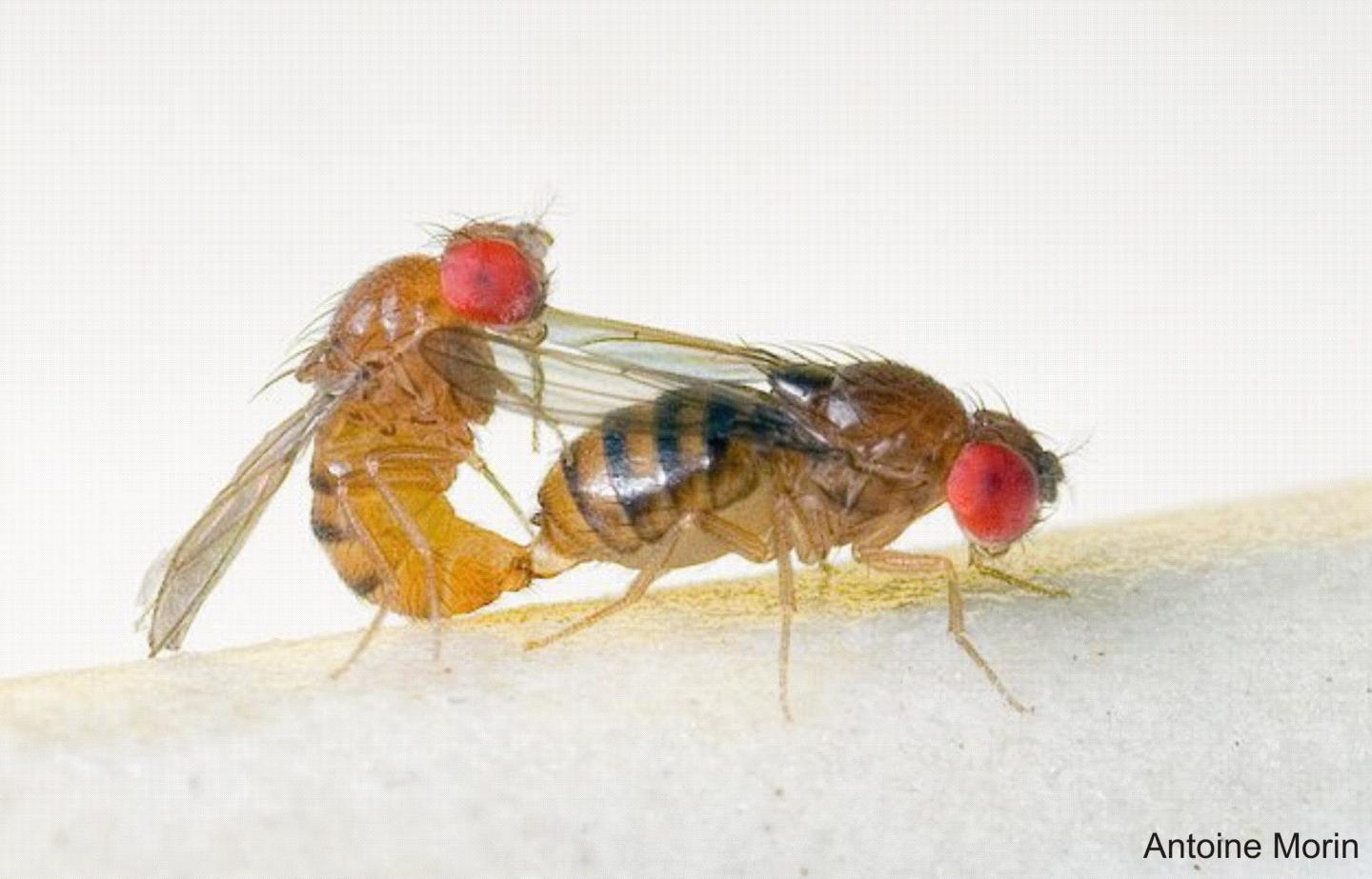
Too much male sexual attention harms attractive females, according to a new Australian and Canadian study on fruit flies.

Associate Professor Steve Chenoweth from The University of Queensland's School of Biological Sciences said the study showed that male harassment of females hampered the species' ability to adapt to new environmental conditions.

"We found that sexually attractive females were overwhelmed by male suitors," he said.

"Female fruit flies with superior genes that allow them to lay more eggs were so attractive to male suitors they spent most of the time fending off male suitors rather than actually laying eggs. The end result was that these supposedly 'superior' genes could not be passed on to the next generation."

The Supreme Court seems poised to take on the abortion issue again, and with reason.

On June 29, by a five-to-four vote, the Court temporarily blocked a Texas law that would force many clinics to close, guaranteeing that the state’s new law would not take effect until the justices decide whether to rule on its constitutionality. And just today, June 30, the Court did not take action on a case involving a similar abortion restriction passed in Mississippi.

The first species of Yeti Crab from hydrothermal vent systems of the East Scotia Ridge in the Southern Ocean, Antarctica, has been described in a study by Sven Thatje from University of Southampton, and colleagues.

The species of Yeti crab Kiwa tyleri belongs to an enigmatic group of squat lobsters, known as Kiwaidae, that thrive in the hot waters surrounding the geothermally heated hydrothermal vents. It is the dominant species at these sites, occurring at extremely high densities exceeding 700 specimens per square meter.

In a new study, researchers found that neurons in a specific brain region play a key role in rapidly forming memories about every day events, a finding that may result in a better understanding of memory loss and new methods to fight it in Alzheimer’s and other neurological diseases.

Specifically, the study examined neurons in the medial temporal lobe associated with episodic memory, the brain’s ability to consciously recall experienced events and situations like running into an old school friend at the opera. Episodic memory logs these unique experiences and relies on the very rapid formation of new associations in the brain.

Quantum computing is well into its second decade of hype with little progress being made. Computer chip companies have continued to optimize available physics and have left the quantum kind to the academic sandbox. It's not stable long enough to make calculations.

Perhaps what is needed is an intermediary to transmit information, say researchers at the Okinawa Institute of Science and Technology Graduate University (OIST).

Our brain recognizes objects within milliseconds, even if it only receives rudimentary visual information. Researchers believe that reliable and fast recognition works because the brain is constantly making predictions about objects in the field of view and is comparing these with incoming information.

Only if mismatches occur in this process do higher areas of the brain have to be notified of the error in order to make active corrections to the predictions. Now scientists at the Goethe University have confirmed this hypothesis. Those brain waves that are sent to higher brain areas increase their activity when a predictive error occurs.