Banner
Here's Where Your Backyard Was 300 Million Years Ago

We may use terms like "grounded" and terra firma to mean stability and consistency but geology...

Convergent Evolution Cheat Sheet Now 120 Million Years Old

One tenet of natural selection is a random walk of genes but nature may be more predictable than...

Synchrotron Could Shed Light On Exotic Dark Photons

There are many hypothetical particles proposed to explain dark matter and one idea to explore how...

The Pain Scale Is Broken But This May Fix It

Chronic pain is reported by over 20 percent of the global population but there is no scientific...

User picture.
News StaffRSS Feed of this column.

News Releases From All Over The World, Right To You... Read More »

Blogroll

Like with car pool lanes, the rationale for more bicycling infrastructure is that if they are built, more people will use them, and it will save the environment, public health, etc. but like with car pool lanes, the reality turns out to be different. In actual usage 25 percent of highways or more get blocked off for vehicles with multiple occupants while 7 percent of occupants use them, which leads to higher traffic, and the stress and accidents that go with it, and worse emissions due to slower cars.


Men with naturally high levels of the female hormone estrogen have a greater risk of developing breast cancer, according to according to an epidemiology paper published in the Journal of Clinical Oncology.

This is the first time a link between estrogen levels in the blood and male breast cancer has been identified, despite its connection to breast, womb and ovarian cancers in women, according to study author Professor Tim Key, Cancer Research UK's hormone and nutrition expert at the University of Oxford. Men with the highest levels of estrogen were two and a half times more likely to develop breast cancer than men with the lowest levels of the hormone.

A study of 2,377 children with autism, their parents and siblings - data from families with one child with autism and one or more children without the condition - has led to new information on how different types of mutations affect autism risk.

The genetic data was obtained from exome sequencing, which looks at only the protein-coding portions of the genome and came from families participating in the Simons Simplex Collection and from the Simons Foundation Autism Research Initiative, including millions of genetic variants, and has been made freely available to other autism researchers.

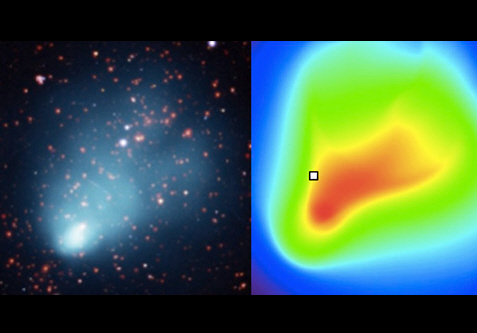
A new simulation that explains the collision between clusters of galaxies known as "El Gordo" also challenges popular thinking on the blanket term for undetected 'dark matter'.

In general, galaxy clusters grow in size by merging with each other due to gravitations forces despite the expansion of the universe. El Gordo is the biggest known cluster of galaxies, and is in turn the result of the collision between two large clusters. The simulation believes that the collision process compresses the gas within each cluster to very high temperatures so that it is shining in the X-ray region of the spectrum. In the X-ray spectrum this gas cloud is comet shaped with two long tails stretching between the dense cores of the two clusters of galaxies.

Dating apps like Tinder offer a quick look at a potential connection, with a simple swipe to either decline or accept a potential match, so it follows that some people will try to game the system by using an old picture or one that is enhanced using a tool like Photoshop.

So many people do it, at least according to common belief, that is must work. But does it?  

People assume some pictures must be fake and they don't want to be "catfished" (slang for a romantic hoax, because less reputable seafood restaurants will serve catfish as something more expensive) so alarm bells ring when something looks too good to be true, or in this case "too hot to trust."

Grape vineyards experimenting with sustainable pest management systems are seeing an unexpected benefit: an increase in butterflies. This method of conservation is easier in Washington, since vineyards in this state already face fewer pests and use fewer chemicals than vineyards in states like California.

"We're fortunate here to have the perfect place to be able to have this sustainable option," said  David James, an associate professor in Washington State University's Department of Entomology.