Banner
Males Are Genetically Wired To Beg Females For Food

Bees have the reputation of being incredibly organized and spending their days making sure our...

The Scorched Cherry Twig And Other Christmas Miracles Get A Science Look

Bleeding hosts and stigmatizations are the best-known medieval miracles but less known ones, like ...

$0.50 Pantoprazole For Stomach Bleeding In ICU Patients Could Save Families Thousands Of Dollars

The inexpensive medication pantoprazole prevents potentially serious stomach bleeding in critically...

Metformin Diabetes Drug Used Off-Label Also Reduces Irregular Heartbeats

Adults with atrial fibrillation (AFib) who are not diabetic but are overweight and took the diabetes...

User picture.
News StaffRSS Feed of this column.

News Releases From All Over The World, Right To You... Read More »

Blogroll

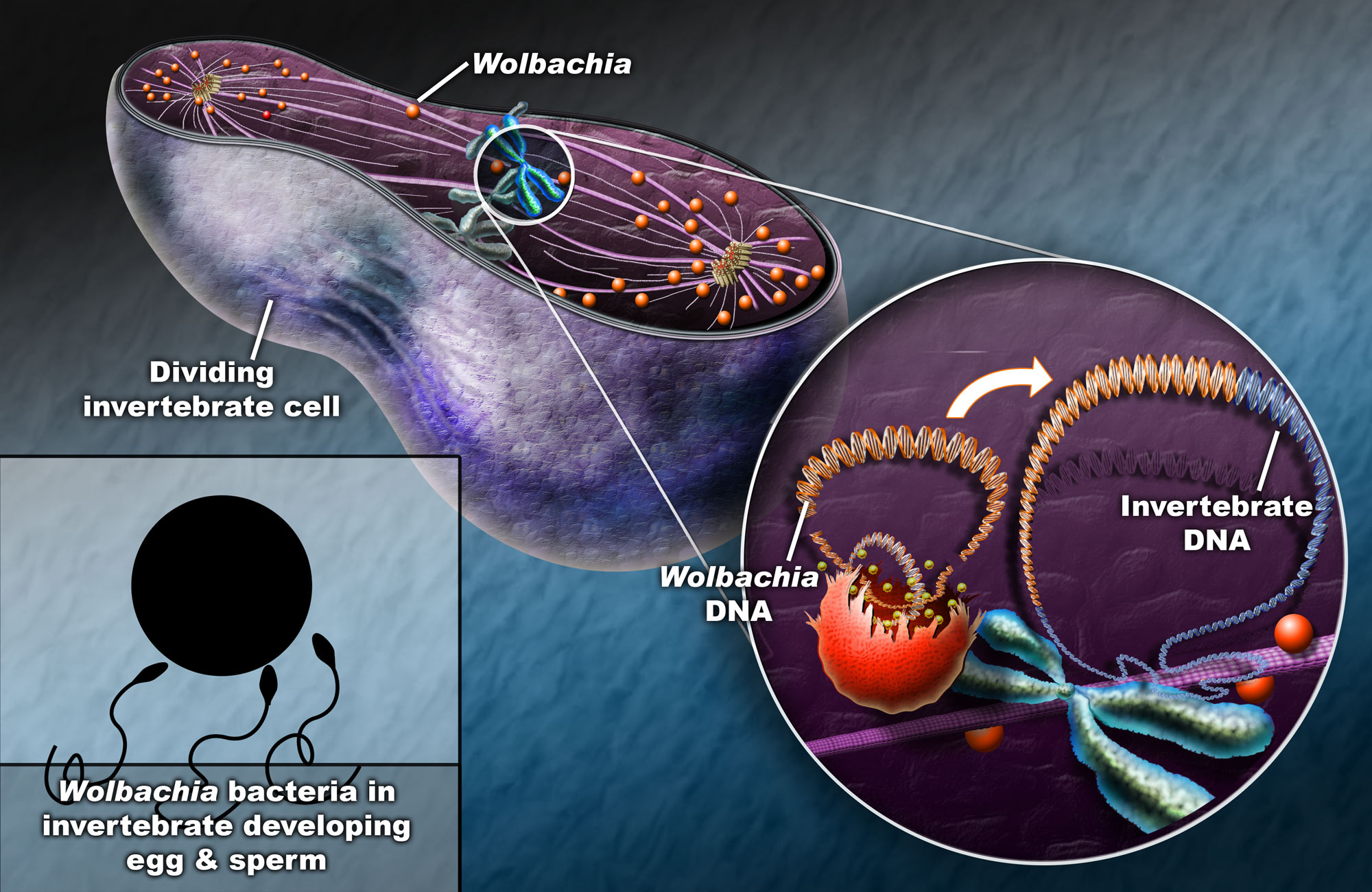
Bacterial parasites are a lot more creative than we thought. It turns out one species, Wolbachia, can insert almost its entire genome into the genomes of members of one host species (a fly called Drosophila ananassae), and can insert parts of its genome into the genomes of members of several other host species.

"We've found at least one species where the parasite's entire or nearly entire genome has been absorbed and integrated into the host's," says Jack Werren of the University of Rochester, principle investigator of the study and a world-leading authority on the Wolbachia parasite.

Scientists for the first time have observed elusive oscillations in the sun's corona, known as Alfvén waves, that transport energy outward from the surface of the sun. The discovery may give researchers more insight into solar magnetic fields, eventually leading to a better understanding of how the sun affects Earth's atmosphere and the entire solar system.

By tracking the speed and direction of the waves, researchers will be able to infer basic properties of the solar atmosphere, such as the density and direction of magnetic fields.

It's the climate cat and dog fight of the decade. When Al Gore alleged that Hurricane Katrina was caused by global warming, it set off a firestorm in the atmospheric science community. A few prominent experts disputed it and the websites and email campaigns took over from there

A trip of NASA/Goddard researchers say that storms may at least be impacted by global warming.

Previous climate model studies have shown that heavy rainstorms will be more common in a warmer climate, but the model developed by researchers Tony Del Genio, Mao-Sung Yao, and Jeff Jonas is the first to successfully simulate the difference in strength between land and ocean storms and includes how the strength will change in a warming climate.

Ancient cities arose not by decree from a centralized political power, as was previously widely believed, but as the outgrowth of decisions made by smaller groups or individuals, according to a new study.

The research was led by Jason Ur, assistant professor of anthropology in the Faculty of Arts and Sciences at Harvard University, with Philip Karsgaard of the University of Edinburgh, and Joan Oates of the McDonald Institute for Archaeological Research of the University of Cambridge.

“The results of our work show that the existing models for the origins of ancient cities may in fact be flawed,” says Ur. “Urbanism does not appear to have originated with a single, powerful ruler or political entity. Instead, it was the organic outgrowth of many groups coming together.”

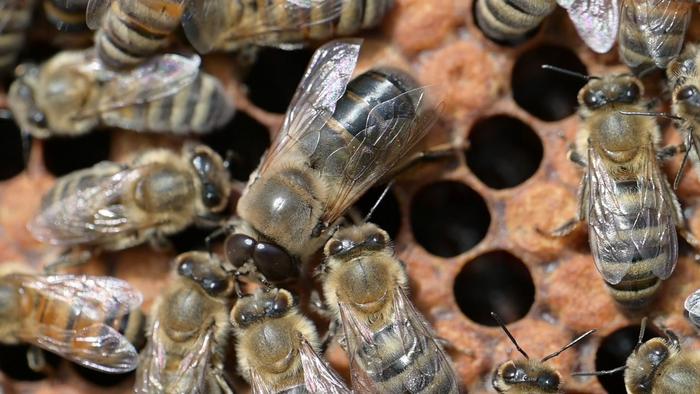
For bees, anyway. People are out of luck.

A research team led by the University of Illinois has identified an odorant receptor that allows male drones to find a queen in flight. The receptor, on the male antennae, can detect an available queen up to 60 meters away. This is the first time an odorant receptor has been linked to a specific pheromone in honey bees.

The “queen substance,” or “queen retinue pheromone,” was first identified decades ago, but scientists have only recently begun to understand its structure and role in the hive. The pheromone is a primary source of the queen’s authority. It is made up of eight components, one of which, 9-oxo-2-decenoic acid (9-ODA), attracts the drones during mating flights.

Only about a fifth of the genes in a cell are switched on at any given time but environmental changes such as smoking lead to changes in that genetic activity.

According to a Canadian team led by Wan L. Lam and Stephen Lam from the British Columbia Cancer Research Centre, smoking introduces some changes that are irreversible. Reversible changes were in xenobiotic functions( managing chemicals not produced in the body ), nucleotide metabolism and mucus secretion but some genes, such as GSK3B that are important in cell survival, are irreversibly damaged by smoking, and smoking also switched off genes that help combat lung cancer development.

The researchers took samples from the lungs of 24 current and former smoker, as well as from non-smokers who have never smoked.