Banner
The Scorched Cherry Twig And Other Christmas Miracles Get A Science Look

Bleeding hosts and stigmatizations are the best-known medieval miracles but less known ones, like ...

$0.50 Pantoprazole For Stomach Bleeding In ICU Patients Could Save Families Thousands Of Dollars

The inexpensive medication pantoprazole prevents potentially serious stomach bleeding in critically...

Metformin Diabetes Drug Used Off-Label Also Reduces Irregular Heartbeats

Adults with atrial fibrillation (AFib) who are not diabetic but are overweight and took the diabetes...

Your Predator: Badlands Future - Optical Camouflage, Now Made By Bacteria

In the various 'Predator' films, the alien hunter can see across various spectra while enabling...

User picture.
News StaffRSS Feed of this column.

News Releases From All Over The World, Right To You... Read More »

Blogroll

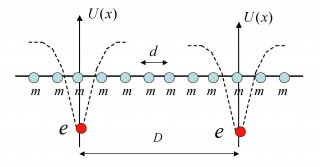
Most people understand how liquids freeze as solid crystals when temperatures become cold enough, like water droplets crystallizing into snowflakes or molten glass hardening into solid glass.

Latter 20th-century physicists realized that at low enough temperatures, most liquids that exist in nature become energetically unstable as they solidify. Scientists discovered solids that don't have the commonly known, regular crystalline and glass phases - things like liquid crystals, quasi-crystals and charge-density waves. Charge-density waves are systems that display interesting physics, such as metals becoming insulators.

Research from The University of Nottingham sheds new light on a fascinating phenomenon of the natural world — the ability of some species to reproduce sexually without a partner.

Scientists have been trying to determine how individuals of a key fungus, Aspergillus nidulans, are able to have sex without the need for a partner.

In new findings they reveal that the fungus has evolved to incorporate the two different sexes into the same individual.

In their search for the cellular and molecular causes of multiple sclerosis, an Italian-German research team has identified a subgroup of protective immune cells (suppressor cells) which are strikingly reduced in number in patients with this nervous system disorder.

These suppressor cells are characterized by a specific surface marker, called CD39, and degrade ATP, an energy carrier released from damaged tissues. By this means, suppressor cells appear to be able to curb inflammation occurring in the central nervous system in the course of the disease.

With CD39, Dr. Giovanna Borsellino (Laboratory for Neuroimmunology of the Fondazione Santa Lucia in Rome, Italy) in collaboration with Dr. Olaf Rötzschke and Dr.

By using pulses of light to dramatically accelerate quantum computers, University of Michigan researchers have made strides in technology that could foil national and personal security threats.

It's a leap, they say, that could lead to tougher protections of information and quicker deciphering of hackers' encryption codes.

A new paper on the results of this research, "Coherent Optical Spectroscopy of a Strongly Driven Quantum Dot," appears in the Aug. 17 issue of Science. Duncan Steel, the Robert J. Hiller Professor at Michigan Engineering's Department of Electrical Engineering and Computer Science and the Department of Physics, is one of the lead authors of the paper.

Scientists have discovered a new protein that may offer fresh insights into brain function in mad cow disease. “Our team has defined a second prion protein called ‘Shadoo’, that exists in addition to the well-known prion protein called ‘PrP’ ” said Professor David Westaway, director of the Centre for Prions and Protein Folding Diseases at the University of Alberta.

“For decades we believed PrP was a unique nerve protein that folded into an abnormal shape and caused prion disease: end of story. This view is no longer accurate,” Westaway adds.

The study was conducted jointly by the University of Toronto, University of Alberta, Case Western Reserve University (Ohio) and the McLaughlin Research Institute (Montana).

All bad jokes aside, their research represents a step forward in computers reaching the capability of a human mind.

"This work has a relationship to 'Sociable Computing,'" says Larry Mazlack. "Currently, computers are often difficult to communicate with, to use and to apply to solving problems that are informally stated.

“The ‘robot’ is just a software program that still needs a lot of work,” says researcher Julia Taylor. “The idea is to be able to recognize jokes that are based on phonological similarity of words.”