Banner
The Scorched Cherry Twig And Other Christmas Miracles Get A Science Look

Bleeding hosts and stigmatizations are the best-known medieval miracles but less known ones, like ...
$0.50 Pantoprazole For Stomach Bleeding In ICU Patients Could Save Families Thousands Of Dollars

The inexpensive medication pantoprazole prevents potentially serious stomach bleeding in critically...
Metformin Diabetes Drug Used Off-Label Also Reduces Irregular Heartbeats

Adults with atrial fibrillation (AFib) who are not diabetic but are overweight and took the diabetes...

Your Predator: Badlands Future - Optical Camouflage, Now Made By Bacteria

In the various 'Predator' films, the alien hunter can see across various spectra while enabling...

User picture.
News StaffRSS Feed of this column.

News Releases From All Over The World, Right To You... Read More »

Blogroll

Scientists have discovered that leptin, one of the key hormones responsible for reducing hunger and increasing the feeling of fullness, also controls our fondness for food.

A University of Cambridge team, headed by Dr Sadaf Farooqi and Dr Paul Fletcher, have discovered that the appetising properties of food have strong effects on the same key brain regions responsible for rewarding emotions and desires. Using brain imaging technology, they show that these areas of the brain “light up” when individuals deficient in leptin are shown images of food.

Hunger influences what and how much we eat, but is not the only determinant of our eating behaviour.

Many people with long-standing high blood pressure develop heart failure. But some don't. Daniel P. Kelly, M.D., and colleagues at Washington University School of Medicine in St. Louis and other institutions are trying to figure out what could explain that difference.

Their latest research reveals that impaired energy production in heart muscle may underlie heart failure in some hypertensive patients. The researchers assert that a molecular factor involved in maintaining the heart's energy supply could become a key to new approaches to prevent or treat heart failure.

The molecular factor, a protein called estrogen-related receptor alpha (ERR alpha), helps the heart keep up with energy-draining conditions like high blood pressure, which makes the heart work harder to pump blood.

Most continental rocks on Earth align their magnetic moments with the current magnetic field – they are said to have ‘induced’ magnetism. “I consider induced rocks to have ‘Alzheimers’. These are the rocks that forgot where they were born and how to get home,” explains Suzanne McEnroe from the Geological Survey of Norway at a European Science Foundation (ESF), EuroMinScI conference near Nice, France this year.

However, not all of Earth’s continental rocks have an induced magnetization. Some rocks stubbornly refuse to swing with the latest magnetic field, and instead keep hold of the direction they were born with. These rocks are said to have a remanent magnetization.

Concentrated chemicals derived from green tea dramatically boosted production of a group of key detoxification enzymes in people with low levels of these beneficial proteins, according to researchers at Arizona Cancer Center.

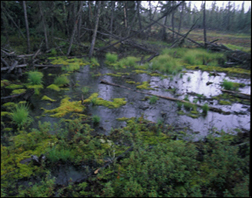
Permafrost, the perpetually frozen foundation of the north, serves like a platform underneath vast expanses of northern forests and wetlands that are rooted in many northern ecosystems. But rising atmospheric temperatures are accelerating rates of permafrost thaw in northern regions, says MSU researcher Merritt Turetsky.

“The loss of permafrost usually means the loss of terra firma in an otherwise often boggy landscape,” Turetsky said. “Roads, buildings and whole communities will have to cope with this aspect of climate change.

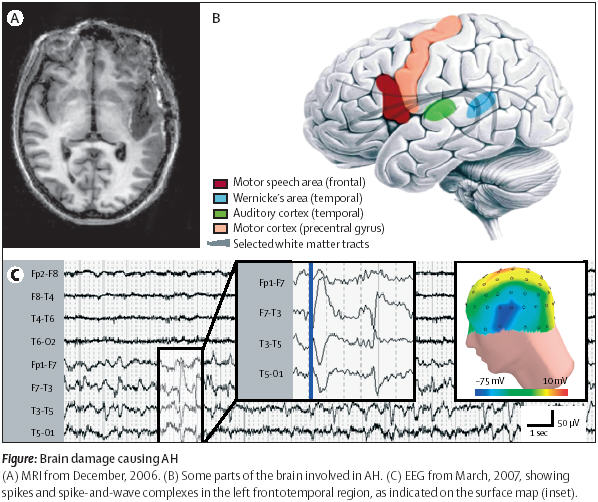
The unusual case of a woman who heard voices with her own speech impairments in her head after a bicycle accident is examined in a Case Report in this week’s edition of The Lancet. The woman was treated by Dr Daniela Hubl, University Hospital of Psychiatry, Bern, Switzerland, and colleagues, who authored the Case Report.

It was in August 2006 that the 63-year-old woman, with no previous medical history, was brought to the hospital after falling from her bicycle and hitting her head and having a brain bleed, causing her to lose consciousness. Tests showed she had brain damage covering several lobes and an aneurysm, which was clipped, and she underwent a decompressive craniotomy.