Banner
The Scorched Cherry Twig And Other Christmas Miracles Get A Science Look

Bleeding hosts and stigmatizations are the best-known medieval miracles but less known ones, like ...

$0.50 Pantoprazole For Stomach Bleeding In ICU Patients Could Save Families Thousands Of Dollars

The inexpensive medication pantoprazole prevents potentially serious stomach bleeding in critically...
Metformin Diabetes Drug Used Off-Label Also Reduces Irregular Heartbeats

Adults with atrial fibrillation (AFib) who are not diabetic but are overweight and took the diabetes...

Your Predator: Badlands Future - Optical Camouflage, Now Made By Bacteria

In the various 'Predator' films, the alien hunter can see across various spectra while enabling...

User picture.
News StaffRSS Feed of this column.

News Releases From All Over The World, Right To You... Read More »

Blogroll

Using selective plant breeding and genetic engineering could be used to reduce the incidence of iron deficiency worldwide by improving the quality of dietary iron, conclude authors of a Seminar in this week’s edition of The Lancet.

Dr Michael Zimmerman, Laboratory for Human Nutrition, Swiss Federal Institute of Technology, Zurich, and colleagues have reviewed published literature worldwide, mainly from the last five years, to prepare the Seminar, which looks at the issue of nutritional iron deficiency in both industrialised and developing countries.

The authors say: “Iron deficiency is one of the leading risk factors for disability and death worldwide, affecting an estimated 2 billion people…the high prevalence of iron deficiency in the developing world has substantial health and eco

It is not just what’s in your genes, it’s how you turn them on that accounts for the difference between species — at least in yeast — according to a report by Yale researchers in this week’s issue of Science.

“We’ve known for a while that the protein coding genes of humans and chimpanzees are about 99 percent the same,” said senior author Michael Snyder, the Cullman Professor of Molecular Cellular and Developmental Biology at Yale. “The challenge for biologists is accounting for what causes the substantial difference between the person and the chimp.”

Conventional wisdom has been that if the difference is not the gene content, the difference must be in the way regulation of genes produces their protein products.

Computer scientists at the University of Washington have developed software that is incorporated in new technology allowing television audiences to instantaneously see how air flows around speeding cars.

The algorithm, first presented at a computer graphics conference last August, was since used by sports network ESPN and sporting-technology company Sportvision Inc. to create a new effect for racing coverage.

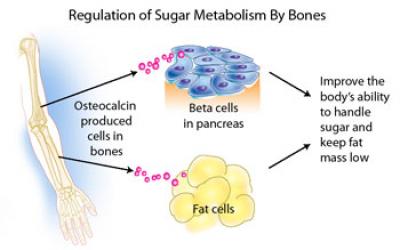
Bones are typically thought of as calcified, inert structures, but researchers at Columbia University Medical Center have now identified a surprising and critically important novel function of the skeleton: they’ve shown for the first time that the skeleton is an endocrine organ that helps control our sugar metabolism and weight and, as such, is a major determinant of the development of type 2 diabetes.

The research demonstrates that bone cells release a hormone called osteocalcin, which controls the regulation of blood sugar (glucose) and fat deposition through synergistic mechanisms previously not recognized. Usually, an increase in insulin secretion is accompanied by a decrease in insulin sensitivity.

It may not be inhaled into the lungs, but smokeless tobacco exposes users to some of the same potent carcinogens as cigarettes. In the August issue of Cancer Epidemiology, Biomarkers & Prevention, a journal of the American Association for Cancer Research, researchers at the University of Minnesota Cancer Center report that users of smokeless tobacco are exposed to higher amounts of tobacco-specific nitrosamines -- molecules that are known to be carcinogenic -- than smokers.

Smokeless tobacco, also known as oral snuff, is a variant on chewing tobacco that users suck on by slipping it between their cheeks and gums.

When most people look at a window they see solid panes of glass but to physicists it isn't so simple. Window glass has always been a puzzle but an Emory University research team led by physicist Eric Weeks has found another clue.

Weeks has devoted his career to probing the mysteries of "squishy" substances that cannot be pinned down as a solid or liquid. Referred to as "soft condensed materials," they include everyday substances such as toothpaste, peanut butter, shaving cream, plastic and glass.

Scientists fully understand the process of water turning to ice.