

Banner
The Scorched Cherry Twig And Other Christmas Miracles Get A Science Look

Bleeding hosts and stigmatizations are the best-known medieval miracles but less known ones, like ...

$0.50 Pantoprazole For Stomach Bleeding In ICU Patients Could Save Families Thousands Of Dollars

The inexpensive medication pantoprazole prevents potentially serious stomach bleeding in critically...
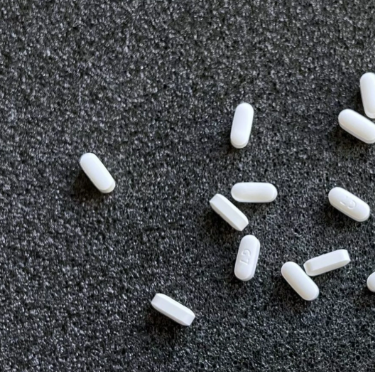
Metformin Diabetes Drug Used Off-Label Also Reduces Irregular Heartbeats

Adults with atrial fibrillation (AFib) who are not diabetic but are overweight and took the diabetes...

Your Predator: Badlands Future - Optical Camouflage, Now Made By Bacteria

In the various 'Predator' films, the alien hunter can see across various spectra while enabling...

User picture.
News StaffRSS Feed of this column.

News Releases From All Over The World, Right To You... Read More »

Blogroll

An intense form of ultrasound that shakes a tumor until its cells start to leak can trigger an “alarm” that enlists immune defenses against the cancerous invasion, according to a study led by researchers at Duke University's Pratt School of Engineering.

The new findings from animal experiments suggest that once activated by the ultrasound, the immune system might even seek and destroy cancer cells, including those that have spread through the bloodstream to lurk in other parts of the body.

This high-intensity focused ultrasound, or HIFU, is in use or testing in China, Europe and the United States to kill tumors by heating them. But Duke researchers now find that HIFU might work even better if it is first delivered in a manner that just shakes the cells.

University of Cincinnati (UC) neurovascular researchers have identified a gene that—when suppressed or completely absent—may predispose a person to brain aneurysms.

Todd Abruzzo, MD, and his colleagues demonstrated that “knocking out” a gene known as endothelial nitric oxide synthase (NOS-3) in an animal model led to intracranial aneurysm formation in 33 percent of study subjects.

Scientists say this suggests that the gene may play an important role in the development of intracranial aneurysms.

While 10 years of bathing North Carolina pine tree stands with extra carbon dioxide did allow the trees to grow more tissue, only those pines receiving the most water and nutrients were able to store significant amounts of carbon that could offset the effects of global warming, scientists told a national meeting of the Ecological Society of America (ESA).

These results from the decade-long Free Air Carbon Enrichment (FACE) experiment in a Duke University forest suggest that proposals to bank extra CO2 from human activities in such trees may depend on the vagaries of the weather and large scale forest fertilization efforts, said Ram Oren, the FACE project director.

"If water availability decreases to plants at the same time that carbon dioxide increases, then we might not have a net g

Despite marketing claims, parents who want to give their infants a boost in learning language probably should limit the amount of time they expose their children to DVDs and videos such as “Baby Einstein” and “Brainy Baby.”

Rather than helping babies, the over-use of such productions actually may slow down infants eight to 16 months of age when it comes to acquiring vocabulary, according to a new study by researchers at the University of Washington and Seattle Children’s Hospital Research Institute.

The scientists found that for every hour per day spent watching baby DVDs and videos, infants understood an average of six to eight fewer words than infants who did not watch them.

Like navigating spacecraft through the solar system by means of gravity and small propulsive bursts, researchers can guide atoms, molecules and chemical reactions by utilizing the forces that bind nuclei and electrons into molecules (analogous to gravity) and by using light for propulsion. But, knowing the minimal amount of light required, and how that amount changes with the complexity of the molecule, has been a problem.

Now, by creating a quantum mechanical analog of Ulam’s conjecture, researchers at the University of Illinois and the University of California have expanded the flexibility and controllability of quantum mechanical systems.

Many of us experience a tinge of guilt as we delight in feelings of pleasure from our favorite indulgences, like splurging on an expensive handbag or having another drink.

Yet, in spite of documented ambivalence towards temptation and well-meaning vows not to succumb again, consumers often end up repeating the same or similar choices. A new study by Suresh Ramanathan (University of Chicago) and Patti Williams (Wharton School of Business, University of Pennsylvania) examines repeated impulsive behavior despite the presence of guilt – important research underscored by the increasing prevalence of binge drinking, obesity, and credit card debt.







