
Banner
The Scorched Cherry Twig And Other Christmas Miracles Get A Science Look

Bleeding hosts and stigmatizations are the best-known medieval miracles but less known ones, like ...
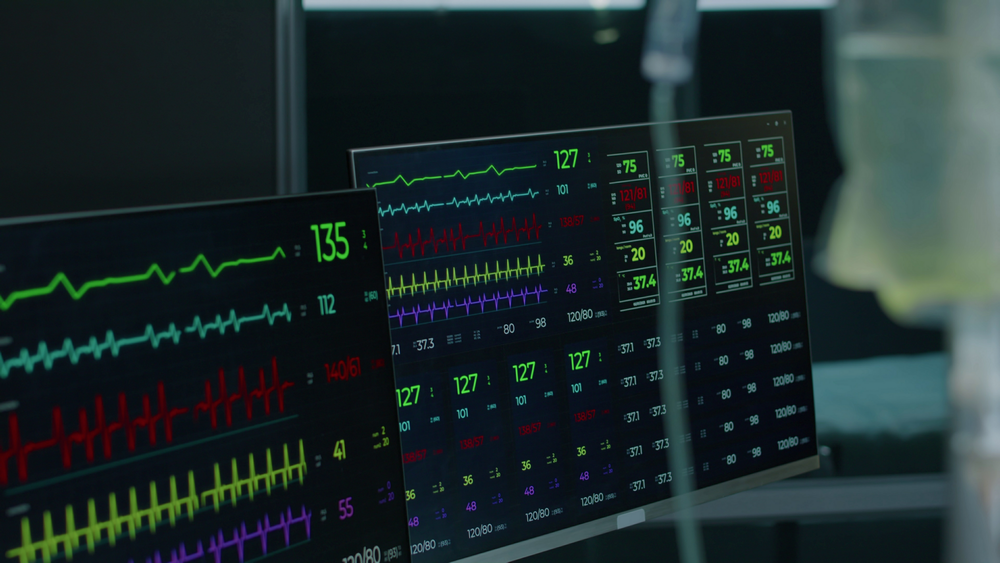
$0.50 Pantoprazole For Stomach Bleeding In ICU Patients Could Save Families Thousands Of Dollars

The inexpensive medication pantoprazole prevents potentially serious stomach bleeding in critically...
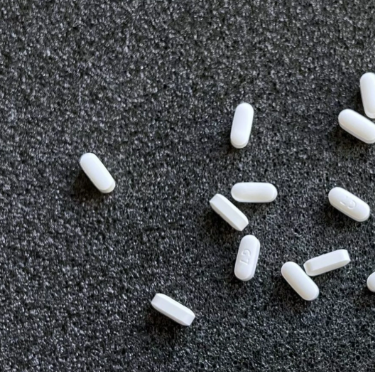
Metformin Diabetes Drug Used Off-Label Also Reduces Irregular Heartbeats

Adults with atrial fibrillation (AFib) who are not diabetic but are overweight and took the diabetes...

Your Predator: Badlands Future - Optical Camouflage, Now Made By Bacteria

In the various 'Predator' films, the alien hunter can see across various spectra while enabling...

User picture.
News StaffRSS Feed of this column.

News Releases From All Over The World, Right To You... Read More »

Blogroll

Monkeys seem to learn the same way humans do, a new research study indicates.

“Like humans, monkeys benefit enormously from being actively involved in learning instead of having information presented to them passively,” said Nate Kornell, a UCLA postdoctoral scholar in psychology and lead author of the study. “The advantage of active learning appears to be a fundamental property of memory in humans and nonhumans alike.”

In Kornell’s study, conducted when he was a psychology graduate student at Columbia University, two rhesus macaque monkeys learned to place five photographs in a particular order. The photographs were displayed on a touch-screen computer monitor similar to those found on ATMs. When the monkeys pressed a correct photograph, a border appeared around it.

Why do we like some music and not others? Why does music feel right and why does it evoke certain moods? The brain's ability to segment the continual stream of sensory information into perceptual chunks and extract meaning, “event segmentation” functions, have long fascinated researchers.

In a series of experiments, a team led by Vinod Menon of Stanford University School of Medicine asked subjects to listen to symphonies of the English composer William Boyce. The symphonies were chosen because they are relatively short and comprise well-defined movements - changes in tempo, tonality, rhythm, and pitch, and brief silences.

In studies with monkeys, researchers have identified in detail the brain regions responsible for the unique ability of primates, including humans, to process visual 3D shapes to guide their sophisticated manipulation of objects.

Specifically, the researchers delineated regions of the parietal cortex responsible for extracting 3D information by integrating disparities in information from the two eyes. Such integration is critical to perceiving three dimensions, because each eye receives only a two-dimensional projection of an image on the retina.

A woman, whose ovaries had failed due to damage caused by chemotherapy and radiotherapy, has received a successful ovarian transplant from her genetically non-identical sister. The transplant restored her ovarian function, she started to menstruate and, after a year, doctors were able to recover two mature oocytes from her ovaries and fertilise them to produce two embryos.

This first case of a successful transplantation of ovarian tissue between two non-identical sisters is reported today by Professor Jacques Donnez, head of the department of gynecology and professor and chairman at the Catholic University of Louvain in Brussels, Belgium, who led the team that carried out the work.

Engineering pliable, new vocal cord tissue to replace scarred, rigid tissue in these petite, yet powerful organs is the goal of a new University of Delaware research project.

Xinqiao Jia, UD assistant professor of materials science and engineering, is leading the project. Jia's research focuses on developing intelligent biomaterials that closely mimic the molecular composition, mechanical responsiveness and nanoscale organization of natural extracellular matrices--the structural materials that serve as scaffolding for cells. These novel biomaterials, combined with defined biophysical cues and biological factors, are being used for functional tissue regeneration.

An international research team, led by scientists at the London Centre for Nanotechnology (LCN), has found a way to switch a material’s magnetic properties from ‘hard’ to ‘soft’ and back again – something which could lead to new ways of controlling electromagnetic devices. The research shows how a magnet can be ‘tuned’ by subjecting it to a second magnetic field, perpendicular to the original.

Magnets can be classified by their ‘hard’ or ‘soft’ magnetic properties. Hard magnets, sometimes called ‘permanent’ magnets, have fixed or ‘pinned’ domain walls which mean the material stays magnetised for a long time. Soft magnets have moveable domain walls that can be easily flipped.