Banner
The Scorched Cherry Twig And Other Christmas Miracles Get A Science Look

Bleeding hosts and stigmatizations are the best-known medieval miracles but less known ones, like ...

$0.50 Pantoprazole For Stomach Bleeding In ICU Patients Could Save Families Thousands Of Dollars

The inexpensive medication pantoprazole prevents potentially serious stomach bleeding in critically...
Metformin Diabetes Drug Used Off-Label Also Reduces Irregular Heartbeats

Adults with atrial fibrillation (AFib) who are not diabetic but are overweight and took the diabetes...

Your Predator: Badlands Future - Optical Camouflage, Now Made By Bacteria

In the various 'Predator' films, the alien hunter can see across various spectra while enabling...

User picture.
News StaffRSS Feed of this column.

News Releases From All Over The World, Right To You... Read More »

Blogroll

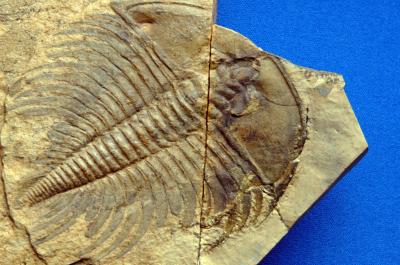
The abundant diversity of characteristics within species likely helped fuel the proliferation and evolution of an odd-looking creature that emerged from an unprecedented explosion of life on Earth more than 500 million years ago.

“From an evolutionary perspective, the more variable a species is, the more raw material natural selection has to operate on,” said paleontologist Mark Webster, an Assistant Professor in Geophysical Sciences at Chicago.

Paleontologists for decades have suspected that highly variable species evolved more rapidly than others, said Nigel Hughes, Professor of Earth Sciences at the University of California, Riverside.

Isoprene is a hydrocarbon volatile compound emitted in high quantities by many woody plant species, with significant impact on atmospheric chemistry.

The Australian Blue Mountains and the Blue Ridge Mountains in the Eastern United States are called such because of the spectral properties of the huge amounts of isoprenes emitted from the trees growing there.

The correlation between leaf temperature and isoprene emission in plants is well known but the physiological role of isoprene emission, quite costly to the plant, is still under debate.


This image illustrates infrared thermographic images of Grey poplar leaves under different leaf temperatures.

Large quantities of ozone-depleting chemicals have been discovered in the Antarctic atmosphere by researchers from the University of Leeds, the University of East Anglia, and the British Antarctic Survey, but sea salt and algae are more to blame than mankind, say researchers.

The team of atmospheric chemists carried out an 18-month study of the make-up of the lowest part of the earth's atmosphere on the Brunt Ice Shelf, about 20 km from the Weddell Sea. They found high concentrations of halogens - bromine and iodine oxides – which persist throughout the period when there is sunlight in Antarctica (August through May). A big surprise to the science team was the large quantities of iodine oxide, since this chemical has not been detected in the Arctic.

‘Killer’ electrons are highly energetic, negatively charged particles found in near-Earth space. They can critically, and even permanently, damage satellites in orbit, including telecommunication satellites, and pose a hazard to astronauts.

Several theories have been formulated in the past to explain the origin of killer electrons, and many uncoordinated observations have already been performed. Recently, scientists got a boost in their understanding of this hazardous phenomenon. This was possible thanks to a unique set of data, collected simultaneously, by a global armada of ground and space observatories during the recovery phase of a large geomagnetic storm.

More than 180,000 women will be diagnosed with breast cancer this year, and 40,900 will die from the disease, according to the American Cancer Society. Researchers at the University of Michigan Comprehensive Cancer Center have identified a gene linked to the development of an aggressive form of breast cancer.

The researchers found that the gene, FOXP3, suppresses tumor growth. FOXP3 is located on the X chromosome, which means a single mutation can effectively silence the gene. This is unusual, as only one other gene linked to cancer has been found on the X chromosome.

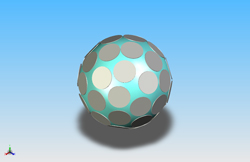
Researchers at the University of Warwick's Department of Chemistry have found a way of replacing the soap used to stabilize latex emulsion paints with nanotech sized clay armour that can create a much more hard wearing and fire resistant paint.

To date latex emulsion paints have relied on the addition of soaps or similar materials to overcome the polymer parts of the paint's aversion to water, stabilize the paint, and make it work. The University of Warwick chemistry researchers led by Dr Stefan Bon have found a simple way to individually coat the polymer particles used in such paints with a series of nanosized Laponite clay discs.

The discs effectively create an armoured layer on the individual polymer latex particles in the paint.