
Banner
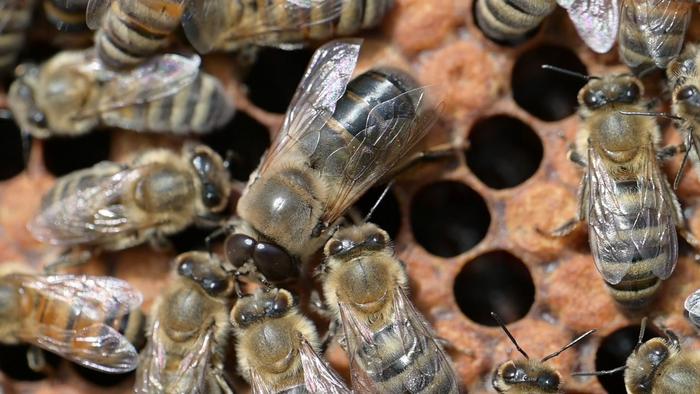
Males Are Genetically Wired To Beg Females For Food

Bees have the reputation of being incredibly organized and spending their days making sure our...

The Scorched Cherry Twig And Other Christmas Miracles Get A Science Look

Bleeding hosts and stigmatizations are the best-known medieval miracles but less known ones, like ...

$0.50 Pantoprazole For Stomach Bleeding In ICU Patients Could Save Families Thousands Of Dollars

The inexpensive medication pantoprazole prevents potentially serious stomach bleeding in critically...
Metformin Diabetes Drug Used Off-Label Also Reduces Irregular Heartbeats

Adults with atrial fibrillation (AFib) who are not diabetic but are overweight and took the diabetes...

User picture.
News StaffRSS Feed of this column.

News Releases From All Over The World, Right To You... Read More »

Blogroll

Nothing starts a debate in the medical community like death. Abortion, euthanasia, capital punishment, all controversial subjects; three anesthesiologists and a medical ethicist tackle the last one in a commentary and two editorials published in September's Mayo Clinic Proceedings.

In a commentary column, David Waisel, M.D., an anesthesiologist practicing at Children's Hospital Boston, Harvard Medical School, asserts that it is time to reassess the AMA's position on this issue and allow doctors to participate in state-mandated executions to help provide the condemned a more humane path to death.

Dr. Waisel cites numerous details about the technical problems associated with lethal injection, the form of capital punishment most commonly used in the United States today. Dr.

DNA is one of the most popular building blocks of nanotechnology and is commonly used to construct ordered nanoscale structures with controlled architectures. For the most part, DNA is looked upon as a promising building block for fabricating microelectronic circuits from the bottom up. Now a team of researchers at Young propose the marriage of DNA self-assembly with standard microfabrication and lithography tools to form features such as nanochannels, nanowires, and nanoscale trenches. This discovery may open up new avenues for nanofabrication at dimensions not accessible by conventional optical lithography.

Nutrients taken from avocados are able to thwart oral cancer cells, killing some and preventing pre-cancerous cells from developing into actual cancers, according to researchers at Ohio State University.

Researchers found that extracts from Hass avocados kill or stop the growth of pre-cancerous cells that lead to oral cancer. Hass avocados are year-round fruits known for their distinctive bumpy skin that turns from green to purplish-black as they ripen.

While there are more than 500 varieties of avocados grown worldwide, Hass avocados are the most readily available at supermarkets nationwide. Similar research has not been conducted on other varieties of avocados.

The findings are published online in the journal Seminars in Cancer Biology.

Lead author Steven M.

Purging is often associated with bulimics, who eat large quantities of food and then vomit.

A University of Iowa professor says that purging is its own disorder, distinct because it involves women who eat small quantities of food and then vomit, unlike bulimics who may instead fast or over-exercise after eating.

"Purging disorder is new in the sense that it has not been officially recognized as a unique condition in the classification of eating disorders," said Pamela Keel, associate professor of psychology in the UI College of Liberal Arts and Sciences, "But it's not a new problem.

Probiotics, the friendly bacteria beloved of yoghurt advertisers, may be an effective substitute for growth promoting antibiotics in pigs, giving us safer pork products, according to scientists speaking today (Wednesday 5 September 2007) at the Society for General Microbiology’s 161st Meeting at the University of Edinburgh, UK, which runs from 3-6 September 2007.

Scientists from the UK’s Veterinary Laboratories Agency in Weybridge, Surrey have shown that probiotics – the good bacteria taken by millions of people worldwide – can reduce the disease-causing Salmonella bacteria which infect people and pigs.

“Salmonella is responsible for thousands of food poisoning cases each year with many of the cases originating from infected pork products.

A new study by Jeremy Graff and colleagues from Eli Lilly and Company has demonstrated the anti-cancer effect of a new therapeutic in a mouse model of human tumors and has spawned clinical trials to test the ability of this therapeutic to treat human cancers. As highlighted in the accompanying commentary by Celeste Simon and colleagues from the University of Pennsylvania, Philadelphia, if the therapeutic is as effective in clinical trials as it was in mice it will be useful for the treatment of a broad range of cancers.






