Banner
The Scorched Cherry Twig And Other Christmas Miracles Get A Science Look

Bleeding hosts and stigmatizations are the best-known medieval miracles but less known ones, like ...

$0.50 Pantoprazole For Stomach Bleeding In ICU Patients Could Save Families Thousands Of Dollars

The inexpensive medication pantoprazole prevents potentially serious stomach bleeding in critically...

Metformin Diabetes Drug Used Off-Label Also Reduces Irregular Heartbeats

Adults with atrial fibrillation (AFib) who are not diabetic but are overweight and took the diabetes...

Your Predator: Badlands Future - Optical Camouflage, Now Made By Bacteria

In the various 'Predator' films, the alien hunter can see across various spectra while enabling...

User picture.
News StaffRSS Feed of this column.

News Releases From All Over The World, Right To You... Read More »

Blogroll

Combining radiation therapy with a drug that helps destroy blood vessels nourishing malignant tumors has been shown in mice to be significantly more effective in treating lung cancer than either approach alone, researchers at UT Southwestern Medical Center have found.

The study, involving human lung-cancer cells implanted in mice, appears in the Sept. 1 issue of Clinical Cancer Research.

In the study, Dr. Philip Thorpe, professor of pharmacology at UT Southwestern, and his colleagues found that radiation generates a chemical reaction in the membranes of endothelial cells, which line the blood vessels that feed tumors. The reaction causes membrane components called anionic phospholipids to flip inside out, exposing them. In normal blood vessels, they face the interior of the cell.

Studying the DNA of 889 people, gene hunters at the Mayo Clinic and H. Lee Moffitt Cancer Centers have identified a region on chromosome 5p that is significantly associated with dense breast tissue, a known risk factor for breast cancer. The findings, published in the September 1 issue of Cancer Research, a publication of the American Association for Cancer Research, suggest that genes which influence breast density could serve as a predictive marker for disease and provide a biological target for agents that may reduce breast cancer risk by reducing breast density.

Scientists are researching new ways of harnessing the sun’s rays which could eventually make it cheaper for people to use solar energy to power their homes.

The experts at Durham University are developing light-absorbing materials for use in the production of thin-layer solar photovoltaic (PV) cells which are used to convert light energy into electricity.

The four-year project involves experiments on a range of different materials that would be less expensive and more sustainable to use in the manufacturing of solar panels.

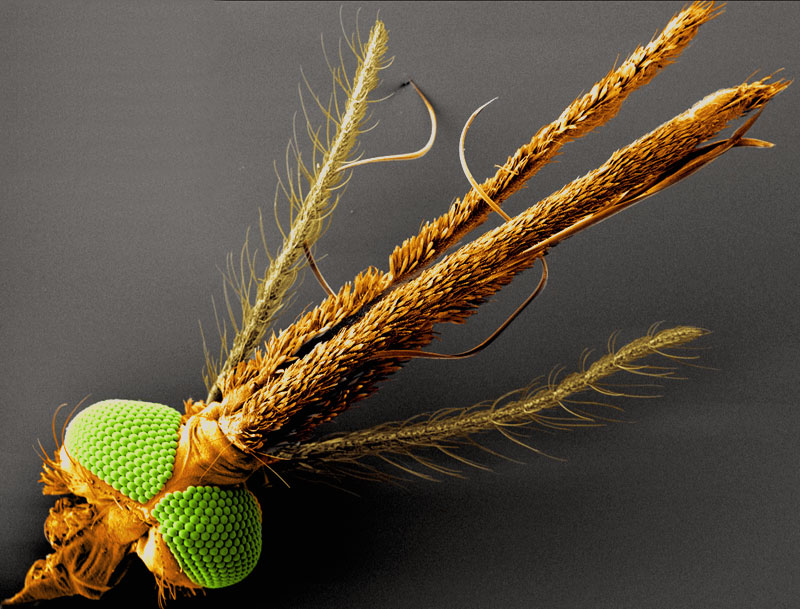
By mapping a specialized sensory organ that the malaria mosquito uses to zero in on its human prey, an international team of researchers has taken an important step toward developing new and improved repellants and attractants that can be used to reduce the threat of malaria, generally considered the most prevalent life-threatening disease in the world.

The sensory organ is the maxillary palp. It is one of three structures extending from the mosquito’s head that together provide it with its sense of smell and taste.

A team of scientists led by young Croatian evolutionary geneticist Tomislav Domazet-Lošo from Ruder Boškovic Institute (RBI) in Zagreb, Croatia, developed a novel methodological approach in evolutionary studies.

Using the method they named 'genomic phylostratigraphy', its authors shed new and unexpected light on some of the long standing macroevolutionary issues, which have been puzzling evolutionary biologists since Darwin.

The only direct method of research in evolutionary history involves analyzing the fossil remains of once living organisms, excavated in various localities throughout of the world. However, that approach often cannot provide the full evolutionary pathway of some species, as it requires uncovering of many fossils from various stages of its evolutionary history.

A new method for fighting skin wrinkles has been developed at the Hebrew University Faculty of Agriculture, Food and Environmental Quality Sciences.

In her doctoral research at the university, Dr. Orit Bossi succeeded in isolating a plant-based antioxidant that delays the aging process by countering the breakdown of collagen fibers in the skin. Dr. Bossi conducted her research under the supervision of Zecharia Madar, the Karl Bach Professor of Agricultural Biochemistry at the Hebrew University, and Prof. Shlomo Grossman of Bar-Ilan University.

Antioxidants operate against free radicals which cause a breakdown of many tissues in the body, including the skin. When found in small quantities in the body, free radicals are not harmful and are even involved in various physical processes.