Banner
The Scorched Cherry Twig And Other Christmas Miracles Get A Science Look

Bleeding hosts and stigmatizations are the best-known medieval miracles but less known ones, like ...

$0.50 Pantoprazole For Stomach Bleeding In ICU Patients Could Save Families Thousands Of Dollars

The inexpensive medication pantoprazole prevents potentially serious stomach bleeding in critically...

Metformin Diabetes Drug Used Off-Label Also Reduces Irregular Heartbeats

Adults with atrial fibrillation (AFib) who are not diabetic but are overweight and took the diabetes...

Your Predator: Badlands Future - Optical Camouflage, Now Made By Bacteria

In the various 'Predator' films, the alien hunter can see across various spectra while enabling...

User picture.
News StaffRSS Feed of this column.

News Releases From All Over The World, Right To You... Read More »

Blogroll

Six American high-school students took the top honors in the 2007 International Linguistics Olympiad in St. Petersburg, Russia earlier this month. This year was the first time a delegation represented the United States at the annual competition. Their victory brings a new focus on computational linguistics.

This year's International Olympiad featured 15 teams representing 9 different countries, including the Netherlands, Russia and Spain. Competitors were given problem sets consisting of sentences in languages most people are not familiar with, including: Tatar; Georgian; a language spoken by indigenous people in Bolivia called Movima; the Papua New Guinean language Ndom; Hawaiian; Turkish; and their English translations.

Are too many people now diagnosed as having depression? Two experts give their views.

Professor Gordon Parker, a psychiatrist from Australia says the current threshold for what is considered to be ‘clinical depression’ is too low. He fears it could lead to a diagnosis of depression becoming less credible.

It is, he says, normal to be depressed and points to his own cohort study which followed 242 teachers. Fifteen years into the study, 79% of respondents had already met the symptom and duration criteria for major, minor or sub-syndromal depression.

The biggest problem for controlling hypertension (high blood pressure) is compliance with treatment, states an editorial in this week’s Lancet.

“Despite very effective and cost-effective treatments, target blood pressure levels are very rarely reached, even in countries where cost of medication is not an issue. Many patients still believe that hypertension is a disease that can be cured, and stop or reduce medication when blood pressure levels fall.”

The risk of becoming hypertensive for a person in a developed country exceeds a “staggering” 90%, and the increasingly common combination and interaction of hypertension with obesity, diabetes and hyperlipidaemia, if left untreated for too long, leads to cardiovascular disease, stroke, renal failure and death.

For mice, carbon dioxide often means danger — too many animals breathing in too small a space or a hungry predator exhaling nearby. Mice have a way of detecting carbon dioxide, and new research from Rockefeller University shows that a special set of olfactory neurons is involved, a finding that may have implications for how predicted increases in atmospheric carbon dioxide may affect animal behavior.

Most olfactory sensory neurons express odorant receptor molecules that detect odors and reside within the lining of the nasal cavity. But a small subset express an enzyme called guanylyl cyclase-D (GC-D). Peter Mombaerts, professor and head of the Laboratory of Developmental Biology and Neurogenetics at Rockefeller, and Andreas Walz, a research associate in Mombaerts’s CO2 detector.

Astronomers have discovered a chaotic scene unlike any witnessed before in a cosmic “train wreck” between giant galaxy clusters. NASA’s Chandra X-ray Observatory and optical telescopes revealed a dark matter core that was mostly devoid of galaxies, which may pose problems for current theories of dark matter behavior.

"These results challenge our understanding of the way clusters merge," said Dr. Andisheh Mahdavi of the University of Victoria, British Columbia.

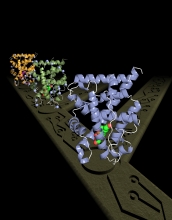
Scientists have determined for the first time the atomic structure of an ancient protein, revealing in unprecedented detail how genes evolved their functions.

"Never before have we seen so clearly, so far back in time," said project leader Joe Thornton, an evolutionary biologist at the University of Oregon. "We were able to see the precise mechanisms by which evolution molded a tiny molecular machine at the atomic level, and to reconstruct the order of events by which history unfolded."

A detailed understanding of how proteins – the workhorses of every cell – have evolved has long eluded evolutionary biologists, in large part because ancient proteins have not been available for direct study.