Banner
Pilot Study: Fibromyalgia Fatigue Improved By TENS Therapy

Fibromyalgia is the term for a poorly-understood condition where people experience pain and fatigue...

High Meat Consumption Linked To Lower Dementia Risk

Older people who eat large amounts of meat have a lower risk of dementia and cognitive decline...

Long Before The Inca Colonized Peru, Natives Had A Thriving Trade Network

A new DNA analysis reveals that long before the Incan Empire took over Peru, animals were...

Mesolithic People Had Meals With More Tradition Than You Thought

The common imagery of prehistoric people is either rooting through dirt for grubs and picking berries...

User picture.
News StaffRSS Feed of this column.

News Releases From All Over The World, Right To You... Read More »

Blogroll
Fifth generation (5G) wireless communication networks are being deployed worldwide and promise mass connectivity, ultra-reliability, and guaranteed low latency.

It sounds great for 2020 but people of 2030 are likely to want that, plus enhanced spectral/energy/cost efficiency, better intelligence level, and security - all over the world.

For that, they will need 6G air interface and transmission technologies and novel network architecture, such as waveform design, multiple access, channel coding schemes, multi-antenna technologies, network slicing, cell-free architecture, and cloud/fog/edge computing. 

In humans, if we spend time beneath the ocean and then travel to the surface, we can suffer decompression sickness, known as "the bends" - when the nitrogen in compressed air that dissolved into our blood during a dive does not have time to clear and forms bubbles in tissues. 
While the world recovers from the third coronavirus pandemic of the last 17 years, it's important to be mindful that nature is always evolving new ways to kill. It's why scientists need to create a new influenza vaccine each year.
A lot of environmentalists raise money talking about climate change, but their energy recommendations - mitigation, rationing, high cost - are regressive.

Scientists are interested in progress, and nothing has exemplified that like genetically modified organisms (GMOs), which optimize nature in order to speed up organic processes that may take centuries to happen naturally. From insulin to watermelon to any number of other foods, GMOs have made it possible to grow more produce on less land using less water and energy and chemicals per calorie than ever before.
Now a team believe GMOs can fix climate change, by reducing the amount of CO2 plants put into the atmosphere.
A new study found that natural selection, a key mechanism in biological evolution, favors pathogens with more virulence - how much harm they cause - at the point the disease emerges in a new host species.

Not too much, or else everything will be dead, but not too weak to matter either. 

Virulence and transmission are linked, with virulence arising because pathogens need to exploit hosts to persist, replicate and transmit. Low virulence will be detrimental for pathogens if they cannot transmit while virulence that is too high will also be a disadvantage if infection kills hosts so fast that the pathogen does not have time to transmit. 
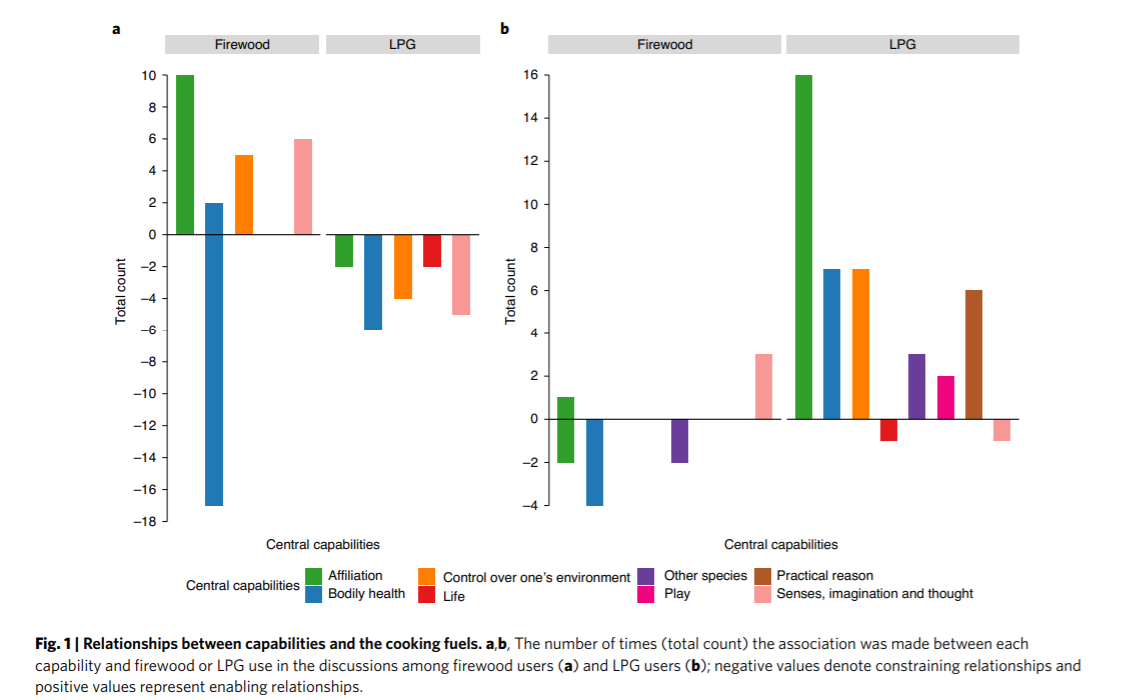
A billion people still use wood for cooking and heating - and western countries are to blame. In the last decade, centralized energy production for developing countries was derailed unless they used solar or wind - neither of which are viable on their own.

That leave families cutting and burning wood or dried dung for fuel, both of which are far worse for the environment than coal. 

Yet there are other obstacles that even prevent people from even switching to local Liquefied Petroleum Gas (LPG) - a belief that local firewood increases "wellbeing" for their families.