Banner
Pilot Study: Fibromyalgia Fatigue Improved By TENS Therapy

Fibromyalgia is the term for a poorly-understood condition where people experience pain and fatigue...

High Meat Consumption Linked To Lower Dementia Risk

Older people who eat large amounts of meat have a lower risk of dementia and cognitive decline...

Long Before The Inca Colonized Peru, Natives Had A Thriving Trade Network

A new DNA analysis reveals that long before the Incan Empire took over Peru, animals were...

Mesolithic People Had Meals With More Tradition Than You Thought

The common imagery of prehistoric people is either rooting through dirt for grubs and picking berries...

User picture.
News StaffRSS Feed of this column.

News Releases From All Over The World, Right To You... Read More »

Blogroll

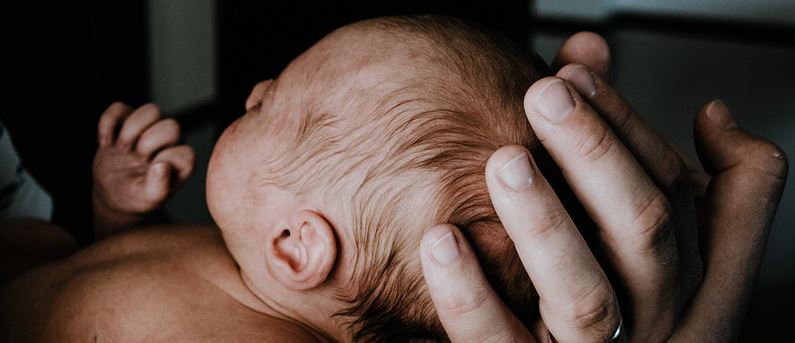
Many people feel anxious about the prospect of their death. Indeed, some philosophers have argued that death anxiety is universal and that this anxiety bounds and organizes human existence. But do we also suffer from birth anxiety? Perhaps. After all, we are all beings that are born as well as beings that die.

Whereas philosophers have said a lot about our anxiety about death, they have said little about birth anxiety. This is part-and-parcel of the broader neglect of birth in the Western philosophical tradition. The guiding thought has been that ‘all men are mortal’ (‘men’ in the sense of ‘human beings’) rather than ‘all human beings are mortal and natal’.

While they last, gamma-ray bursts outshine stars and even galactic quasars. They are the most energetic phenomenon known to humankind, resulting from the formation of neutron stars or black holes as dying stars collapse. They are triggered by outflows of plasma ejected near the speed of light. 

They usually display energies in the region of tens of giga-electron-volts but why not even greater? Indeed, it is no longer speculation, a gamma-ray burst in the region of a tera-electron-volt has been detected. Which means these energies might actually be common.

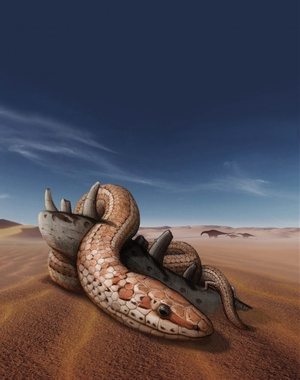
The evolution of the snake body has captivated researchers for a long time because it represents one of the most dramatic examples of the vertebrate body's ability to adapt. A limited fossil record has obscured our understanding of their early evolution but now an ancient legged snake, called Najash has shed light on the origin of the slithering reptiles.


The fossil analyses reveal they possessed hind legs during the first 70 million years of their evolution, and provide details about how the flexible skull of snakes evolved from their lizard ancestors.

Scientists performed high-resolution (CT) scanning and light microscopy of preserved skulls of Najash to reveal substantial new anatomical data on the early evolution of snakes.
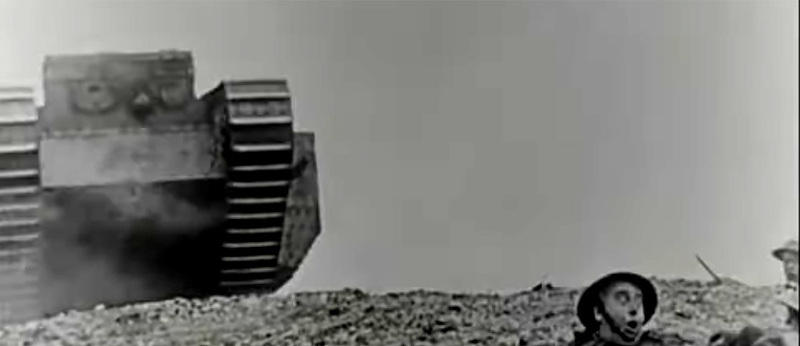
Before Chomsky, there was Lippmann: the First World War and ‘manufactured consent.’

While the ‘manufacture of consent’ is an idea now mostly associated with Noam Chomsky, the phrase was actually coined by the US journalist and writer Walter Lippman in his influential book "Public Opinion" (1922) – a fact that Chomsky and Edward Herman, his co-author on "Manufacturing Consent" (1988), readily acknowledge. 

Lippman contended that, because the world is too complex for any individual to comprehend, a strong society needs people and institutions specialized in collecting data and creating the most accurate interpretations of reality possible.
Though homosexual behavior has been rewarded in over 1,000 organisms, it can be an evolutionary puzzle; since reproduction can't happen, there is a fitness cost, so why do it?
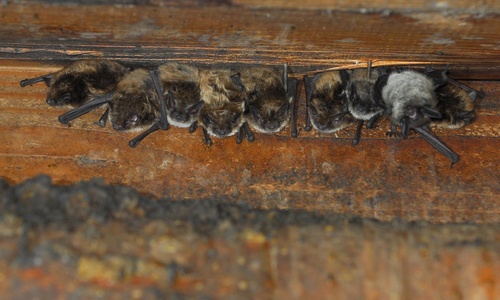
During mating season in the summer, little brown bat (Myotis lucifugus) females huddle their small, furry bodies together to save thermal energy. These "maternity colonies" are important but with population losses across North America, summer access to an attic or other permanent sheltered structure, as opposed to just trees or rock crevices, could be a huge benefit.

In a new Ecosphere paper, researchers investigate and describe the conservation importance of buildings relative to natural, alternative roosts for little brown bats  in Yellowstone National Park.