Banner
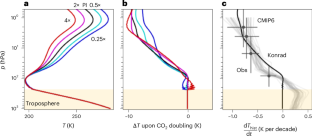
Wavelengths Of Light Are Why CO2 Cools The Upper Atmosphere But Warms Earth

There are concerns about projected warming on the Earth’s surface and in the lower atmosphere...

Here's Where Your Backyard Was 300 Million Years Ago

We may use terms like "grounded" and terra firma to mean stability and consistency but geology...

Convergent Evolution Cheat Sheet Now 120 Million Years Old

One tenet of natural selection is a random walk of genes but nature may be more predictable than...

Synchrotron Could Shed Light On Exotic Dark Photons

There are many hypothetical particles proposed to explain dark matter and one idea to explore how...

User picture.
News StaffRSS Feed of this column.

News Releases From All Over The World, Right To You... Read More »

Blogroll
Soitec, part of Euronext Paris, has announced that the U.S. Department of Energy (DOE) is giving them a SUNPATH award in the amount of $25 million to support its new North American solar manufacturing facility in San Diego, California.

SUNPATH, which stands for Scaling Up Nascent PV At Home, is part of the U.S. governments controversial efforts to increase America's manufacturing competitiveness in the solar market.

Society is in a tough spot. Drug companies are culturally vilified and routinely sued when things go bad - all in return for only a few years of profitability before anyone can make the new drugs they develop - the FDA is constantly under pressure to expedite new drugs to respond to patient needs and governments are increasing pressure and regulation.

 Small wonder there are fewer early stage drug companies and drug shortages.  The situation is even worse in Europe, both in their cultural resistance to modern science and anti-business climate.

Heliatek GmbH, a technology company in the field of organic photovoltaics, has announced that its transparent solar films could be used to be integrated between the glass sheets of double glazed windows. These windows would look like tinted glass as the unique vapor deposition technology for the solar films allows for a homogeneous coating of the solar layer without any distracting patterns or irregularities.  

Think it takes James Webb Space Telescope money-pit type funding to do (or someday do) astronomy these days?

Not so, some astronomers get it done with a lens equivalent to a digital camera. As the saying goes, it's not the size of your aperture, it's the vigor of your numerical analysis that counts.

The KELT North telescope in southern Arizona has a tiny lens - really tiny.  But it has revealed the existence of two very unusual faraway planets in a big way, according to Ohio State University doctoral student Thomas Beatty and Vanderbilt University research scientist Robert Siverd, who detailed their discoveries for the KELT-North team at the American Astronomical Society national meeting in Anchorage.

AMSTERDAM, June 13, 2012  -- Elsevier has added a new enhancement to SciVal Strata, a web-based performance evaluation tool that allows users to conduct highly customized performance assessments of research teams and individual researchers. The new functionality provides the capacity for objective assessment of a specific selection of a researcher's work in addition to their complete publication output. This option is critical when selecting the most impactful papers to be submitted for various government or institutional assessments. In addition the enhanced functionality will prove useful to individuals applying for grants and showing funders the impact of the research they supported. 

MELBOURNE, Australia, June 13 -- In what is being billed as the world's largest international study of online consumer behavior, involving over 36,000 users (though that sounds low - we could easily get more than 36,000 respondents to a survey today), differences between online behavior cultures were found, including the secret to success - which appears to be simplicity. 

The Webreep online consumer survey analyzed consumer behavior on the internet between May 2011 and May 2012. Participants were distributed across 7 regions, including France, Germany, Spain, Australia, China, and Russia.

The study found Americans are the most trusting, 20% more than Europeans, Chinese (23%), and Russians (33%).