Banner
Ousiometrics Analysis Says All Human Language Is Biased

A new tool drawing on billions of uses of more than 20,000 words and diverse real-world texts claims...

Wavelengths Of Light Are Why CO2 Cools The Upper Atmosphere But Warms Earth

There are concerns about projected warming on the Earth’s surface and in the lower atmosphere...

Here's Where Your Backyard Was 300 Million Years Ago

We may use terms like "grounded" and terra firma to mean stability and consistency but geology...

Convergent Evolution Cheat Sheet Now 120 Million Years Old

One tenet of natural selection is a random walk of genes but nature may be more predictable than...

User picture.
News StaffRSS Feed of this column.

News Releases From All Over The World, Right To You... Read More »

Blogroll
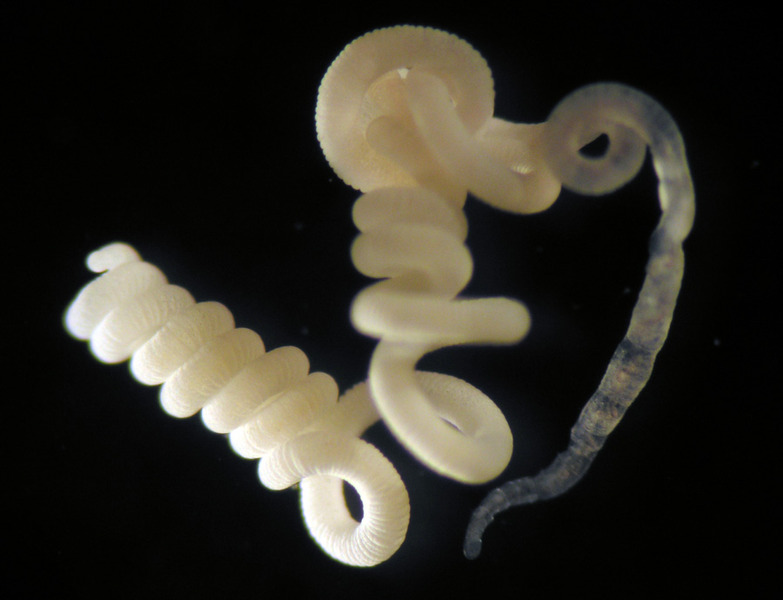
A small marine worm, Olavius algarvensis, is faced with a scarce food supply in the sandy sediments it lives in off the coast of Elba, so it must deal with a highly poisonous menu: it lives on carbon monoxide and hydrogen sulfide.

O. algarvensis can thrive on these poisons thanks to millions of symbiotic bacteria that live under its skin. The bacteria use the energy from carbon monoxide and hydrogen sulphide to produce food for the worm, just like plants do by fixing carbon dioxide into carbohydrates - but instead of using light energy from the sun, the symbionts use the energy from chemical compounds like carbon monoxide.
Dye-sensitized solar cells (DSC) are easier to manufacture than silicon-based solid-state photovoltaic cells but not as efficient. Some new research may make carbon nanotubes a more efficient alternative for platinum electrodes in dye-sensitized solar cells, making them more viable overall.
Wikipedia is crowdsourced knowledge and therefore discourages people from writing about themselves. As a result, 60 percent of Wikipedia articles about companies contain factual errors, according to research published in Public Relations Journal.

Marcia W. DiStaso, Ph.D., assistant professor of public relations at Penn State University, surveyed 1,284 public relations people from
the Public Relations Society of America's (PRSA). Results of the survey indicate a gap exists between public relations companies and Wikipedia concerning the proper protocol for editing entries.
Whether you are concerned about Mayans, a worldwide infrastructure collapse or an exploding supervolcano, science has some good news for your doomsday preparation - sunlight and a twist of lime are an inexpensive and effective way to quickly improve the quality of your drinking water.

Researchers have found that adding lime juice to water while using a solar disinfection method removed detectable levels of harmful bacteria such as Escherichia coli (E. coli) significantly faster than solar disinfection alone. 
Proteins are large, organic - in the science sense of organic, not the food marketing sense -  molecules that help us to convert food into energy, supply oxygen to our blood and muscles and drive our immune systems. 

Proteins consist of one or more polypeptides, chains of amino acids held together by peptide bonds. If a protein in water is heated to temperatures approaching the boiling point of water, these chains will lose their structure and the protein will denature (unfold). 
We created clocks and calendars to give people a common way to communicate about the future and the past and about when to have dinner.  But time is, as they say, relative.  A clock on top of a mountain moves differently than one at sea level - that's gravitational time dilation. NIST researchers have even been able to show that tall people age differently than short ones. And if you lived your life in a car traveling 20 miles per hour, you would age slower than people who just walk around. Time is not only relative in physics, it is relative in culture.  We feel like time moves faster the older we get.