Banner
Pilot Study: Fibromyalgia Fatigue Improved By TENS Therapy

Fibromyalgia is the term for a poorly-understood condition where people experience pain and fatigue...

High Meat Consumption Linked To Lower Dementia Risk

Older people who eat large amounts of meat have a lower risk of dementia and cognitive decline...

Long Before The Inca Colonized Peru, Natives Had A Thriving Trade Network

A new DNA analysis reveals that long before the Incan Empire took over Peru, animals were...

Mesolithic People Had Meals With More Tradition Than You Thought

The common imagery of prehistoric people is either rooting through dirt for grubs and picking berries...

User picture.
News StaffRSS Feed of this column.

News Releases From All Over The World, Right To You... Read More »

Blogroll

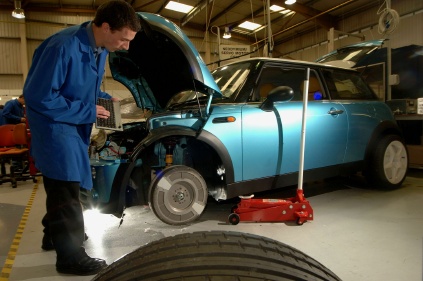
Scientists at the University of Portsmouth are using the latest breakthroughs in artificial intelligence to develop the world's first thinking car wheel.

The 'smart' wheel is being developed under a £200K Department of Trade and Industry-funded Knowledge Transfer Partnership (KTP) project with Hampshire-based company PML Flightlink Ltd.


A University of Portsmouth Scientist works on the wheel. Credit: Russell Sach

The era in which standard serology tests divided populations into two basic blood groups, ABO and Rh, may soon be a thing of the past. Nearly a century after blood group analysis began, new technologies for genotyping of blood offer a far more accurate picture of blood groups, experts reported at the 12th Congress of the European Hematology Association.

Primates with severe Parkinson’s disease were able to walk, move, and eat better, and had diminished tremors after being injected with human neural stem cells, a research team from Yale, Harvard, the University of Colorado, and the Burnham Institute report today in Proceedings of the National Academy of Sciences.

These results are promising, but it will be years before it is known whether a similar procedure would have therapeutic value for humans, said the lead author, D. Eugene Redmond Jr., professor of psychiatry and neurosurgery at Yale.

While solar power and hybrid cars have become popular symbols of green technology, Stanford researchers are exploring another path for cutting emissions of carbon dioxide, the leading greenhouse gas that causes global warming.

Carbon capture and storage, also called carbon sequestration, traps carbon dioxide after it is produced and injects it underground. The gas never enters the atmosphere. The practice could transform heavy carbon spewers, such as coal power plants, into relatively clean machines with regard to global warming.

The vocal learning process in the zebra finch offers a model system to study the neural and behavioral mechanisms by which humans learn to produce sounds. Songbirds such as zebra finches have specialized areas of their brains devoted to communication. That is why they have been used as animal models to study speech disorders, such as stuttering. It is estimated that more than 3 million Americans stutter.

Want to play the ultimate version of The X-Men's "Wolverine" this Halloween? You'll need self-healing skin after those claws come out. Researchers at the University of Illinois are here to help. They have invented the next generation of self-healing materials, which mimics human skin by healing itself time after time. The new materials rely upon embedded, three-dimensional microvascular networks that emulate biological circulatory systems.


Now they just need to invent that Adamantium exo-skeleton. Copyright Marvel Comics Group