Banner
Pilot Study: Fibromyalgia Fatigue Improved By TENS Therapy

Fibromyalgia is the term for a poorly-understood condition where people experience pain and fatigue...

High Meat Consumption Linked To Lower Dementia Risk

Older people who eat large amounts of meat have a lower risk of dementia and cognitive decline...

Long Before The Inca Colonized Peru, Natives Had A Thriving Trade Network

A new DNA analysis reveals that long before the Incan Empire took over Peru, animals were...

Mesolithic People Had Meals With More Tradition Than You Thought

The common imagery of prehistoric people is either rooting through dirt for grubs and picking berries...

User picture.
News StaffRSS Feed of this column.

News Releases From All Over The World, Right To You... Read More »

Blogroll

Sleep remains one of the big mysteries in biology. All animals sleep, and people who are deprived of sleep suffer physically, emotionally and intellectually. But nobody knows how sleep restores the brain.

Now, Giulio Tononi, a professor of psychiatry at the University of Wisconsin-Madison School of Medicine and Public Health, has discovered how to stimulate brain waves that characterize the deepest stage of sleep. The discovery could open a new window into the role of sleep in keeping humans healthy, happy and able to learn.

Arctic sea ice is melting at a significantly faster rate than projected by even the most advanced computer models, a new study concludes. The research, by scientists at the National Center for Atmospheric Research (NCAR) and the University of Colorado's National Snow and Ice Data Center (NSIDC), shows that the Arctic's ice cover is retreating more rapidly than estimated by any of the 18 computer models used by the Intergovernmental Panel on Climate Change (IPCC) in preparing its 2007 assessments.


This figure illustrates the extent to which Arctic sea ice is melting faster than projected by computer models.

Companies selling food products may need to worry about their goods catching "cooties" by coming in contact with certain other products, such as lard and feminine napkins, in shoppers' carts or on store shelves.

Based on their findings, researchers at Duke University and Arizona State University suggest companies may want to reconsider their packaging and shelf positioning strategies in order to safeguard their brands from offending products.

Of all the things companies worry about when selling food products, catching "cooties" is probably not high on the list. But new research suggests it should be.

If you're a communist dictatorship, the solution for pollution is simple - you ban driving.

They did just that during the Summit of the Forum on China-Africa Cooperation from Nov. 4-6, 2006 and it might be an indicator for what they will do during the 2008 Summer Olympics.


Chinese commuters make their way in heavy smog in Beijing in this December 14, 2004 file photo. REUTERS/Reinhard Krause/Files

Harvard University researchers Michael B. McElroy, Yuxuan Wang, and K. Folkert Boersma used data from the Dutch-Finnish Ozone Monitoring Instrument (OMI) to assess the impact in more rapid fashion than is usually possible.

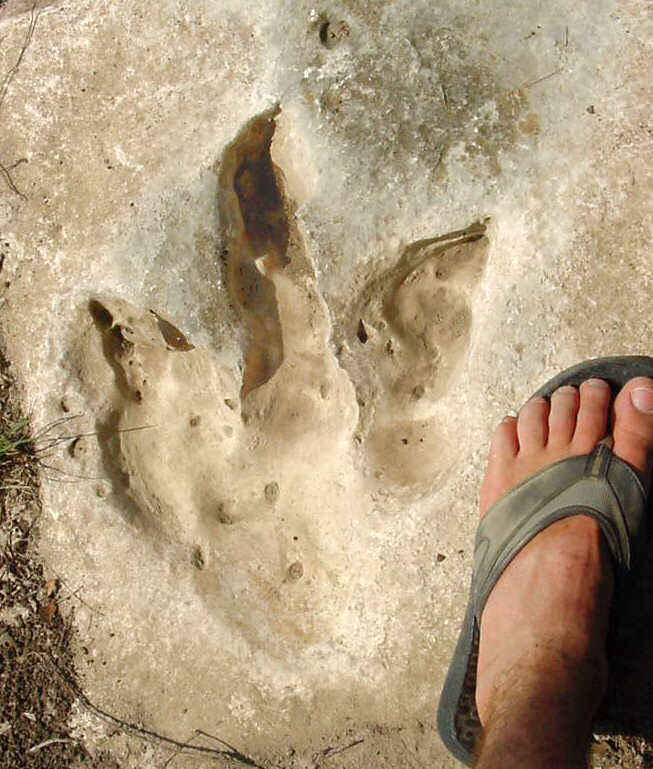
Dinosaur tracks, once neglected, are now considered a key source of scientific information on dinosaur behavior and ecology.

A new study appearing in the May issue of The Journal of Geology provides fascinating insight into the factors geologists must account for when examining dinosaur tracks. The authors studied a range of larger tracks from the family of dinosaurs that includes the T. Rex and the tridactyl, and provide a guide for interpreting the effects of many different types of erosion on these invaluable impressions.


Theropod dinosaur track from central Texas
Edwards formation, Lower Cretaceous. (C) 2002, Glen J. Kuban

Researchers at the Yerkes National Primate Research Center, Emory University, have found bonobos and chimpanzees use manual gestures of their hands, feet and limbs more flexibly than they do facial expressions and vocalizations, further supporting the evolution of human language began with gestures as the gestural origin hypothesis of language suggests.


Now we know where we got it from.

Working with two groups of bonobos (13 animals) and two groups of chimpanzees (34 animals), Yerkes researchers Amy Pollick, PhD, and Frans de Waal, PhD, distinguished 31 manual gestures and 18 facial/vocal signals.