Banner
Pilot Study: Fibromyalgia Fatigue Improved By TENS Therapy

Fibromyalgia is the term for a poorly-understood condition where people experience pain and fatigue...

High Meat Consumption Linked To Lower Dementia Risk

Older people who eat large amounts of meat have a lower risk of dementia and cognitive decline...

Long Before The Inca Colonized Peru, Natives Had A Thriving Trade Network

A new DNA analysis reveals that long before the Incan Empire took over Peru, animals were...

Mesolithic People Had Meals With More Tradition Than You Thought

The common imagery of prehistoric people is either rooting through dirt for grubs and picking berries...

User picture.
News StaffRSS Feed of this column.

News Releases From All Over The World, Right To You... Read More »

Blogroll

Montreal, February 19, 2016 - Having an occasional drink is fine, but "binge" drinking is a known health hazard and now high blood pressure may need to be added to the list of possible consequences. Young adults in their twenties who regularly binge drink have higher blood pressure which may increase the risk of developing hypertension, concludes a study conducted by researchers at the University of Montreal Hospital Research Centre (CRCHUM).

Binge drinking (i.e. consuming five or more alcoholic beverages in less than two hours), is quite prevalent: previous studies in Canada and the U.S. have shown that about four in ten young adults aged 18 to 24 are frequent binge drinkers.

Suetsugu Kenji, a Project Associate Professor at the Kobe University Graduate School of Science, has discovered a new species of plant on the subtropical Japanese island of Yakushima (located off the southern coast of Kyushu in Kagoshima prefecture) and named it Sciaphila yakushimensis. This research was published on 20th February in the Journal of Japanese Botany.

Certain plant species known as mycoheterotrophic plants have abandoned photosynthesis and instead live as parasites, exploiting their fungal hosts for nutrients. However, these parasitic plants are small and only appear above ground when they are in flower or fruit, so accurate information on their distribution is limited.

The renowned 'Animas', two marble heads considered one of the most important works of baroque sculptor, painter and architect Gian Lorenzo Bernini's youth, are not a representation of a Christian soul's personification enjoying the pleasures of the Heaven or tormented by the punishment received in Hell (as believed until now), but they really are mythologically themed sculptures: a nymph and a satyr, respectively.

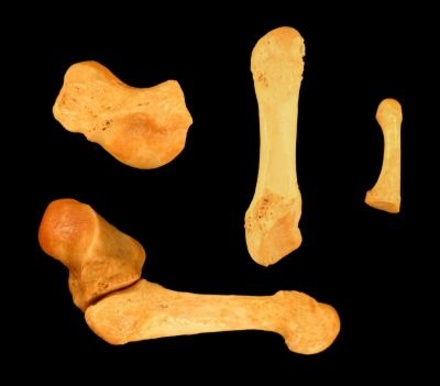
Long before the dinosaurs, hefty herbivores called pareiasaurs ruled the Earth. A detailed investigation of all Chinese specimens of these creatures - often described as the 'ugliest fossil reptiles' - has been published in the Zoological Journal of the Linnean Society.

Pareiasaurs have been reported from South Africa, Europe (Russia, Scotland, Germany), Asia (China), and South America, but it is not known whether there were distinct groups on each of these continents.

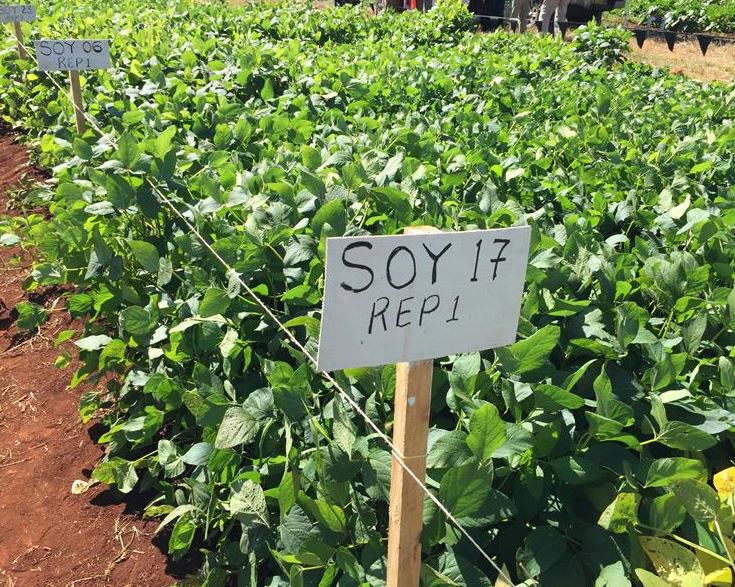
Soybean farmers in the United States can choose from a “candy store” of hundreds of varieties of soybean seed—high-yielding seed with proven performance traits for every region and latitude.

Not so in Africa. For a variety of political reasons, soybean farmers either only have access to a few seed varieties with an unimpressive yield potential, or a few high-yielding varieties for which no performance data exists for their latitude and altitude.

That may change, thanks to a new cultural fortitude which resists being controlled by Europe and a new coordinated soybean variety evaluation program to help give African growers more and better seed options.
Though it was once common to claim that red meat caused heart disease, those turned out to be flawed epidemiological conclusions based on observational studies and things like food diaries. 

A new study finds red meat metabolite levels high in acute heart failure patients, and seeks to re-establish the link between red meat and heart disease using biological markers. Patients with acute heart failure often have high levels of the metabolite trimethylamine N-oxide (TMAO) and red meat is a dietary source. Red meat is a source of L-carnitine which is broken down by gut bacteria to form TMAO. Some papers have linked TMAO with mortality risk in chronic heart failure but no association in acute heart failure has been established.