Banner
Pilot Study: Fibromyalgia Fatigue Improved By TENS Therapy

Fibromyalgia is the term for a poorly-understood condition where people experience pain and fatigue...

High Meat Consumption Linked To Lower Dementia Risk

Older people who eat large amounts of meat have a lower risk of dementia and cognitive decline...

Long Before The Inca Colonized Peru, Natives Had A Thriving Trade Network

A new DNA analysis reveals that long before the Incan Empire took over Peru, animals were...

Mesolithic People Had Meals With More Tradition Than You Thought

The common imagery of prehistoric people is either rooting through dirt for grubs and picking berries...

User picture.
News StaffRSS Feed of this column.

News Releases From All Over The World, Right To You... Read More »

Blogroll
A genetic analysis found a single point mutation in the TLR7 gene and then identified other cases of severe lupus where this gene was also mutated. 

Lupus is a chronic autoimmune disease which causes inflammation in organs and joints, affects movement and the skin, and causes fatigue. In severe cases, symptoms can be debilitating and complications can be fatal. The work resulted from whole genome sequencing on the DNA of a Spanish child named Gabriela, who was diagnosed with severe lupus when she was 7 years old. Such a severe case with early onset of symptoms is rare and indicates a single genetic cause.
In a new paper, scholars say depression, anxiety, and other mental health issues are more common than ever before, and that people of color are impacted most.

The data are from surveys, and young people have always felt a need to 'live in important times' and believe everything is different than any other generation faced, but young people today went through an economic meltdown and then a pandemic, with all of the resulting media attention and worry that entailed. The Healthy Minds Network pool was between 2013 and 2021 from 350,000 students at over 300 campuses. 
The mysteries of the universe are profound but one solution has long been sought; how events at the edge of our solar system, the beginning of the rest of the universe, brought about evolution of earth, the other planets, and even life itself.

A new paper speculates about how the gas giants — Jupiter, Saturn, Uranus and Neptune — ended up where they are, orbiting the sun like they do. They try to figure an explanation for what happened to gas giants in other solar systems and ours- and try to make an education guess if a fifth gas giant lurks 50 billion miles away. A new planet 9, or a planet 14, or whatever a tiny minority of astronomers in the IAU try to decree.
The world’s largest particle accelerator is back in business. Today, two beams of protons circulated in opposite directions around the Large Hadron Collider’s 27-kilometer ring at their injection energy of 450 billion electronvolts (450 GeV), marking the conclusion of a three year hiatus for maintenance, consolidation and upgrade work.

The work was done so that it can operate at an even higher energy and deliver significantly more data to the upgraded LHC experiments but high-energy collisions still months away. The beams circulated today were a test at injection energy and contained a small number of protons.
 Solar power has potential but a crippling weakness that has meant despite trillions of dollars in subsidies and continuing mandates, it has not made a dent in use of conventional energy; it is not on demand and batteries are expensive and going to do more harm to the future than natural gas.

The solar energy system MOST – Molecular Solar Thermal Energy Storage Systems - is starting small but the concept of a specially designed molecule that changes shape when it comes into contact with sunlight scaled to operational sizes might mean real solar farms in remote places that provide electricity as well as conventional energy.
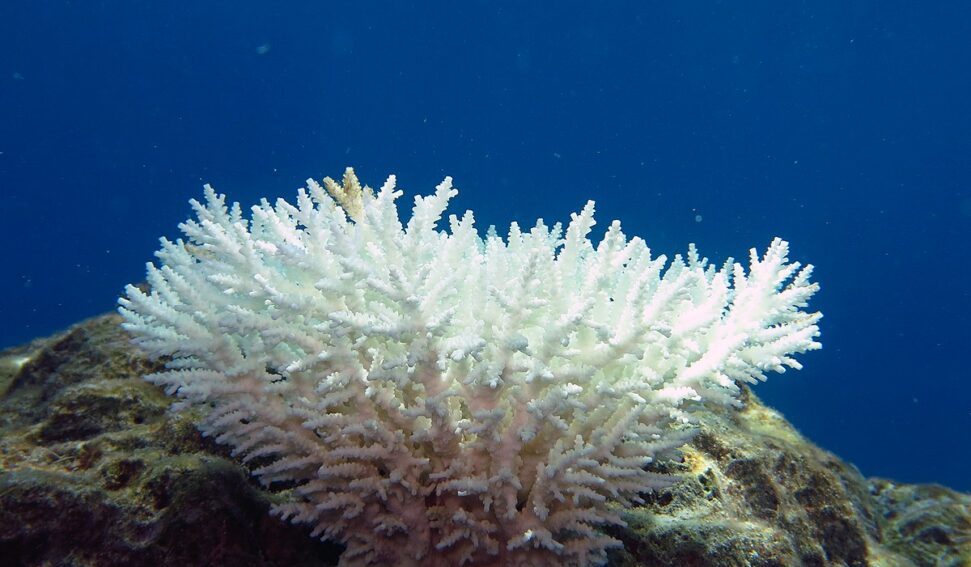
Water has varied in temperature for as long as water has existed and it seems evolution has provided coral reefs a recovery mechanism after variation results in 'bleaching' - when corals expel algae and turn white. It can have some impact beyond algae because about 275 million people live near a coral reef and they can be tourist attractions and help support fishing industries.

In 2018, two years after the government protected Chagos Archipelago underwent bleaching, the reef coral cover and carbonate production were down by more than 70 percent. Yet by last year, they were found to have rebounded nicely.