Banner
Pilot Study: Fibromyalgia Fatigue Improved By TENS Therapy

Fibromyalgia is the term for a poorly-understood condition where people experience pain and fatigue...

High Meat Consumption Linked To Lower Dementia Risk

Older people who eat large amounts of meat have a lower risk of dementia and cognitive decline...

Long Before The Inca Colonized Peru, Natives Had A Thriving Trade Network

A new DNA analysis reveals that long before the Incan Empire took over Peru, animals were...

Mesolithic People Had Meals With More Tradition Than You Thought

The common imagery of prehistoric people is either rooting through dirt for grubs and picking berries...

User picture.
News StaffRSS Feed of this column.

News Releases From All Over The World, Right To You... Read More »

Blogroll

Urban dwellers may think urban living is better than rural life, and penthouse dwellers may believe living at the top of the city is better than living in a townhouse, but a new study found that survival rates from cardiac arrest decrease the higher up the building a person lives.

Human sounds may convey emotions clearer and faster than words, according to a new paper.

It takes just one-tenth of a second for our brains to begin to recognize emotions conveyed by vocalizations, according to the researchers\. It doesn't matter whether the non-verbal sounds are growls of anger, the laughter of happiness or cries of sadness. More importantly, the researchers have also discovered that we pay more attention when an emotion - such as happiness, sadness or anger - is expressed through vocalizations than we do when the same emotion is expressed in speech.

The first study to evaluate the biodiversity of arthropods in U.S. homes finds that humans share their houses with any of more than 500 different kinds of arthropods - at least on a short-term basis. Arthropods are invertebrate animals with exoskeletons, segmented bodies and jointed limbs, such as insects, spiders, mites and centipedes.

New research published in Applied Physiology, Nutrition, and Metabolism reveals that a high proportion of long-term care residents have a B12 deficiency. Researchers from the University of Waterloo and the Schlegel-University of Waterloo Research Institute for Aging found that the current state of B12 levels for elderly individuals in long-term care facilities in Ontario warrants considering B12 screening at admission in order to ensure effective treatment.

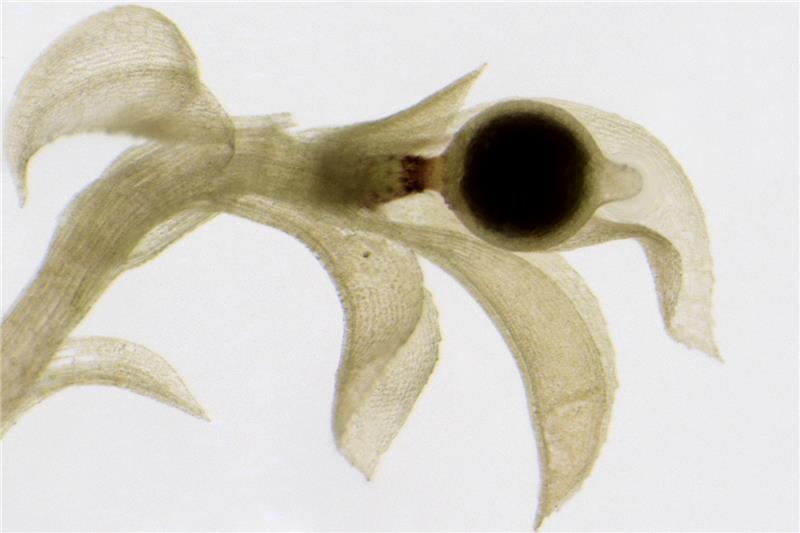
When a sperm and an egg cell merge a new life begins. This is the case in humans and in animals, but in principle also in plants. A team has discovered a gene trigger in the moss Physcomitrella patens which leads to offspring without fertilization and the researchers assume that this mechanism is conserved in evolution and holds the key to answer fundamental questions in biology.

Latest research reveals why geckos are the largest animals able to scale smooth vertical walls - even larger climbers would require unmanageably large sticky footpads. Scientists estimate that a human would need adhesive pads covering 40% of their body surface in order to walk up a wall like Spider-man, and believe their insights have implications for the feasibility of large-scale, gecko-like adhesives.

A new study in PNAS shows that in climbing animals from mites and spiders up to tree frogs and geckos, the percentage of body surface covered by adhesive footpads increases as body size increases, setting a limit to the size of animal that can use this strategy because larger animals would require impossibly big feet.