Banner
Pilot Study: Fibromyalgia Fatigue Improved By TENS Therapy

Fibromyalgia is the term for a poorly-understood condition where people experience pain and fatigue...

High Meat Consumption Linked To Lower Dementia Risk

Older people who eat large amounts of meat have a lower risk of dementia and cognitive decline...

Long Before The Inca Colonized Peru, Natives Had A Thriving Trade Network

A new DNA analysis reveals that long before the Incan Empire took over Peru, animals were...

Mesolithic People Had Meals With More Tradition Than You Thought

The common imagery of prehistoric people is either rooting through dirt for grubs and picking berries...

User picture.
News StaffRSS Feed of this column.

News Releases From All Over The World, Right To You... Read More »

Blogroll

Ants don't get distracted by social information when on the move, only fully responding to it when at rest, a new study from the University of Bristol, UK indicates. Such sporadic monitoring of the social environment may reduce information overload and enhance the robustness of complex societies, the researchers suggest.

Edmund Hunt, a PhD student in Bristol's School of Biological Sciences, and colleagues tracked the movement patterns of lone rock ants (Temnothorax albipennis) exploring a large arena outside the nest, both when the arena was clean and when it contained chemical information (pheromones or other cues) left by previous nest-mates.

PISCATAWAY, NJ - Young people's exposure to alcohol advertisements on television could be greatly reduced if alcohol companies improved their use of so-called no-buy lists, according to a study in the January issue of the Journal of Studies on Alcohol and Drugs.

Alcohol manufacturers are self-regulated when it comes to advertising: In 2003, the industry set guidelines that limit advertising to media that have a primarily adult audience -- with at least 71.6 percent of the audience being age 21 or older.

This news release is available in French.

A gene involved in the regulation of emotions and behaviour could influence the long-term impact of violence experienced in childhood on antisocial behaviour. This is the finding of a longitudinal study carried out by a team of researchers at the Institut universitaire en santé mentale de Montréal (CIUSSS de l'Est-de-l'Île-de-Montréal) and Université de Montréal on 327 young men who live in Quebec (Quebec Longitudinal Study of Kindergarten Children), some of whom were exposed to violence as children.

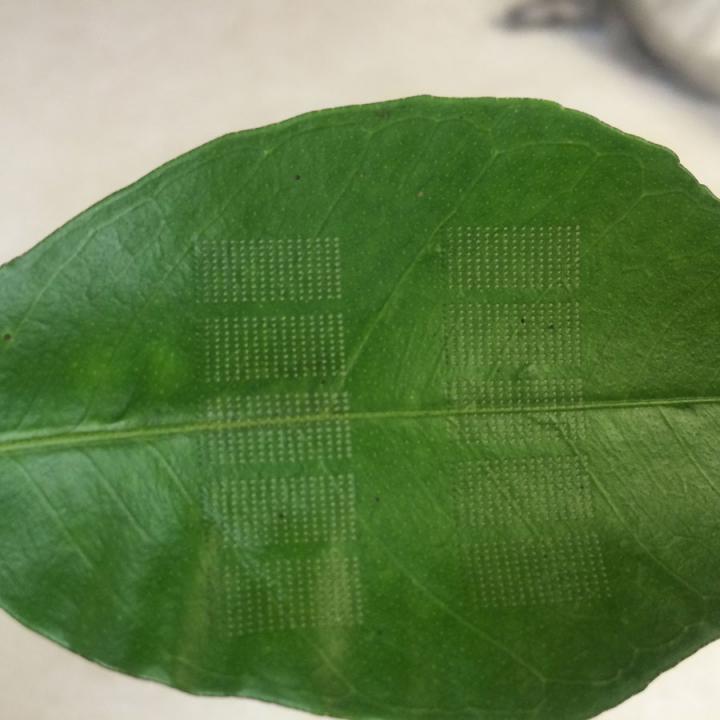
Florida's citrus industry has been struggling with citrus greening, also known as Huanglongbing (HLB), a disease caused by a bacterium called Candidatus Liberibacter asiaticus (CLas) that destroys fruit production and eventually kills the tree. An effective cure using antibiotics and breeding has not happened, and crop production is declining steadily.

A group of researchers are using lasers on citrus leaves. When used with the right settings, could greatly improve the success of antibiotic treatments currently being looked into as a way to stop the deadliest plant disease in Florida's history. 

Clouds play a bigger role in the melting of the Greenland ice sheet than was previously assumed. Compared to clear skies, clouds enhance the meltwater runoff by a third. Those are the findings of an international study that was coordinated by KU Leuven and published in Nature Communications.

Greenland's ice sheet is the second largest ice mass in the world - the largest is Antarctica. The ice sheet is losing mass at a high speed and increasingly contributes to the sea level rise on our planet. The role of clouds in this loss of snow and ice has never been calculated before, nor can it be deduced from theoretical climate models. For lack of observations, the different models do not agree on the importance of clouds over the ice sheet.

CAMBRIDGE, MA -- Cell survival depends on having a plentiful and balanced pool of the four chemical building blocks that make up DNA -- the deoxyribonucleosides deoxyadenosine, deoxyguanosine, deoxycytidine, and thymidine, often abbreviated as A, G, C, and T. However, if too many of these components pile up, or if their usual ratio is disrupted, that can be deadly for the cell.

A new study from MIT chemists sheds light on a longstanding puzzle: how a single enzyme known as ribonucleotide reductase (RNR) generates all four of these building blocks and maintains the correct balance among them.