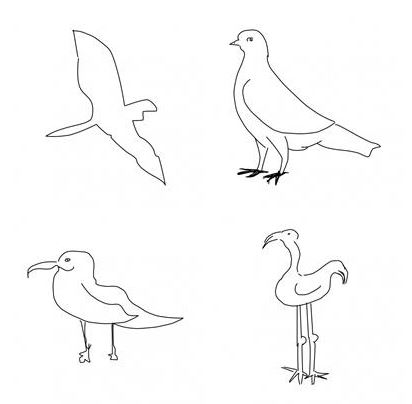
The downside to computer programs is they lack the ability to interpret. A tiny human can look at a picture of a chicken and a cartoon of a chicken and know that's a chicken while a computer program cannot.
Researchers from Queen Mary University of London believe they have overcome one obstacle and have built the first computer program that can recognize hand-drawn sketches better than humans. They call it Sketch-a-Net and in their tests it is capable of correctly identifying the subject of sketches 74.9 percent of the time compared to humans that only managed a success rate of 73.1 percent.
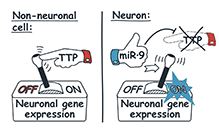
The human organism contains hundreds of distinct cell types that often differ from their neighbors in shape and function. To acquire and maintain its characteristic features, each cell type must express a unique subset of genes. Neurons, the functional units of our brain, develop through differentiation of neuronal precursors, a process that depends on coordinated activation of hundreds and possibly thousands of neuron-specific genes.
It may seem like infants just sleep, eat and cry, but newborn brains are full of activity and they are already gathering and processing important information from the world around them. At just two days after birth, babies are already able to process language using processes similar to those of adults.
Researchers have demonstrated that they are sensitive to the most important parts of words, the edges, a cognitive mechanism which has been repeatedly observed in older children and adults.
Centralized ventilation systems that exchange heat between the air inside and outside a building often come with a lot of pipes and shafts while compact, decentralized ventilation systems distributed throughout a building can provide a real added-value both in terms of design, comfort and energy efficiency.
The Green Ventilation system promise to balance inbound and outbound air flow in such a way that it reduces heating and cooling requirements—a principle called balanced heat recovery. The advantage of this system is that it can be added to building envelope components such as windows, walls, insulation materials, terminal heating and cooling units and lintels.
CRISPR/Cas systems for genome editing have revolutionized biological research over the past three years, and their ability to make targeted changes in DNA sequences in living cells with relative ease and affordability is now being applied to clinical medicine and will have a significant impact on advances in drug and other therapies, agriculture, and food products.
The power and promise of this innovation are presented in the Review article "The Bacterial Origins of the CRISPR Genome-Editing Revolution published in Human Gene Therapy.
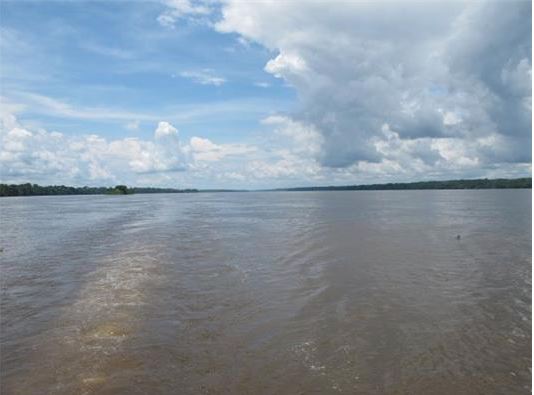
Researchers have completed a large-scale research project conducted over a five-year period on the African continent to compile the first greenhouse gas budget of African rivers.
Covering 12 rivers spread across the entire continent of Africa, the study shows that greenhouse gas emissions from the rivers are very significant. The researchers trawled the African continent in order to analyze the streams of carbon dioxide (CO2), methane (CH4) and nitrous oxide (N2O), the three main GHG.


 Pilot Study: Fibromyalgia Fatigue Improved By TENS Therapy
 High Meat Consumption Linked To Lower Dementia Risk
 Long Before The Inca Colonized Peru, Natives Had A Thriving Trade Network
 Mesolithic People Had Meals With More Tradition Than You Thought