Banner
The Scorched Cherry Twig And Other Christmas Miracles Get A Science Look

Bleeding hosts and stigmatizations are the best-known medieval miracles but less known ones, like ...
$0.50 Pantoprazole For Stomach Bleeding In ICU Patients Could Save Families Thousands Of Dollars

The inexpensive medication pantoprazole prevents potentially serious stomach bleeding in critically...
Metformin Diabetes Drug Used Off-Label Also Reduces Irregular Heartbeats

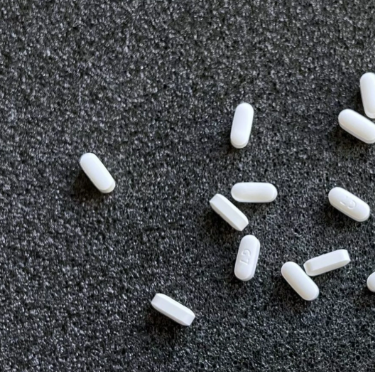
Adults with atrial fibrillation (AFib) who are not diabetic but are overweight and took the diabetes...

Your Predator: Badlands Future - Optical Camouflage, Now Made By Bacteria

In the various 'Predator' films, the alien hunter can see across various spectra while enabling...

User picture.
News StaffRSS Feed of this column.

News Releases From All Over The World, Right To You... Read More »

Blogroll
If you read internet science in 2006, you'd have thought former president George W. Bush's limitations of use of embryonic stem cell lines had killed science.  In reality, embryonic stem cell research only received $15 million in US funding when the restrictions were imposed and it grew to billions per year during his presidency so some of that rhetoric was designed simply to engage in cultural spin and mobilize votes for Democrats.

With a Democrat president and a bulletproof majority in the Senate, culturally-inclined science bloggers can now instead focus on religion and maybe the few Republicans still out there and the rest of us can tackle serious issues, like how to educate people on stem cell research so they can make informed policy decisions.
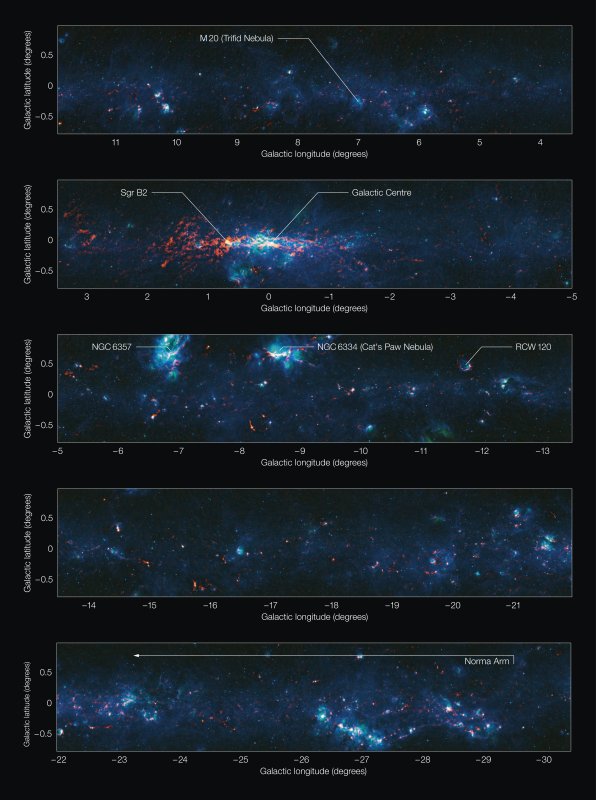
Astronomers have unveiled a new atlas of the inner regions of the Milky Way - that's our home galaxy, if you're from someplace else - and it's peppered with thousands of previously undiscovered dense knots of cold cosmic dust, the potential birthplaces of new stars. Using observations from the APEX telescope in Chile, this survey is the largest map of cold dust so far.

This new guide for astronomers, known as the APEX Telescope Large Area Survey of the Galaxy (ATLASGAL) shows the Milky Way in submillimetre-wavelength light (between infrared light and radio waves. Images of the cosmos at these wavelengths are vital for studying the birthplaces of new stars and the structure of the crowded galactic core. 
Do friends wear the same clothes or see the same movies because they have similar tastes, part of the reason they became friends or, once a friendship is established, do individuals influence each other to adopt like behaviors? 

Social scientists don't know for sure and are still trying to understand the role social influence plays in the spreading of trends because the real world doesn't keep track of how people acquire new items or preferences. 

But the virtual world of "Second Life" does. Researchers from the University of Michigan have tried to use this information to study how "gestures" make their way through this online community. Gestures are code snippets that Second Life avatars must acquire in order to make motions such as dancing, waving or chanting.
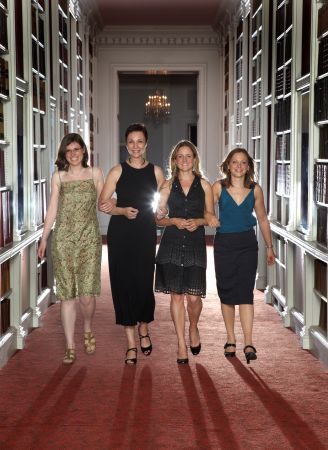
L'Oréal and New Scientist today announced the results of a poll revealing the most inspirational female scientists of all time. Nuclear physicist and chemist Marie Curie topped the poll which was created to celebrate 10 years of the L'Oréal-UNESCO For Women In Science program, with around a quarter (25.1%) of the vote. 

Voted for by more than 800 members of the scientific community and visitors to http://www.NewScientist.com, the poll highlights the absence of modern role models on the list; Astrophysicist Dame Susan Jocelyn Bell Burnell (4.7%), responsible for the discovery of radiopulsars, and Jane Goodall, the primatologist (2.7 per cent) were the only scientists in the top ten to have research published in recent years, polled 4th and 10th, respectively. 
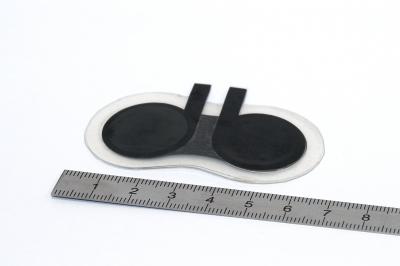
A new printable battery that can be produced cost-effectively on a large scale has been developed by a research team led by Prof. Dr. Reinhard Baumann of the Fraunhofer Research Institution for Electronic Nano Systems ENAS in Chemnitz together with colleagues from TU Chemnitz and Menippos GmbH.

Like your t-shirt, the batteries are printed using a silk-screen method.

They are also different from conventional batteries in that these printable versions weigh less than one gram, are less than a millimeter thick and can even be integrated into bank cards.
When glaciers advanced over much of the planet's surface during the last ice age, what kept  Earth from freezing over entirely?  Climate scientists are unsure because popular numerical models indicated that over the past 24 million years geological conditions should have caused carbon dioxide levels in the atmosphere to plummet, possibly leading to runaway "icehouse" conditions - yes, we needed CO2-related global warming, they said - but researchers writing in Nature claims plants are a missing piece of the puzzle.