Banner
The Scorched Cherry Twig And Other Christmas Miracles Get A Science Look

Bleeding hosts and stigmatizations are the best-known medieval miracles but less known ones, like ...

$0.50 Pantoprazole For Stomach Bleeding In ICU Patients Could Save Families Thousands Of Dollars

The inexpensive medication pantoprazole prevents potentially serious stomach bleeding in critically...

Metformin Diabetes Drug Used Off-Label Also Reduces Irregular Heartbeats

Adults with atrial fibrillation (AFib) who are not diabetic but are overweight and took the diabetes...

Your Predator: Badlands Future - Optical Camouflage, Now Made By Bacteria

In the various 'Predator' films, the alien hunter can see across various spectra while enabling...

User picture.
News StaffRSS Feed of this column.

News Releases From All Over The World, Right To You... Read More »

Blogroll
A team of researchers from the University of Alcalá de Henares (UAH) says that human beings can develop echolocation, the system of acoustic signals used by dolphins and bats to explore their surroundings. Producing certain kinds of tongue clicks helps people to identify objects around them without needing to see them, obviously something that would be useful for the blind, if it's true.

The team has started a series of tests, the first of their kind in the world, they say, to make use of human beings' under-exploited echolocation skills.

Daredevil echolocation
Much cooler than Man-Bat.  ©Marvel Comics Group
There's a reason religious cults do things in groups; peer pressure and mutual awareness keeps them on message.   Likewise, young people are more likely to participate in conservation if their peers do - a tendency that should be exploited when it comes to protecting the environment, according to results of a new study.

The research, which focused on a mammoth government initiative called Grain-to-Green that pays Chinese farmers to convert cropland back to forest, is the first to focus on the phenomenon of social norms in the context of China's conservation efforts, said scientist Jianguo "Jack" Liu of Michigan State University (MSU).
The front portion of the brain that handles tasks like decision-making, the left inferior frontal sulcus, also helps decipher different phonetic sounds, according to new Brown University research.  This section of the brain treats different pronunciations of the same speech sound (such as a 'd' sound) the same way, they say, and in determining this they believe they have solved a mystery.

Elsevier today announced the highlights of its journal impact factor performance in 2008. Elsevier overall saw 75% of its journal impact factors (IF) increase from 2007 to 2008. According to the 2008 Journal Citation Report(R) published by ThomsonReuters, Elsevier journals took the #1 position in 51 categories (of 229) across all of the sciences and social sciences.

In addition, 30 Elsevier journals got their first impact factor this year. Cell Stem Cell (http://www.cell.com/cell-stem-cell/home) (16.826) entered the Cell Biology category ranked 6th (of 157 journals), while Cell Host Microbe (http://www.cell.com/cell-host-microbe/home) (7.436) entered the Microbiology category ranked 10th (of 91 journals).

An international team of researchers has modified chlorophyll from an alga so that it resembles the extremely efficient light antennae of bacteria. The team was then able to determine the structure of these light antennae. This is the first step to converting sunlight into energy using an artificial leaf.

Leiden researcher Swapna Ganapathy has obtained her PhD based on this subject, under the supervision of Professor Huub de Groot, one of the initiators of the research. 
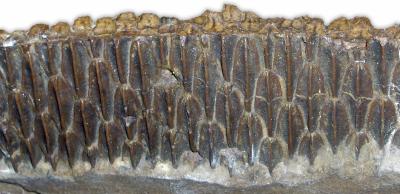
Microscopic analysis of scratches on dinosaur teeth may have helped scientists unravel an ancient riddle of what a major group of dinosaurs - the Hadrosaurs - ate and exactly how they did it.

A study led by the University of Leicester has found evidence that the duck-billed dinosaurs called  Hadrosaurs had a unique way of eating, unlike any living creature today.  Working with researchers from the Natural History Museum, the study used a new approach to analyze the feeding mechanisms of dinosaurs and understand their place in the ecosystems of tens of millions of years ago.