Banner
The Scorched Cherry Twig And Other Christmas Miracles Get A Science Look

Bleeding hosts and stigmatizations are the best-known medieval miracles but less known ones, like ...
$0.50 Pantoprazole For Stomach Bleeding In ICU Patients Could Save Families Thousands Of Dollars

The inexpensive medication pantoprazole prevents potentially serious stomach bleeding in critically...
Metformin Diabetes Drug Used Off-Label Also Reduces Irregular Heartbeats

Adults with atrial fibrillation (AFib) who are not diabetic but are overweight and took the diabetes...

Your Predator: Badlands Future - Optical Camouflage, Now Made By Bacteria

In the various 'Predator' films, the alien hunter can see across various spectra while enabling...

User picture.
News StaffRSS Feed of this column.

News Releases From All Over The World, Right To You... Read More »

Blogroll
Recent research says that talking on a cell phone poses a dangerous distraction for drivers and others whose attention should be focused elsewhere and now a new study in the Journal of Environmental Psychology finds that just the ring of a cell phone may be equally distracting, especially when it comes in a classroom setting or includes a familiar song as a ringtone.

Students exposed to a briefly ringing cell phone scored 25 percent worse on a test of material presented before the distraction.
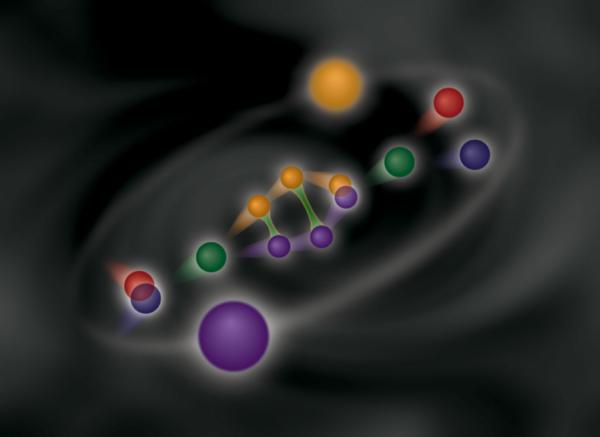
'True muonium' is a long-theorized but never-seen tiny atom that was first proposed more than 50 years ago.  True muonium, which unlike "muonium" (an atom made of an electron and an anti-muon) is made of a muon and an anti-muon.   Both muons and anti-muons are created frequently in nature when energetic particles from space — cosmic rays — strike the Earth's atmosphere yet their existence is fleeting and their combination, 'true muonium,' decays naturally into other particles in a few trillionths of a second. This has made observation impossible.

But it might be observed even in current collider experiments, according to theoretical work published recently by researchers at the SLAC National Accelerator Laboratory and Arizona State University.
Like ethanol, the darling of activists who refused to know any better until it was actually implemented and shown to be a disaster, there is a certain amount of marketing hype around CFL bulbs and environmental groups have drunk the Kool-Aid.  

All mercury is bad when it comes to kids.   And who knows what those frequencies will do to your pets?   But it may not be an issue for long.   A new laser process says it can double the brightness of incandescent bulbs while using the same amount of energy.    

DHS Begins Test of Biometric Exit Procedures at Two U.S. Airports, the next step toward deploying biometric exit procedures for international travelers.

The U.S. Department of Homeland Security (DHS) today began collecting biometrics - digital fingerprints - from non-U.S. citizens departing the United States as part of a pilot program at Hartsfield-Jackson Atlanta International Airport and Detroit Metropolitan Wayne County Airport. Since 2004, biometrics have helped DHS prevent the use of fraudulent documents, protect visitors from identity theft and stop thousands of criminals and immigration violators from entering the United States.

Collecting biometrics allows us to determine faster and more accurately whether non-U.S.

VIB (the Flanders Institute for Biotechnology) researchers linked to K.U.Leuven and Harvard University say they have shown that stretches of DNA previously believed to be useless 'junk' DNA play a vital role in the evolution of our genome. Their findings were that unstable pieces of junk DNA help tuning gene activity and enable organisms to quickly adapt to changes in their environments.

Junk DNA in two paragraphs

"Most people do not realize that all our genes only comprise about 3% of the total human genome. The rest is basically one large black box,"  says Kevin Verstrepen, heading the research team. "Why do we have this DNA, what is it doing?"

Oxidative stress has been linked to aging, cancer and other diseases in humans. Paradoxically, researchers have suggested that small exposure to oxidative conditions may actually offer protection from acute doses. Now, scientists at the University of California, San Diego, have discovered the gene responsible for this effect. Their study, published in PLoS Genetics on May 29, explains the underlying mechanism of the process that prevents cellular damage by reactive oxygen species (ROS).