Scientists at South Dakota State University are exploring the mechanisms by which a substance derived ultimately from Red Sea coral could help treat skin cancer.
The study built on earlier work by SDSU distinguished professor Chandradhar Dwivedi’s lab looking at the chemopreventive effects of sarcophine-diol, made from a substance called sarcophine that can be isolated from soft coral found in the Red Sea. The new study carried the work beyond looking at sarcophine-diol’s possible use in prevention of skin cancer to consider its potential as a tool in therapies to actually treat skin cancer.
“We are finding that sarcophine-diol could be used both for chemoprevention and as a chemotherapeutic agent,” Dwivedi said.
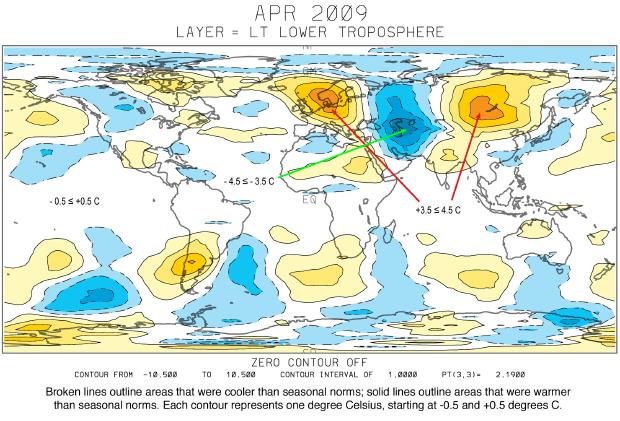
Global warming isn't spiking but the global composite temperature during April revealed an increase above the 20-year average for that month. The report is issued monthly as part of an ongoing joint project between The University of Alabama in Huntsville, NOAA and NASA.
As part of an ongoing joint project between The University of Alabama in
Huntsville, NOAA and NASA, Dr. John Christy, director of U.A. Huntsville's
Earth System Science Center, and Dr. Roy Spencer, a principal research
scientist in the ESSC, use data gathered by microwave sounding units on NOAA
and NASA satellites to get accurate temperature readings for almost all
regions of the Earth. This includes remote desert, ocean and rain forest
Duplicating our organic tissue synthetically isn't as easy as it sounds. Our bodily tissue is both soft and tough but modern implants - and replacement organs - will need to be as close to natural as possible to be effective.
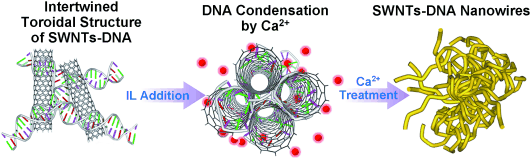
A team of Australian and Korean researchers led by Geoffrey M. Spinks and Seon Jeong Kim has now developed a novel, highly porous, sponge-like material whose mechanical properties closely resemble those of biological soft tissues. It consists of a robust network of DNA strands and carbon nanotubes.
Dartmouth Medical School geneticists say they have made new inroads into understanding the regulatory circuitry of the biological clock that synchronizes the ebb and flow of daily activities, according to two studies published May 15.
Research on the relationship between clocks and temperature, reported in Cell, offers insight into a longstanding puzzle of temperature compensation: why the 24-hour circadian rhythm does not change with temperature when metabolism is so affected. A related study, in Molecular Cell, tracks a clock protein in action, mapping hundreds of highly choreographed modifications and interactions to provide the first complete view of regulation across a day.
Let's be honest, the one thing you worry about most when driving your Hummer and sipping corporate-farmed coffee is how much damage that Union Oyster House ("oldest restaurant in America!") refrigerator magnet in your house is doing to the environment.
You're out of luck. The refrigerator magnets scientists are a step closer to making are for environmentally-friendly 'magnetic' refrigerators and air conditioning systems.
The research group of Dr. Frédéric Charron, a researcher at the Institut de recherches cliniques de Montréal (IRCM), has made a discovery which could help treat spinal cord injuries and neurodegenerative diseases. This new finding has been published in the current issue of Neuron.


 The Scorched Cherry Twig And Other Christmas Miracles Get A Science Look
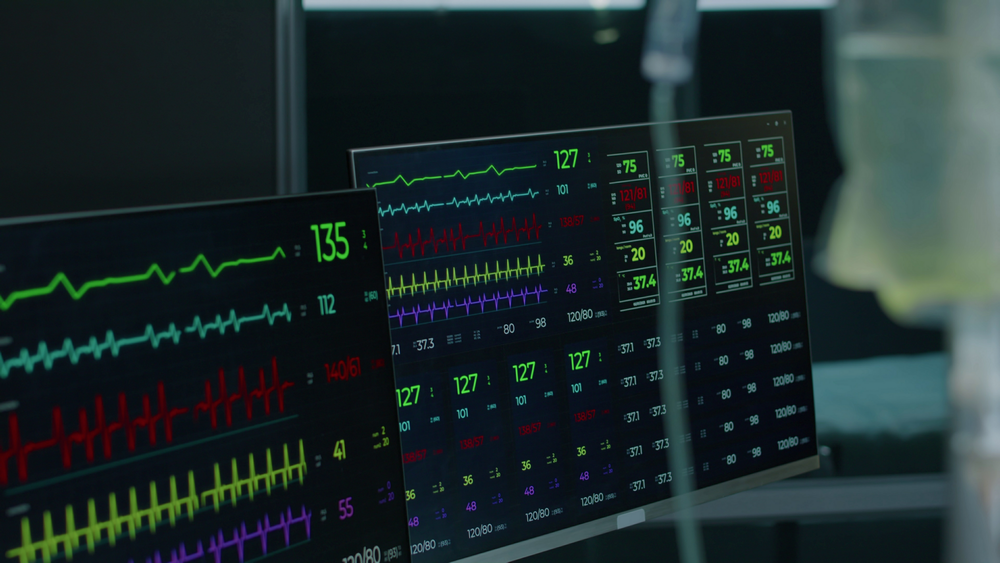 $0.50 Pantoprazole For Stomach Bleeding In ICU Patients Could Save Families Thousands Of Dollars
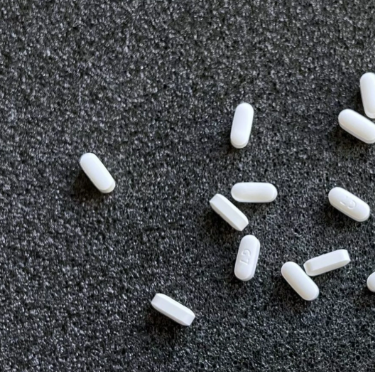 Metformin Diabetes Drug Used Off-Label Also Reduces Irregular Heartbeats
  Your Predator: Badlands Future - Optical Camouflage, Now Made By Bacteria