Banner
The Scorched Cherry Twig And Other Christmas Miracles Get A Science Look

Bleeding hosts and stigmatizations are the best-known medieval miracles but less known ones, like ...

$0.50 Pantoprazole For Stomach Bleeding In ICU Patients Could Save Families Thousands Of Dollars

The inexpensive medication pantoprazole prevents potentially serious stomach bleeding in critically...

Metformin Diabetes Drug Used Off-Label Also Reduces Irregular Heartbeats

Adults with atrial fibrillation (AFib) who are not diabetic but are overweight and took the diabetes...

Your Predator: Badlands Future - Optical Camouflage, Now Made By Bacteria

In the various 'Predator' films, the alien hunter can see across various spectra while enabling...

User picture.
News StaffRSS Feed of this column.

News Releases From All Over The World, Right To You... Read More »

Blogroll
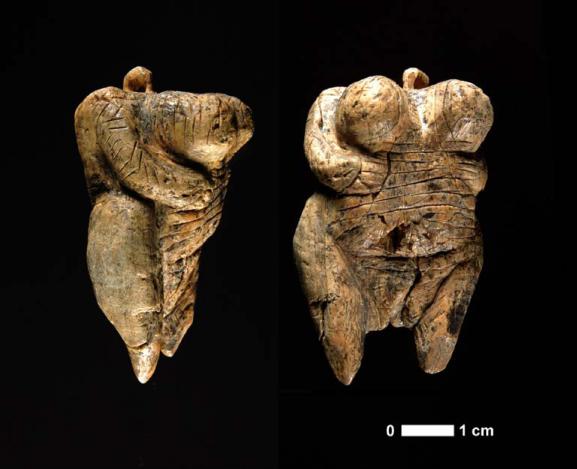
2008 excavations at Hohle Fels Cave in the Swabian Jura of southwestern Germany recovered a female figurine carved from mammoth ivory from the basal Aurignacian deposit. The figurine is the earliest depiction of a human and one of the oldest known examples of figurative art worldwide and is at least 35,000 years old.

If you're looking closely at the Venus of Hohle Fels below, you may also notice those are breasts, which radically changes our views of the context and meaning of the earliest Paleolithic art; maybe it's porn-eolithic.

Venus of Hohle Fels Swabian Jura
A new report published in Cell says that a heart beat and blood circulation are critical signals for the production of blood-forming, or hematopoietic, stem cells in the developing embryo.
New research sheds light on how cocaine regulates gene expression in a crucial reward region of the brain to elicit long-lasting changes in behavior. The study in Neuron provides insight into the molecular pathways regulated by cocaine and may lead to new strategies for battling drug addiction.

It is well established that addictive drugs induce persistent changes in the brain's reward circuits. Previous research has indicated that addiction to drugs such as cocaine is associated with altered gene expression in the nucleus accumbens (NAc), a region of the brain that is involved in motivation, pleasure, and reward.
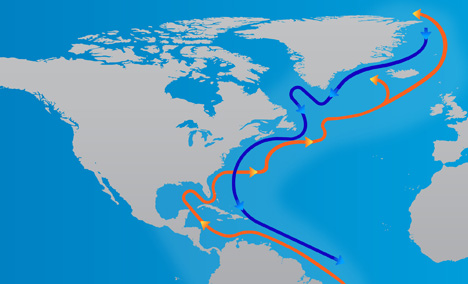
You probably envision ocean currents as a 'conveyor belt'  - that's okay, so do oceanographers.  But at least in the Atlantic, it doesn't work quite the way scientists have believed, according to new research led by Duke University and the Woods Hole Oceanographic Institution.  Their analyses showed that much of this water, originating in the sea between Newfoundland and Greenland, rather than flowing southward from the Labrador Sea, is diverted generally eastward by the time it flows as far south as Massachusetts. From there it disperses to the depths in complex ways that are difficult to follow.
Laboratory experiments have demonstrated the immunological effects of ginseng, say researchers writing in the Journal of Translational Medicine.  Their studies show that the herb, much used in traditional Chinese and other Asian medicine, does have anti-inflammatory effects.

The scientists treated human immune cells with different extracts of ginseng. They found that of the nine ginsenosides they identified, seven could selectively inhibit expression of the inflammatory gene CXCL-10. Allan Lau concludes, "Further studies will be needed to examine the potential beneficial effects of ginsenosides in the management of acute and chronic inflammatory diseases in humans."
Researchers in condensed matter physics at the University of Pennsylvania and the University of Chicago have created an experimental and computer model to study how jamming, the physical process in which collections of particles are crammed together to behave as solids, might affect the behavior of systems in which thermal motion is important, such as molecules in a glass.

The study presents the first experimental evidence of a vestige of the zero temperature jamming transition — the density at which large, loose objects such as gas bubbles in liquid, grains of sand or cars become rigid solids such as foam, sand dunes or traffic jams — in a system of small particles where thermal energy is important.