Banner
The Scorched Cherry Twig And Other Christmas Miracles Get A Science Look

Bleeding hosts and stigmatizations are the best-known medieval miracles but less known ones, like ...

$0.50 Pantoprazole For Stomach Bleeding In ICU Patients Could Save Families Thousands Of Dollars

The inexpensive medication pantoprazole prevents potentially serious stomach bleeding in critically...
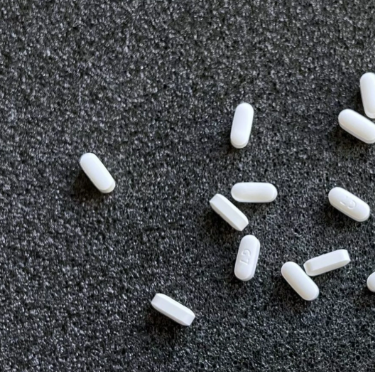
Metformin Diabetes Drug Used Off-Label Also Reduces Irregular Heartbeats

Adults with atrial fibrillation (AFib) who are not diabetic but are overweight and took the diabetes...

Your Predator: Badlands Future - Optical Camouflage, Now Made By Bacteria

In the various 'Predator' films, the alien hunter can see across various spectra while enabling...

User picture.
News StaffRSS Feed of this column.

News Releases From All Over The World, Right To You... Read More »

Blogroll
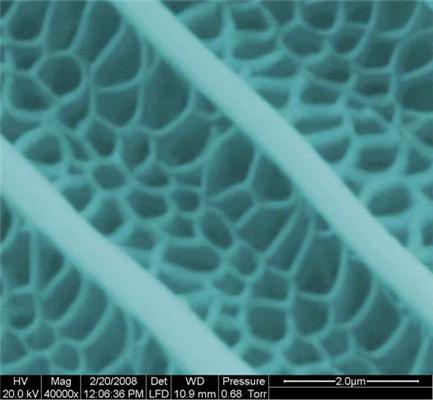
Researchers have developed a technique to replicate biological structures, such as butterfly wings, except on a nano scale and the resulting biomaterial could also be used to make optically active structures, such as optical diffusers for solar panels, they say.

Insects' colors and their iridescence (the ability to change colors depending on the angle) or their ability to appear metallic are determined by tiny nano-sized photonic structures (1 nanometer = 10-9 m) which can be found in their cuticle. Scientists have focused on these biostructures to develop devices with light emitting properties.  Their work was presented in the journal Bioinspiration&Biomimetics.

Can diet make you less likely to develop depression?   A new report from the University of Navarra published in Archives of General Psychiatry. says people who follow 'Mediterranean dietary pattern' heavier in nuts and fish appear less likely to develop depression.

There is lower prevalence of diagnosed depression in Mediterranean countries than northern European ones, for example, though that could also be a cultural issue - a hundred years ago there was almost no diagnoses in the US because doctors did not diagnose it.
Everyone knows about being an organ donor - you may even have a little sticker saying it's okay for doctors to remove parts from you in order to save someone else.   Pacemaker donations from funeral homes are less well known but patients who received refurbished pacemakers in the Philiipinnes have survived without complications, according to a case series reported by the University of Michigan Cardiovascular Center.
A narrow focus on carbon dioxide has long focused attention of the political and economic motivations of the European countries behind treaties like the Kyoto protocol rather than the science data and what parameters are needed to make climate simulations truly accurate.

Now that the fad aspects of global warming are behind us, researchers at Oak Ridge National Laboratory and the National Center for Atmospheric Research have taken a step to make better climate simulation.   Their results, published in Biogeosciences, illustrate the complexity of climate modeling by demonstrating how natural processes still have a strong effect on the carbon cycle and climate simulations.
Archaeopteryx (Urvogel ) is the most primitive bird yet discovered.   Found in the 1860's, it has since been dated  to 150 million years ago but new microscopic imaging of its bone structure says this ancient critter grew less like what we think of as birds and more like dinosaurs.

The bones of more recent bird fossils like Confuciusornis from the Yixian Formation in China which are more recent than Archaeopteryx demonstrate rapid growth more similar to that of modern birds, which means rapid bone growth, considered a prerequisite for flight, was not necessary for taking to the air.
Researchers studying Rhesus Macaque mothers and writing on their results in Current Biology have determined that interactions of macaque mothers with their infants have a lot of similarity to human mothers in the first month of a newborn's life.

"What does a mother or father do when looking at their own baby?" asks Pier Francesco Ferrari of the Università di Parma in Italy. "They smile at them and exaggerate their gestures, modify their voice pitch—the so-called "motherese"—and kiss them. What we found in mother macaques is very similar: they exaggerate their gestures, "kiss" their baby, and have sustained mutual gaze."