Banner
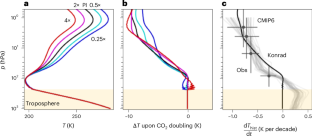
Wavelengths Of Light Are Why CO2 Cools The Upper Atmosphere But Warms Earth

There are concerns about projected warming on the Earth’s surface and in the lower atmosphere...

Here's Where Your Backyard Was 300 Million Years Ago

We may use terms like "grounded" and terra firma to mean stability and consistency but geology...

Convergent Evolution Cheat Sheet Now 120 Million Years Old

One tenet of natural selection is a random walk of genes but nature may be more predictable than...

Synchrotron Could Shed Light On Exotic Dark Photons

There are many hypothetical particles proposed to explain dark matter and one idea to explore how...

User picture.
News StaffRSS Feed of this column.

News Releases From All Over The World, Right To You... Read More »

Blogroll

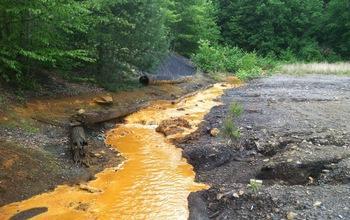
New geochemical tracers can identify any hydraulic fracturing flowback fluids that could have spilled into the environment, according to field tests at a spill site in West Virginia and downstream from an oil and gas brine wastewater treatment plant in Pennsylvania. 

State and local vaccination requirements for school entry seek to protect schoolchildren from vaccine-preventable diseases.  But not all parents agree medicine is a good thing and the newest CDC results show what states are leading and what states are lagging in protection for kids.

Some people infected with pathogens spread their germs to others while remaining symptom-free - a new study may answer why.

When researchers in a new study gave oral antibiotics to mice infected with Salmonella typhimurium, a bacterial cause of food poisoning, a small minority — so called "superspreaders" that had been shedding high numbers of salmonella in their feces for weeks — remained healthy; they were unaffected by either the disease or the antibiotic. The rest of the mice got sicker instead of better and, oddly, started shedding like superspreaders.

The findings point to a reason for superspreaders' ability to remain asymptomatic and also pose questions about use of sub-therapeutic doses of antibiotics in livestock.

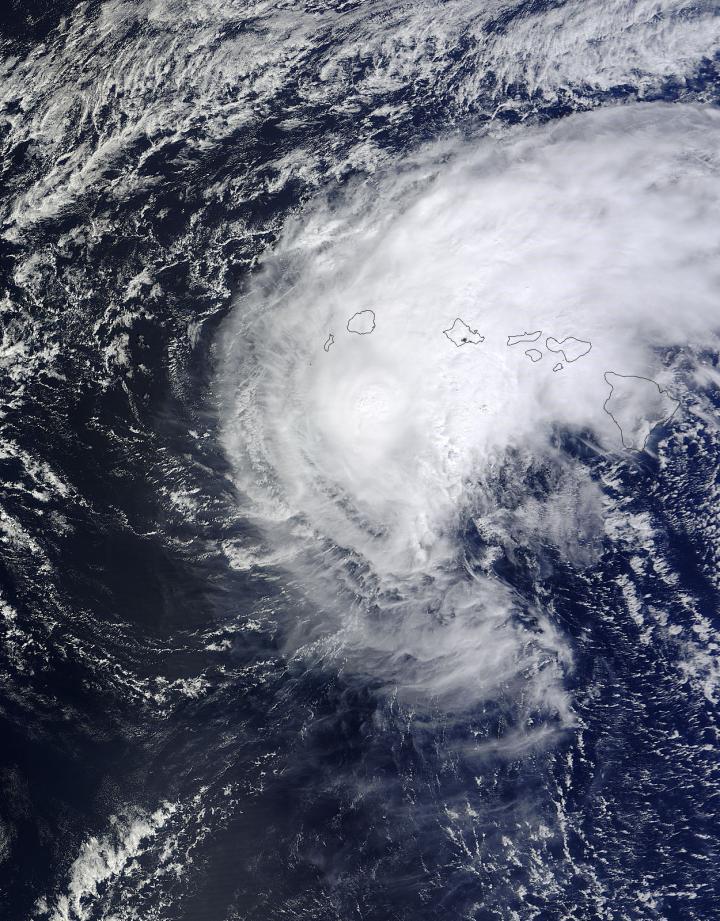
At 2 AM local time in Hawaii, Tropical Storm Ana was just below hurricane strength with maximum sustained winds near 70 mph.

NOAA's Central Pacific Hurricane Center expects it to weaken before it intensifies again. The center of tropical storm Ana was located near latitude 20.6 north and longitude 162.6 west. That puts the center of Ana about 225 miles (360 km) west-southwest of Lihue Hawaii and about 325 miles (525 km) southeast of French Frigate Shoals.

Ana is moving toward the west near 9 mph (15 kph) and is expected to gradually turn to the northwest.  

Modern food science has meant a lot fewer people starving, but there has also been an increase in products designed to keep animals and fish healthy, like antibiotics.

Antibiotics do not just disappear. Even in trace amounts, over time they can build up in the environment and that gives bacteria another path to developing resistance.

In a new study, PhD candidate Hansa Done and Dr. Rolf Halden, PhD of Arizona State University's Biodesign Institute, examine antibiotic use in the rapidly expanding world of global aquaculture. They measured the presence of antibiotics in shrimp, salmon, catfish, trout, tilapia and swai, originating from 11 countries. Data showed traces of 5 of the 47 antibiotics evaluated.

Ancient Greeks used onions as a performance-enhancing drug. Roman gladiators ate ashes and vegetables. If common-sense does not tell us that there was no ancient civilization with futuristic technology building pyramids, anthropology certainly can.

Historic sources claimed referred to gladiators  as "hordearii" ("barley eaters") because they had an inferior diet, heavy in beans and grains, the hallmark of poor status. Even 2,000 years ago people made fun of vegetarians, it seems. Though the diet was accurate, it was not all special, according to a new paper.