Banner
Ousiometrics Analysis Says All Human Language Is Biased

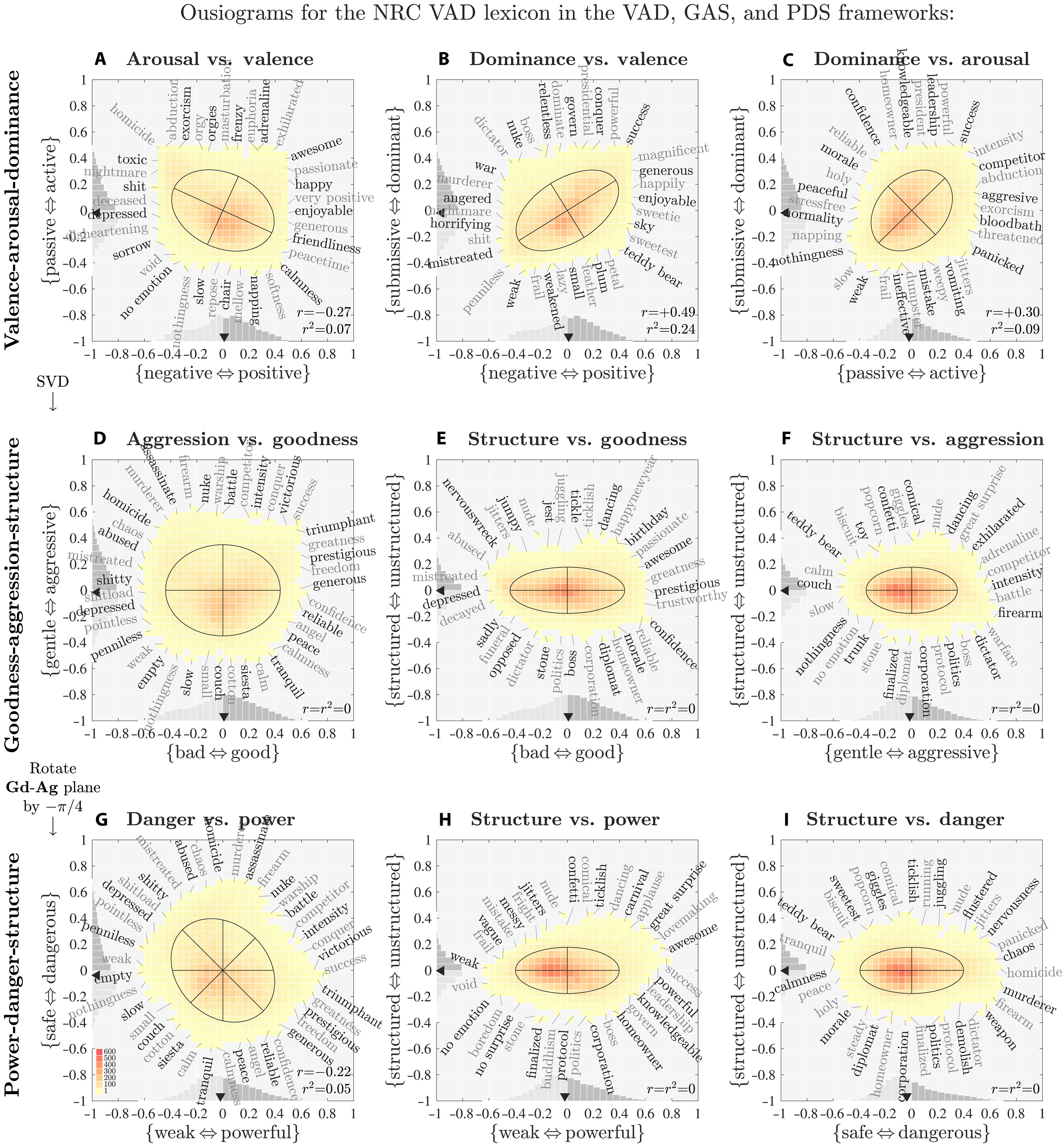
A new tool drawing on billions of uses of more than 20,000 words and diverse real-world texts claims...

Wavelengths Of Light Are Why CO2 Cools The Upper Atmosphere But Warms Earth

There are concerns about projected warming on the Earth’s surface and in the lower atmosphere...

Here's Where Your Backyard Was 300 Million Years Ago

We may use terms like "grounded" and terra firma to mean stability and consistency but geology...

Convergent Evolution Cheat Sheet Now 120 Million Years Old

One tenet of natural selection is a random walk of genes but nature may be more predictable than...

User picture.
News StaffRSS Feed of this column.

News Releases From All Over The World, Right To You... Read More »

Blogroll

Calculating the pros and cons is a time-honored method for making analytical decisions but focusing too much on numberscalculations, especially those involving money, can lead to negative consequences, including social and moral transgressions, says a new paper.

Based on several experiments, researchers concluded that people in a "calculative mindset" as a result of number-crunching are more likely to analyze non-numerical problems mathematically and not take into account social, moral or interpersonal factors.

Chen-Bo Zhong. Credit: Rotman School

Molecules containing carbon-halogen bonds are produced naturally across all kingdoms of life and constitute a large family of natural products with a broad range of biological activities. 

The presence of halogen substituents in many bioactive compounds has a profound influence on their molecular properties and a goal of chemical science has been to find the late-stage, site-specific incorporation of a halogen atom into a complex natural product by replacing an sp³ C-H bond (one of the most inert chemical bonds known in an organic compound) with a C-X bond (X=halogen).

There has been no reliable synthetic or biological method known to be able to achieve this type of transformation but in Nature Chemical Biology

In 2010, McGill Redmen receiver Charles-Antoine Sinotte suffered a concussion during his last home game. "It was like nothing I had experienced before," recalls Sinotte. "I felt like I was out of my body."

Although he received medical attention and missed the rest of the game, he admits he downplayed his symptoms in order to play in the next game – his last before leaving McGill. 

Researchers have discovered "the most famous wheat gene," a reproductive traffic cop of sorts that can be used to transfer valuable genes from other plants to wheat, which clears the way for wheat varieties with disease- and pest-resistance traits of other grasses.

Though it would be genetic modification, because of precise legal definitions that ban some genetic optimization but allow mutagenesis and other older forms of genetic modification, it would not have the same regulatory hurdles and controversy of modern GMOs.

Men who had moderate baldness affecting both the front and the crown of their head by age 45 were at a 40% increased risk of developing aggressive prostate cancer than men with no baldness, according to a new, large cohort analysis from the prospective Prostate, Lung, Colorectal and Ovarian (PLCO) Cancer Screening Trial.

Prostate cancer is the second most common cancer among men.
Aggressive prostate cancer usually indicates a faster growing tumor resulting in poorer prognosis relative to non-aggressive prostate cancer later in life. There was no significant link between other patterns of baldness and prostate cancer risk. 


The use of unnecessary medical tests and procedures driven by a fear of malpractice lawsuits, commonly known as 'defensive medicine', has been estimated to cost up to $46 billion annually in the U.S. 

It used to be that we didn't want medical decisions being made by insurance companies, and instead they became dictated by lawyers. 

For a recent paper, the authors estimated the cost of defensive medicine on three services – tests, procedures or hospitalizations – by asking physicians to estimate the defensiveness of their own orders. The authors invited 42 hospital physicians to complete a survey, which 36 physicians did and rated 4,215 orders for 769 patients in the research letter.