Banner
Ousiometrics Analysis Says All Human Language Is Biased

A new tool drawing on billions of uses of more than 20,000 words and diverse real-world texts claims...

Wavelengths Of Light Are Why CO2 Cools The Upper Atmosphere But Warms Earth

There are concerns about projected warming on the Earth’s surface and in the lower atmosphere...

Here's Where Your Backyard Was 300 Million Years Ago

We may use terms like "grounded" and terra firma to mean stability and consistency but geology...

Convergent Evolution Cheat Sheet Now 120 Million Years Old

One tenet of natural selection is a random walk of genes but nature may be more predictable than...

User picture.
News StaffRSS Feed of this column.

News Releases From All Over The World, Right To You... Read More »

Blogroll

There is a link between our brain structure and our tolerance of risk, find economists who say they have found the first stable 'biomarker' for financial risk-attitudes.

Does that mean there is a causal link between brain structure and behavior? Neuroscientists and psychologists tend to fall into that trap but the scholars in the Journal of Neuroscience avoid that trap.

Dr Agnieszka Tymula, an economist at the University of Sydney, and colleagues found that the gray matter volume of a region in the right posterior parietal cortex was significantly predictive of individual risk attitudes. Men and women with higher gray matter volume in this region exhibited less risk aversion.

"Nobody understands the cloud," shouts a character in a recent comedy about a couple trying to remove a private video from the Internet. 

In reality, the cloud is completely understandable, and it's one of few areas in climate where the emissions costs are also. And because it is quantifiable it can benefit from combinatorial optimization. the famous rucksack problem where a traveler has to try and fit everything in without leaving anything behind.

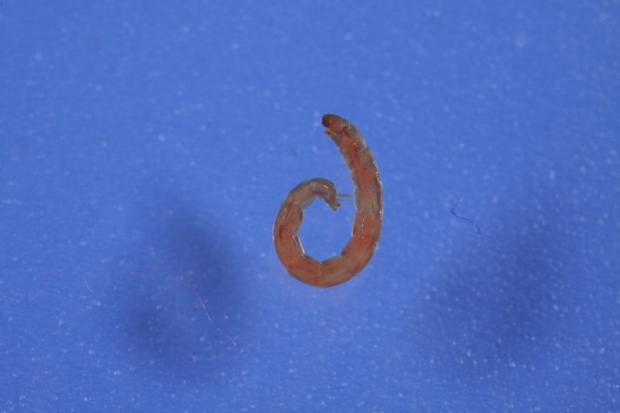
Imagine being able to go from the hottest of hots to the coldest of colds, and endure both extreme droughts, where 97% of your body water is gone, and airless vacuums such as space.

The African midge,  Polypedilum vanderplanki, can do all that and an international team deciphered the genetic mechanism that makes it invulnerable to these harsh conditions.

The midge is capable of anhydrobiosis, a unique state that allows an organism to survive after losing almost all of its body water, along with other severe conditions, such as extreme temperatures ranging from 90°C to -270°C, vacuums and high doses of radiation; all of which would be lethal to most other life forms.
Data from an initial representative 938-subject sample of  a 4,800-subject colorectal cancer trial at Hvidovre Hospital, Copenhagen demonstrated that the NuQ® blood-based diagnostic platform  is able to correctly diagnose 84% of colorectal cancers, including early-stage cancers.
Merck is discontinuing the clinical development program of its investigational MUC1 antigen-specific cancer immunotherapy tecemotide (L-BLP25) as a monotherapy in Stage III non-small cell lung cancer (NSCLC).

Tecemotide is an investigational MUC1 antigen-specific cancer immunotherapy that is designed to stimulate the body's immune system to identify and target cells expressing the cell-surface glycoprotein MUC1. MUC1 is expressed in many cancers, including NSCLC, and has multiple roles in tumor growth and survival. Tecemotide was being investigated in the Phase III START2, START and INSPIRE trials for the treatment of unresectable, locally advanced Stage III NSCLC.
The U.S. Food and Drug Administration has approved Keytruda (pembrolizumab), a new immunotherapy drug to treat advanced melanoma after it was tested on more than 600 patients who had melanoma that had spread throughout their bodies.

Because so many of the patients in the early testing showed significant long-lasting responses, the study was continued and the FDA granted the drug “breakthrough therapy” status, allowing it to be fast-tracked for approval. The largest Phase 1 study in the history of oncology, the research was conducted at UCLA and 11 other sites in the U.S., Europe and Australia.