Banner
Ousiometrics Analysis Says All Human Language Is Biased

A new tool drawing on billions of uses of more than 20,000 words and diverse real-world texts claims...

Wavelengths Of Light Are Why CO2 Cools The Upper Atmosphere But Warms Earth

There are concerns about projected warming on the Earth’s surface and in the lower atmosphere...

Here's Where Your Backyard Was 300 Million Years Ago

We may use terms like "grounded" and terra firma to mean stability and consistency but geology...

Convergent Evolution Cheat Sheet Now 120 Million Years Old

One tenet of natural selection is a random walk of genes but nature may be more predictable than...

User picture.
News StaffRSS Feed of this column.

News Releases From All Over The World, Right To You... Read More »

Blogroll

Drier conditions at the edges of forest patches slow down the decay of dead wood and significantly alter the cycling of carbon and nutrients in woodland ecosystems, according to a new study.

Forests around the world have become increasingly fragmented, and in the UK three quarters of woodland area lie within 100 meters of the forest edge. It has long been known that so-called 'edge effects' influence temperature and moisture (the 'microclimate') in woodlands, but the influence on the carbon cycle is largely unknown. 

With carbon dioxide from the American energy sector plummeting back to early 1990s levels and coal, the dirtiest energy source, back at early 1980s levels, environmentalists have tried to turn on natural gas and its primary component, methane.

Don't be fooled. Other sources, like solar, are not ready yet, wind never will be and nuclear science is reviled by Democrats so methane is the best bridge to the future (which will eventually be solar).  A new technique transforms the delightful stinky, air-polluting landfill gas into a hydrogen fuel cell, according to a presentation at National Meeting of the American Chemical Society.

Conservation wants to preserve nature as it is while wildlife management seeks to maintain responsible levels for animal populations. There is a reasonable balance. In Pennsylvania, for example, there are plenty of state and national park acres but hunting is big business and the fees pay for biologists and state nature management.

 Post-Traumatic Stress Disorder (PTSD) is triggered by a terrifying event, either witnessed or experienced, and the symptoms may include flashbacks, nightmares and severe anxiety, as well as uncontrollable thoughts about the event. 

Not everyone who experiences trauma develops PTSD but it has become a far more common psychiatric and psychological diagnosis, so the search is on for a science basis to know who has it and what it means - including a search to identify biomarkers that could better measure each person's vulnerability to the disorder. 

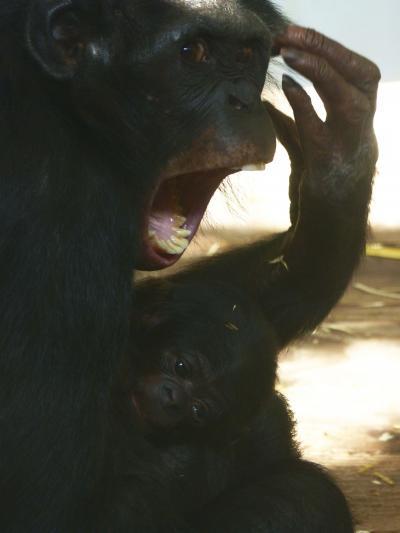
Whether or not humans are the only empathic beings is a debate for anthropologists, because there is no science answer; the ability to experience others' emotions is hard to quantify in a species so it is difficult to measure empathy in any objective way. 

The transmission of a feeling from one individual to another, called 'emotional contagion,' is the most basic form of empathy. Feelings are disclosed by facial expressions (such as sorrow, pain, happiness or tiredness), and these feelings can travel from an "emitting face" to a "receiving face." Upon receipt, the mirroring of facial expressions evokes in the receiver an emotion similar to the emotion experienced by the sender.

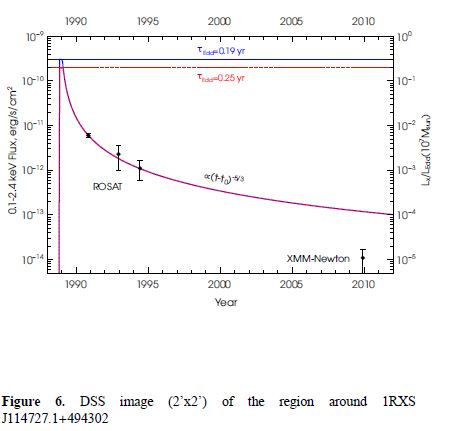
Researchers have reported registering three possible occasions of the total destruction of stars by supermassive black holes at the centers of galaxies. 

They astrophysicists used data obtained by X-ray orbiting observatories ROSAT and XMM-Newton. The former was put into orbit in 1990 and served until 1999, XMM-Newton since, and combined they gathered enough information to detect very rare events, such as the destruction of stars by supermassive black holes.