Banner
Ousiometrics Analysis Says All Human Language Is Biased

A new tool drawing on billions of uses of more than 20,000 words and diverse real-world texts claims...

Wavelengths Of Light Are Why CO2 Cools The Upper Atmosphere But Warms Earth

There are concerns about projected warming on the Earth’s surface and in the lower atmosphere...

Here's Where Your Backyard Was 300 Million Years Ago

We may use terms like "grounded" and terra firma to mean stability and consistency but geology...

Convergent Evolution Cheat Sheet Now 120 Million Years Old

One tenet of natural selection is a random walk of genes but nature may be more predictable than...

User picture.
News StaffRSS Feed of this column.

News Releases From All Over The World, Right To You... Read More »

Blogroll

 Humans train animals by rewarding them with tasty treats and trainers couple the reward with a sound, such as a buzz or a whistle. Once the animal has mastered the task, the trainer stops dispensing food, relying instead on the whistle or buzzer to inform the animal that it has performed successfully and that it will be rewarded - with food, but later.

Even though there may be no food reward at the time, whales and dolphins still squeal in response to the sound substituted for the food reward. And Sam Ridgway found that when he trained dolphins and beluga whales to switch off a sound after diving hundreds of meters, the animals produced the same squeals of victory when the sound stopped.  

11 years ago, DARPA predicted that there was a physics-induced train wreck coming straight at the computer chip industry; the limits of what electricity and existing materials can do. Even then, quantum computers were touted as the answer, with black box magic occurring between the existing and the vision.

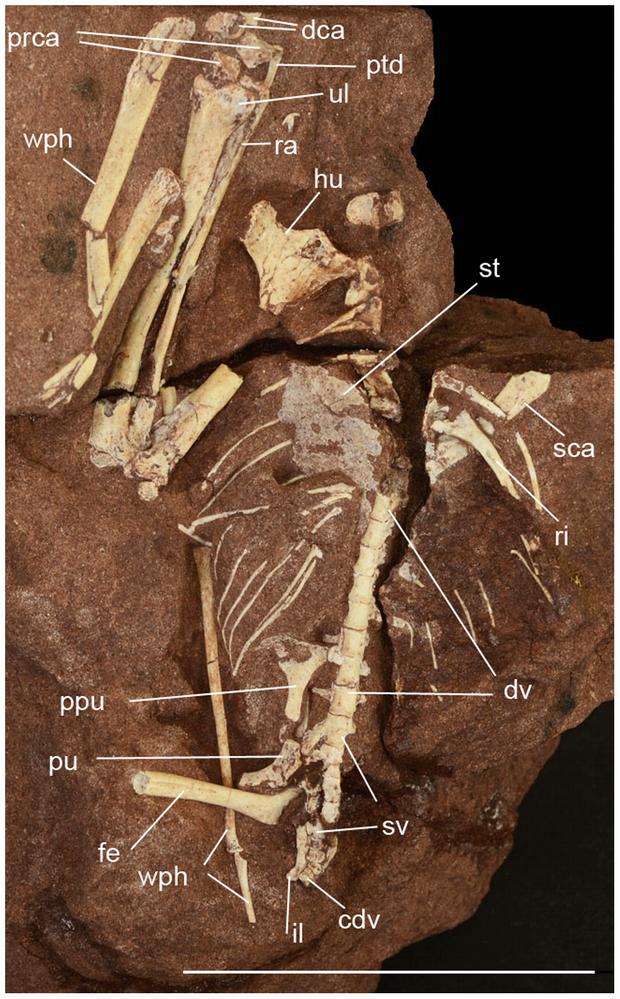
Scientists have reported discovery of a new ancient pterosaur species called Caiuajara dobruskii - and the bones of 47 members to go with it. Caiuajara dobruskii lived during the Cretaceous in southern Brazil, according to the paper.

There may be more among the hundreds of bones. The pterosaur bone bed in the interdunal lake deposit of a Cretaceous desert contains at least 47 individuals, with wing spans of between 0.65 and 2.35 meter. Caiuajara dobruskii is the southermost occurrence of the edentulous clade Tapejaridae (Tapejarinae, Pterodactyloidea) recovered so far.

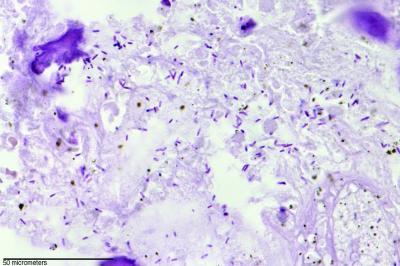
A modified version of the Clostridium novyi (C. noyvi-NT) bacterium can produce a strong and precisely targeted anti-tumor response in rats, dogs and now humans, according to a new report from Johns Hopkins Kimmel Cancer Center researchers.

In its natural form, C. novyi is found in the soil and, in certain cases, can cause tissue-damaging infection in cattle, sheep and humans. The microbe thrives only in oxygen-poor environments, which makes it a targeted means of destroying oxygen-starved cells in tumors that are difficult to treat with chemotherapy and radiation. The Johns Hopkins team removed one of the bacteria's toxin-producing genes to make it safer for therapeutic use.

Researchers have discovered new evidence to suggest that the origins of mummification started in ancient Egypt 1,500 years earlier than previously thought.

Traditional theories on ancient Egyptian mummification suggest that in prehistory -- the Late Neolithic and Predynastic periods between c. 4500 and 3100 B.C. -- bodies were desiccated naturally through the action of the hot, dry desert sand.

Scientific evidence for the early use of resins in artificial mummification has, until now, been limited to isolated occurrences during the late Old Kingdom (c. 2200 BC). Their use became more apparent during the Middle Kingdom (c. 2000-1600 BC).

In quantitative genetics,  genomic prediction is a statistical approach to predicting the value of an economically important trait in a plant, such as yield or disease resistance. The method works if the trait is heritable, as many traits tend to be, and can be performed early in the life cycle of the plant, helping reduce costs.

A research team led by plant geneticists at the University of California, Riverside and Huazhong Agricultural University, China, has used the method to predict the performance of hybrid rice (for example, the yield, growth-rate and disease resistance). The new technology could potentially revolutionize hybrid breeding in agriculture.