Banner
Ousiometrics Analysis Says All Human Language Is Biased

A new tool drawing on billions of uses of more than 20,000 words and diverse real-world texts claims...

Wavelengths Of Light Are Why CO2 Cools The Upper Atmosphere But Warms Earth

There are concerns about projected warming on the Earth’s surface and in the lower atmosphere...

Here's Where Your Backyard Was 300 Million Years Ago

We may use terms like "grounded" and terra firma to mean stability and consistency but geology...

Convergent Evolution Cheat Sheet Now 120 Million Years Old

One tenet of natural selection is a random walk of genes but nature may be more predictable than...

User picture.
News StaffRSS Feed of this column.

News Releases From All Over The World, Right To You... Read More »

Blogroll

A blood testcould help predict the likelihood of a woman developing breast cancer, even in the absence of a high-risk BRCA1 gene mutation, according to researchers from University College London who identified an epigenetic signature in the blood of women predisposed for breast cancer owing to an inherited genetic mutation of the BRCA1 gene.

Epigenetic alterations are thought to be key molecular switches that are involved in the development of cancer. Strikingly, the same signature was discovered in the blood of women without a BRCA1 mutation but who went on to develop breast cancer, making it a potential early marker of women's cancer in the general population. 

What is believed to be the smallest force ever measured, 42 yoctonewtons, has been detected by at the Lawrence Berkeley National Laboratory.

A yoctonewton is one septillionth of a newton and there are approximately 3 x 10²³ yoctonewtons in one ounce of force.
 That's tiny. Using a combination of lasers and a unique optical trapping system that provides a cloud of ultracold atoms, the researchers detected the minute force.

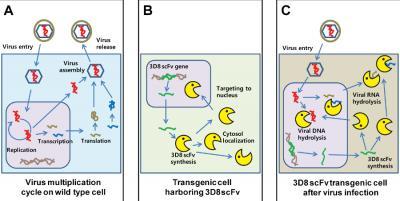
Antibodies and their derivatives can protect plants and humans against viruses but members of this class of drugs are usually highly specific against components of a particular virus, and mutations in the virus that change these components can make them ineffective.

But a mini-antibody called 3D8 scFv can chew up viral DNA and RNA regardless of specific sequences and protect mammalian cells and genetically manipulated mice against different viruses.

Sukchan Lee, from Sungkyunkwan University in Korea, and colleagues had previously discovered that 3D8 has both DNase and RNase activity (that is, it can degrade both), and that it can inhibit viruses under certain circumstances. In this study, they genetically manipulated cells and mice to produce 3D8.

PHILADELPHIA (June 26, 2014)— In the first pilot study asking adults on the autism spectrum about their experiences with driving, researchers at Drexel University found significant differences in self-reported driving behaviors and perceptions of driving ability in comparison to non-autistic adults. As the population of adults with autism continues growing rapidly, the survey provides a first step toward identifying whether this population has unmet needs for educational supports to empower safe driving – a key element of independent functioning in many people's lives.

COLUMBUS, Ohio – Scientists have identified a potential Achilles' heel for Salmonella – the bacteria's reliance on a single food source to remain fit in the inflamed intestine.

When these wily bugs can't access this nutrient, they become 1,000 times less effective at sustaining disease than when they're fully nourished.

The research suggests that blocking activation of one of five genes that transport the nutrient to Salmonella cells could be a new strategy to fight infection.

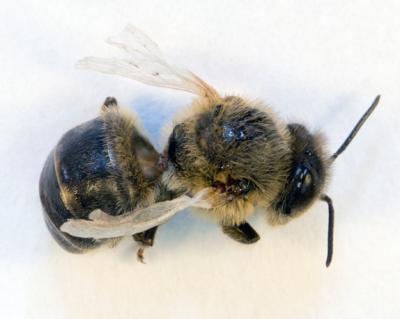
Honeybees are a key pollinating insect, associated with around $40 billion in crops. In recent years, there were higher than normal colony losses (colony collapse disorder) has been a concern. Environmentalist have focused on neonicotinoid pesticides while science has believed it is a combination of weather and parasites.