Banner
Ousiometrics Analysis Says All Human Language Is Biased

A new tool drawing on billions of uses of more than 20,000 words and diverse real-world texts claims...

Wavelengths Of Light Are Why CO2 Cools The Upper Atmosphere But Warms Earth

There are concerns about projected warming on the Earth’s surface and in the lower atmosphere...

Here's Where Your Backyard Was 300 Million Years Ago

We may use terms like "grounded" and terra firma to mean stability and consistency but geology...

Convergent Evolution Cheat Sheet Now 120 Million Years Old

One tenet of natural selection is a random walk of genes but nature may be more predictable than...

User picture.
News StaffRSS Feed of this column.

News Releases From All Over The World, Right To You... Read More »

Blogroll

Old Westbury, N.Y. (June 25, 2014) –Administering low doses of a thyroid hormone to rats with diabetes helps restore hormone levels in their hearts and prevented deterioration of heart function and pathology, according to a new study by NYIT College of Osteopathic Medicine professor A. Martin Gerdes.

The study, published in the online edition of Molecular Medicine provides the first clear indication that low thyroid hormone levels in cardiac tissue of diabetic individuals may be the major cause of their associated heart disease, says Gerdes.

The neurotoxin tetrodotoxin (TTX) has been found for the first time in two species living out of water, according to a study published June 25 in the open access journal PLOS ONE by Amber Stokes from California State University, Bakersfield, California and colleagues.

A promising molecule that blocks bone destruction could provide a potential therapeutic target for osteoporosis and bone metastases of cancer, according to a new study.

The molecule, miR-34a, belongs to a family of small molecules called microRNAs (miRNAs) that serve as brakes to help regulate how much of a protein is made, which in turn, determines how cells respond.

Mice with higher than normal levels of miR-34a had increased bone mass and reduced bone breakdown. This outcome is achieved because miR-34a blocks the development of bone-destroying cells called osteoclasts, which make the bone less dense and prone to fracture.

Bottom Line: Drinking alcohol has increased over a generation in a study of mothers and daughters in Australia.

Authors: Rosa Alati, Ph.D., M.Appl.Sc., of the University of Queensland, Australia, and colleagues.

Background: Previous research suggests drinking patterns have changed with more heavy drinking at younger ages.

How the Study Was Conducted: The authors compared change in alcohol use over a generation of young women born in Australia born from 1981 to 1983 with that of their mothers at the same age. Data from an Australian birth cohort study were used for the two generations of women. The study included 1,053 mothers and daughters with complete data after 21 years of follow-up.

Amsterdam, NL, June 25, 2014 – Individuals with brain injury and their families often struggle to accept the associated personality changes. The behavior of individuals with acquired brain injury (ABI) is typically associated with problems such as aggression, agitation, non-compliance, and depression. Treatment goals often focus on changing the individual's behavior, frequently using consequence-based procedures or medication. In the current issue of NeuroRehabilitation leading researchers challenge this approach and recommend moving emphasis from dysfunction to competence.

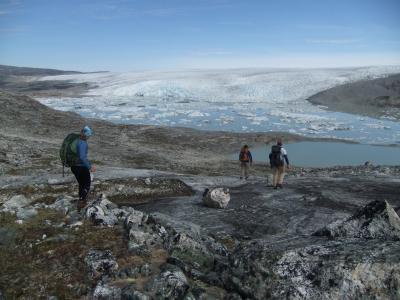
If the Greenland ice sheet ever gets past its stability threshold, it won't be the first time. 

400,000 years ago, a nearly complete deglaciation of southern Greenland happened, raising global sea levels as much as 6 meters. Not quite what was predicted to have happened by 2016 in "An Inconvenient Truth", but a substantial rise nonetheless.

The study authors say this is one of the first to zero in on how the vast Greenland ice sheet responded to warmer temperatures during that period, which were caused by changes in the Earth's orbit around the sun.